
Protective Styles for Natural Hair: Tradeoffs Worth Understanding

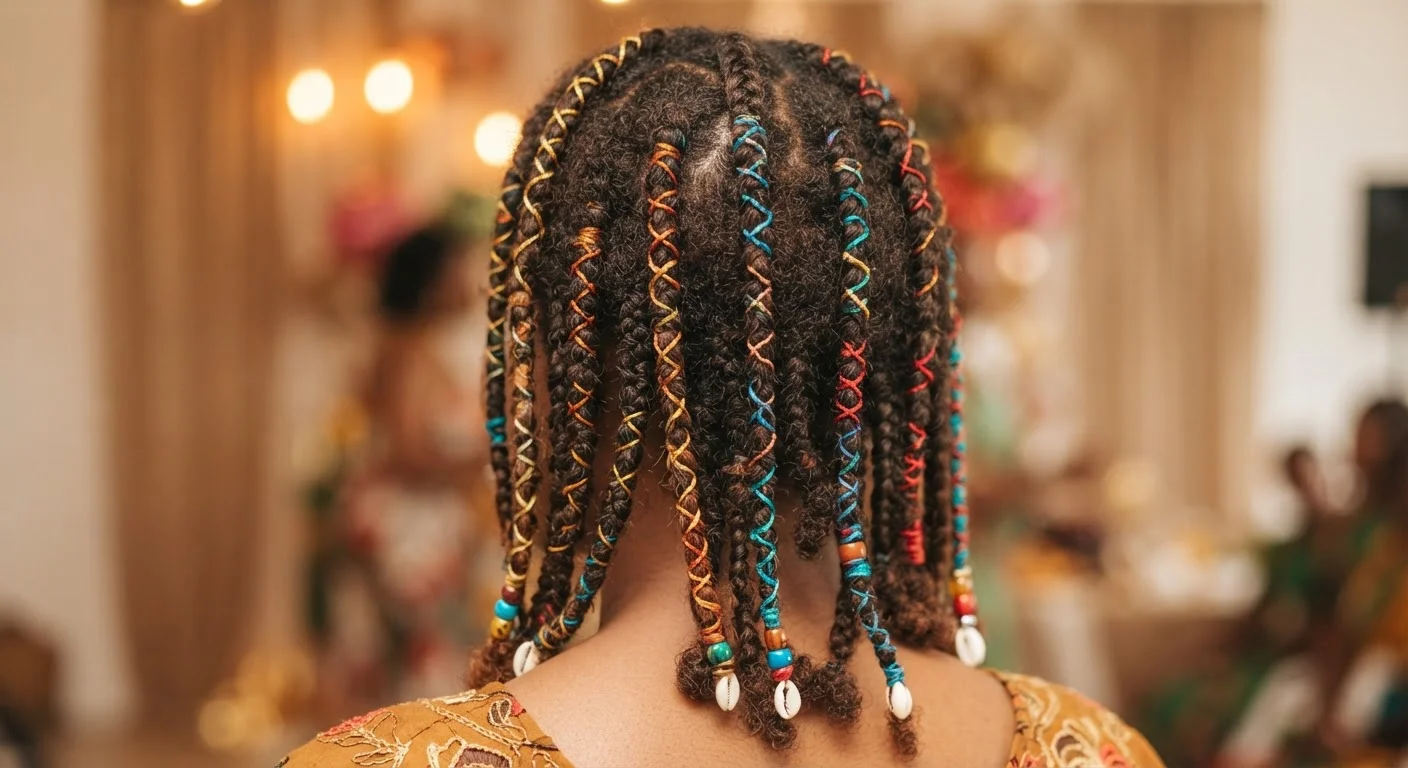
Photo: FaqExplorer.net | Informative Website editorial
Key Takeaways
- Protective styles reduce daily manipulation and can support length retention for natural hair.
- Tension at the scalp is the leading cause of protective-style-related hair loss, including traction alopecia.
- No single style suits every hair type - curl pattern, density, and scalp health all factor in.
- Moisture maintenance under a protective style is essential and often overlooked.
- Duration matters: most styles should be worn no longer than six to eight weeks.
Reduces daily manipulation and mechanical breakage
Tucking away the ends and eliminating daily detangling sessions dramatically lowers the friction-based breakage that shortens many natural hair journeys.
Supports length retention over time
With ends protected from clothing, weather, and combing, hair can accumulate growth rather than losing it to consistent breakage at the tips.
Decreases reliance on heat styling
A style that lasts several weeks requires no daily heat application, giving the hair a sustained break from thermal stress.
Offers styling versatility and time savings
Once installed, most protective styles require only minimal daily upkeep - a significant convenience benefit for busy schedules.
Shields hair from environmental stressors
Cold, dry air, sun exposure, and humidity fluctuations cause cuticle damage over time; protective styles provide a physical barrier against many of these factors.
Tension at the scalp can cause traction alopecia
Styles installed too tightly - particularly along the hairline - put sustained stress on follicles, which can lead to irreversible hair loss if the problem isn't addressed early.
Hidden moisture loss under the style
Natural hair continues to lose moisture while styled, and the lack of visibility makes it easy to neglect hydration; dry, brittle hair underneath a protective style is a common outcome.
Scalp hygiene challenges increase with duration
Product buildup and reduced airflow create conditions favorable for scalp irritation, fungal imbalance, or inflammation when styles are worn beyond recommended timeframes.
Extension weight can stress fine or fragile strands
Synthetic or human hair extensions add weight that thinner or previously damaged hair may not tolerate well, accelerating breakage at the point of attachment.
Removal can cause significant shedding if done carelessly
Detangling months of shed hairs at once during takedown, or rushing removal, can cause mechanical damage that negates the retention gained during the style.
What Counts as a Protective Style - and Why It Matters
A protective style is any hairstyle that tucks away the ends of the hair - the oldest, most fragile part of each strand - and minimizes daily handling. Common examples include box braids, cornrows, two-strand twists, Senegalese twists, flat twists, locs, wigs, and weaves. The underlying logic is straightforward: less manipulation means less friction, fewer split ends, and better moisture retention over time.
But "protective" is not automatic. A style only functions as intended when installed correctly and cared for properly. Understanding your own curl pattern and hair density is a useful starting point - curl pattern guides can help you identify what your strands may tolerate well. From there, the real tradeoffs begin.
Reduces daily manipulation and mechanical breakage
Tucking away the ends and eliminating daily detangling sessions dramatically lowers the friction-based breakage that shortens many natural hair journeys.
Supports length retention over time
With ends protected from clothing, weather, and combing, hair can accumulate growth rather than losing it to consistent breakage at the tips.
Decreases reliance on heat styling
A style that lasts several weeks requires no daily heat application, giving the hair a sustained break from thermal stress.
Offers styling versatility and time savings
Once installed, most protective styles require only minimal daily upkeep - a significant convenience benefit for busy schedules.
Shields hair from environmental stressors
Cold, dry air, sun exposure, and humidity fluctuations cause cuticle damage over time; protective styles provide a physical barrier against many of these factors.
The Genuine Benefits of Going Protective
When done thoughtfully, protective styling delivers several well-documented advantages for natural hair health.
Length retention is the most commonly cited benefit. Because the ends are shielded from clothing friction, weather, and repeated combing, breakage decreases and hair has an opportunity to grow to lengths that might otherwise feel difficult to maintain. Many people with type 3 and 4 curl patterns - hair that tangles readily and loses moisture quickly - find that even a few weeks in a protective style produces noticeable improvements in length and overall condition.
Protective styles also reduce the frequency of heat styling, which complements broader hair health over time. For a deeper look at how thermal styling choices stack up, see our comparison of air-drying versus blow-drying.
The Risks That Come With the Territory
No style is without downsides, and protective styles carry several risks worth taking seriously.
Tension at the scalp can cause traction alopecia
Styles installed too tightly - particularly along the hairline - put sustained stress on follicles, which can lead to irreversible hair loss if the problem isn't addressed early.
Hidden moisture loss under the style
Natural hair continues to lose moisture while styled, and the lack of visibility makes it easy to neglect hydration; dry, brittle hair underneath a protective style is a common outcome.
Scalp hygiene challenges increase with duration
Product buildup and reduced airflow create conditions favorable for scalp irritation, fungal imbalance, or inflammation when styles are worn beyond recommended timeframes.
Extension weight can stress fine or fragile strands
Synthetic or human hair extensions add weight that thinner or previously damaged hair may not tolerate well, accelerating breakage at the point of attachment.
Removal can cause significant shedding if done carelessly
Detangling months of shed hairs at once during takedown, or rushing removal, can cause mechanical damage that negates the retention gained during the style.
The most medically significant concern is traction alopecia - hair loss caused by sustained tension on the follicle. This condition develops gradually and can become permanent if the tension continues long enough. Signs include tenderness at the hairline, small bumps near follicles, and thinning along the edges. If you notice any of these, remove the style promptly and consult a dermatologist or trichologist (a specialist in hair and scalp health) before re-installing.
Scalp hygiene also suffers when a style is left in too long or when the scalp isn't cleansed regularly. Product buildup and moisture imbalance can lead to itching, flaking, or inflammation - none of which support healthy hair growth. A diluted shampoo applied to the scalp or a gentle scalp rinse every one to two weeks is generally recommended by hair care professionals, though the right interval varies by individual.
When to See a Professional
Choosing the Right Style for Your Hair
Not every protective style suits every head of hair. Key variables include:
- Hair density and thickness: Finer strands tolerate less weight and tension than thicker ones. Heavy extensions on fine hair increase breakage risk.
- Scalp sensitivity: People prone to dryness, psoriasis, or seborrheic dermatitis may find that closed styles trap irritants and worsen symptoms.
- Lifestyle: Active lifestyles involving frequent sweating call for more regular cleansing routines, which affects how practical certain styles are long-term.
- Installation method: Extensions braided too tightly at the root are always riskier than the same style done with gentler tension, regardless of the style chosen.
Wigs and weaves offer an advantage here: they protect the natural hair underneath while remaining fully removable for cleansing and scalp care. The tradeoff is that poor wig cap construction or adhesive use can cause friction damage or allergic reactions along the hairline.
~33%
Black women affected by traction alopecia
Research published in dermatology literature estimates that approximately one-third of Black women experience some degree of traction alopecia, with tight hairstyles cited as a primary contributing factor.
6-8 weeks
Recommended maximum protective style duration
Most professional hair care practitioners advise removing or refreshing protective styles within six to eight weeks to prevent scalp buildup and stress-related damage.
The content on this site is provided for informational purposes only and should not be considered a substitute for professional advice. While we strive to provide accurate and up-to-date information, we make no guarantees regarding its completeness or accuracy. Always consult a qualified professional for advice specific to your circumstances before making any decisions.