
SPF Numbers, Broad Spectrum, and PA Ratings: Reading Sunscreen Labels Without the Confusion

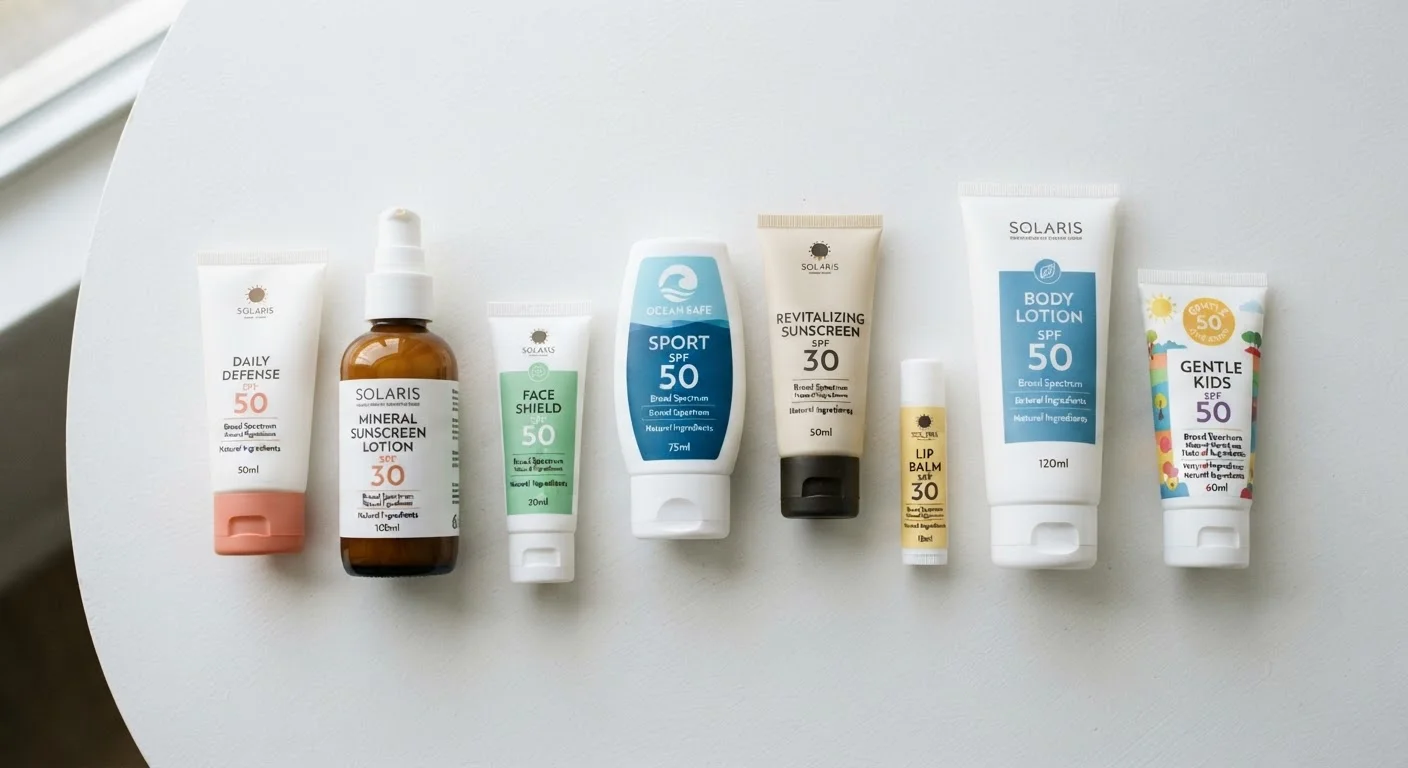
Photo: FaqExplorer.net | Informative Website editorial
Key Takeaways
- SPF measures UVB protection only; higher numbers block marginally more UVB but no sunscreen blocks 100%.
- Broad Spectrum on a U.S. label means the product has passed FDA-required UVA protection testing.
- PA ratings (PA+, PA++, PA+++, PA++++) quantify UVA protection and are common on products formulated for Asian markets.
- No rating system measures water resistance, application coverage, or protection against all UV-related damage.
- Reapplication every two hours is essential regardless of SPF number.
- For daily UV protection rationale, context matters as much as label numbers.
What SPF Actually Measures
SPF stands for Sun Protection Factor. It measures how much UVB radiation - the wavelength primarily responsible for sunburn and a known contributor to skin cancer risk - a product filters relative to unprotected skin. The math is straightforward but often misread.
SPF 30 blocks approximately 97% of UVB rays. SPF 50 blocks about 98%. SPF 100 reaches roughly 99%. Each step up yields diminishing returns, which is why dermatologists commonly emphasize consistent application over chasing a higher number. No sunscreen blocks 100% of UVB radiation.
Critically, SPF says nothing about UVA rays - the longer wavelengths that penetrate deeper into the skin and are associated with photoaging and more subtle forms of DNA damage. A product labeled SPF 50 with no other claims could theoretically offer zero UVA coverage. That gap is where the other label terms become important.
97%
UVB blocked by SPF 30 sunscreen
SPF 30 filters approximately 97% of UVB rays under standard laboratory test conditions, per FDA testing methodology.
~55%
Estimated typical under-application rate
Research published in dermatology literature suggests most people apply less than half the amount of sunscreen needed to achieve the labeled SPF in real-world conditions.
4 levels
PA rating grades for UVA protection
The PA system uses PA+ through PA++++ to indicate UVA protection, with each grade representing roughly a threefold increase in measured PPD value.
Broad Spectrum: What the FDA Requires
In the United States, the term Broad Spectrum on a sunscreen label is not marketing language - it is a regulated claim. Under FDA guidelines, a product must pass a Critical Wavelength test demonstrating that it covers UVA wavelengths up to 370 nanometers before it can carry that designation.
However, the label does not tell you how much UVA protection is provided beyond that minimum. Two products both labeled Broad Spectrum SPF 30 could differ meaningfully in UVA coverage. The claim confirms a baseline, not a ceiling.
Products that fail the Broad Spectrum test cannot claim protection against skin cancer or skin aging - those claims are only permitted alongside a passing Broad Spectrum result. This is one reason the full label matters, not just the SPF number.
Check for Both Claims Together
PA Ratings: The UVA Scale from Asian Markets
PA ratings were developed in Japan and are now widely used across East and Southeast Asia. They appear as PA+ through PA++++ - four levels indicating increasing UVA protection, each level representing roughly a threefold increase in protection based on the PPD (Persistent Pigment Darkening) test.
- PA+ - some UVA protection (PPD 2-3)
- PA++ - moderate UVA protection (PPD 4-7)
- PA+++ - high UVA protection (PPD 8-15)
- PA++++ - very high UVA protection (PPD 16 or above)
Because the U.S. FDA does not recognize or require PA ratings, many effective American-market sunscreens don't display them, even when their UVA coverage would qualify for a high rating. Conversely, imported or dual-market products may show both systems, giving you more granular information about UVA defense.
If you're comparing products and one shows a PA rating while another only says Broad Spectrum, you're looking at the same dimension of protection measured differently - not necessarily a difference in quality.
What Labels Don't Tell You
Even a complete label - SPF 50, Broad Spectrum, PA++++ - describes performance under controlled laboratory conditions. Real-world protection depends heavily on factors that no rating system captures.
Application amount: SPF testing uses 2 mg per square centimeter of skin. Most people apply a fraction of that, which can reduce effective SPF significantly. Applying liberally and evenly matters as much as the number on the bottle.
Reapplication: Protection degrades with sweat, water, and time. The standard guidance of reapplying every two hours is independent of SPF number.
Formulation and skin type: Mineral sunscreens (zinc oxide, titanium dioxide) and chemical filters work differently on different skin types and under different conditions. Neither is universally superior, and personal tolerance matters.
For a broader look at why daily sunscreen use is supported regardless of season or skin tone, see our article on daily UV protection. And if you want to understand how sunscreen actives relate to other ingredients in your routine, our active ingredients glossary covers the key terms.
This article is for general informational and educational purposes only. It is not a substitute for advice from a licensed dermatologist or healthcare professional. Consult a qualified provider with questions about your specific skin concerns or conditions.
Frequently Asked Questions
The content on this site is provided for informational purposes only and should not be considered a substitute for professional advice. While we strive to provide accurate and up-to-date information, we make no guarantees regarding its completeness or accuracy. Always consult a qualified professional for advice specific to your circumstances before making any decisions.