
Personal Finance From the Ground Up: A Starter's Guide to Saving and Planning

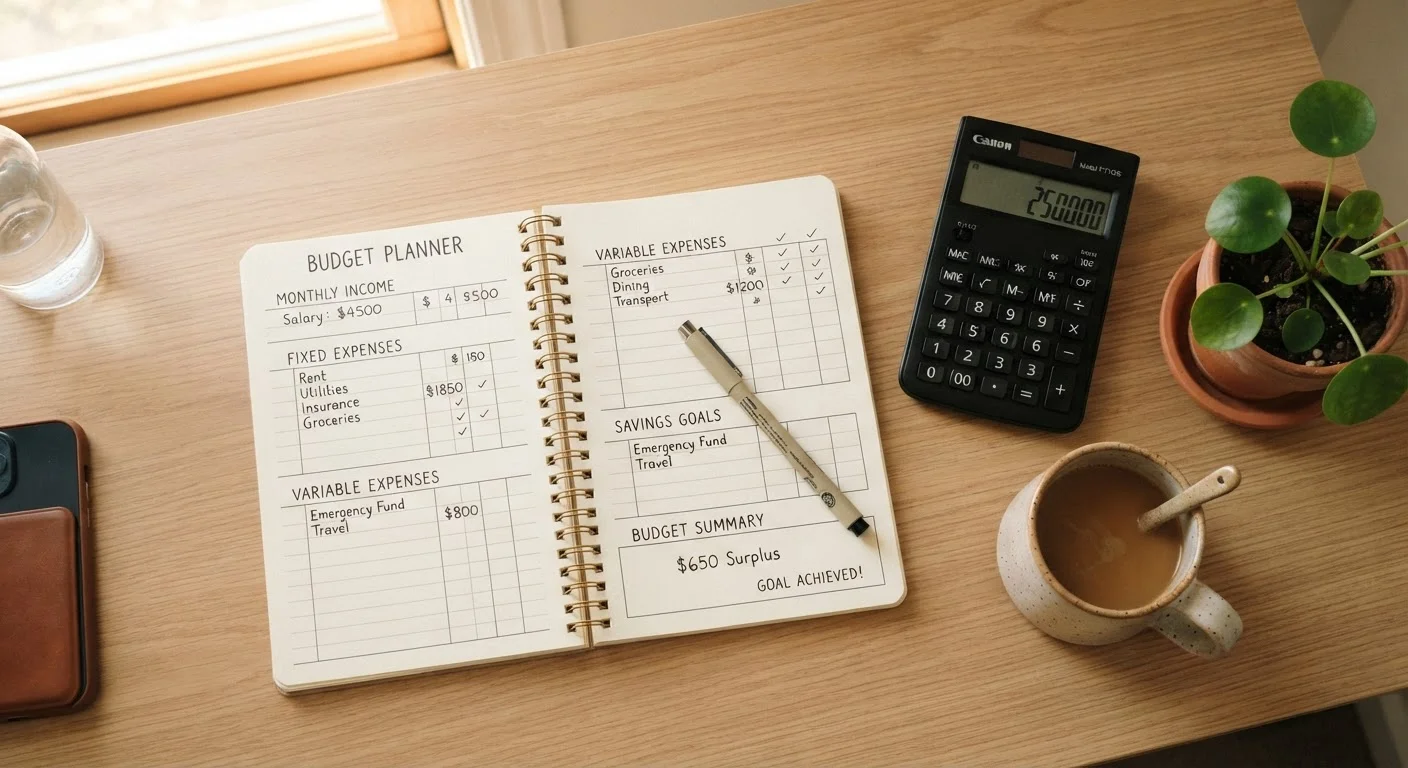
Photo: FaqExplorer.net | Informative Website editorial
Key Takeaways
- A written budget is the single most effective first step toward financial stability.
- An emergency fund of three to six months of expenses protects you from derailing debt.
- Breaking large savings goals into monthly targets makes them actionable and measurable.
- Automating savings removes willpower from the equation and builds consistency.
- Reviewing your plan regularly keeps it aligned with your actual income and priorities.
Why Personal Finance Fundamentals Matter
Managing money well is not about earning more - it is about understanding where your money goes and making deliberate choices about where it should go. Without a basic framework, even a solid income can slip away to untracked spending and missed opportunities to build stability.
Personal finance fundamentals give you visibility and control. They reduce financial stress, prepare you for unexpected costs, and create a path toward goals that matter to you - whether that is buying a home, funding education, or simply sleeping better at night. This guide covers the core building blocks: budgeting, emergency savings, and goal-setting. For a deeper dive into household spending strategies, see The Complete Guide to Household Budgeting.
Take-home pay
The amount of money you actually receive after taxes and any other deductions are subtracted from your gross paycheck.
Budget
A written plan that shows how much money you expect to earn and how you intend to spend or save it each month.
Emergency fund
A dedicated pool of savings set aside exclusively for unexpected financial emergencies, kept in an accessible account rather than invested.
Savings goal
A specific, defined target - an amount of money you aim to save by a particular date - that gives your saving a clear purpose and timeline.
Liquidity
How quickly and easily money can be accessed without penalty or loss of value; a savings account is highly liquid, while money tied up in investments may not be.
Debt repayment
The process of systematically paying back borrowed money, including any interest owed, according to a structured plan.
Building Your First Budget
A budget is simply a plan for your money - a record of what comes in and a deliberate allocation of where it goes. Start by calculating your total monthly take-home income, then list every expense you pay regularly: rent, utilities, groceries, insurance, subscriptions, and loan payments.
One widely used starting framework is the 50/30/20 rule: allocate roughly 50% of take-home pay to needs, 30% to wants, and 20% to savings and debt repayment. These percentages are a guideline, not a rule - adjust them to reflect your real circumstances. The Budgeting Basics hub offers practical strategies for tracking spending and refining these categories over time.
The goal of a first budget is not perfection. It is awareness. Even a rough estimate of your monthly cash flow tells you more than guessing.
Start With Just One Month of Expenses
Creating and Growing an Emergency Fund
An emergency fund is money kept liquid - typically in a basic savings account - reserved only for genuine financial emergencies: unexpected job loss, a medical expense, or a necessary car repair. Without one, unplanned costs often land on a credit card, creating debt that is difficult to unwind.
Most financial guidance recommends building three to six months of essential living expenses. If that figure feels overwhelming, begin with a smaller milestone such as $500 or $1,000. Once you hit it, set the next target. Progress is cumulative, and even a modest cushion meaningfully changes how you respond to financial shocks.
If you own a vehicle, unexpected repair costs are among the most common emergency-fund triggers. Our Car Ownership hub covers how to anticipate and manage those costs as part of your broader financial picture.
Setting Realistic Savings Goals for Major Milestones
Large financial goals - a home down payment, a wedding, a college fund, or retirement - become manageable when broken into monthly targets. The formula is straightforward: divide the total amount needed by the number of months until your target date.
For example, if you want to save $12,000 for a down payment in two years, you need roughly $500 per month. If your budget cannot support that, you either extend the timeline, reduce the goal amount, or find ways to increase income or cut spending - all of which are real, adjustable levers.
When planning for goals more than a decade away, factors like inflation and investment growth become relevant. Those decisions involve risk and personal circumstances that vary widely, so consulting a licensed financial adviser is worthwhile before making longer-horizon investment choices. Remember: no savings approach guarantees a specific outcome.
Watch Out for Lifestyle Inflation
Habits That Keep Your Plan on Track
A financial plan only works if it is maintained. Three habits make consistency far easier:
- Automate your savings. Schedule an automatic transfer to your savings account on payday. When the money moves before you see it, you adjust your spending to what remains rather than saving whatever is left over - which is often nothing.
- Do a monthly check-in. Spend 15 minutes each month comparing actual spending to your budget. Small overages caught early are easy to correct; ignored patterns become entrenched habits.
- Reassess when life changes. A raise, a new dependent, a move, or a change in debt level all affect what your budget should look like. Treat your plan as a living document, not a one-time exercise.
Building these habits takes time. The goal is progress over perfection - consistent, small actions compound into significant financial change over months and years.
This article is for general informational and educational purposes only and does not constitute personalized financial, investment, tax, or legal advice. For decisions specific to your circumstances, consult a qualified financial adviser or other licensed professional.
Frequently Asked Questions
The content on this site is provided for informational purposes only and should not be considered a substitute for professional advice. While we strive to provide accurate and up-to-date information, we make no guarantees regarding its completeness or accuracy. Always consult a qualified professional for advice specific to your circumstances before making any decisions.