
The 50/30/20 Rule: A Plain-Language Look at This Popular Budgeting Framework

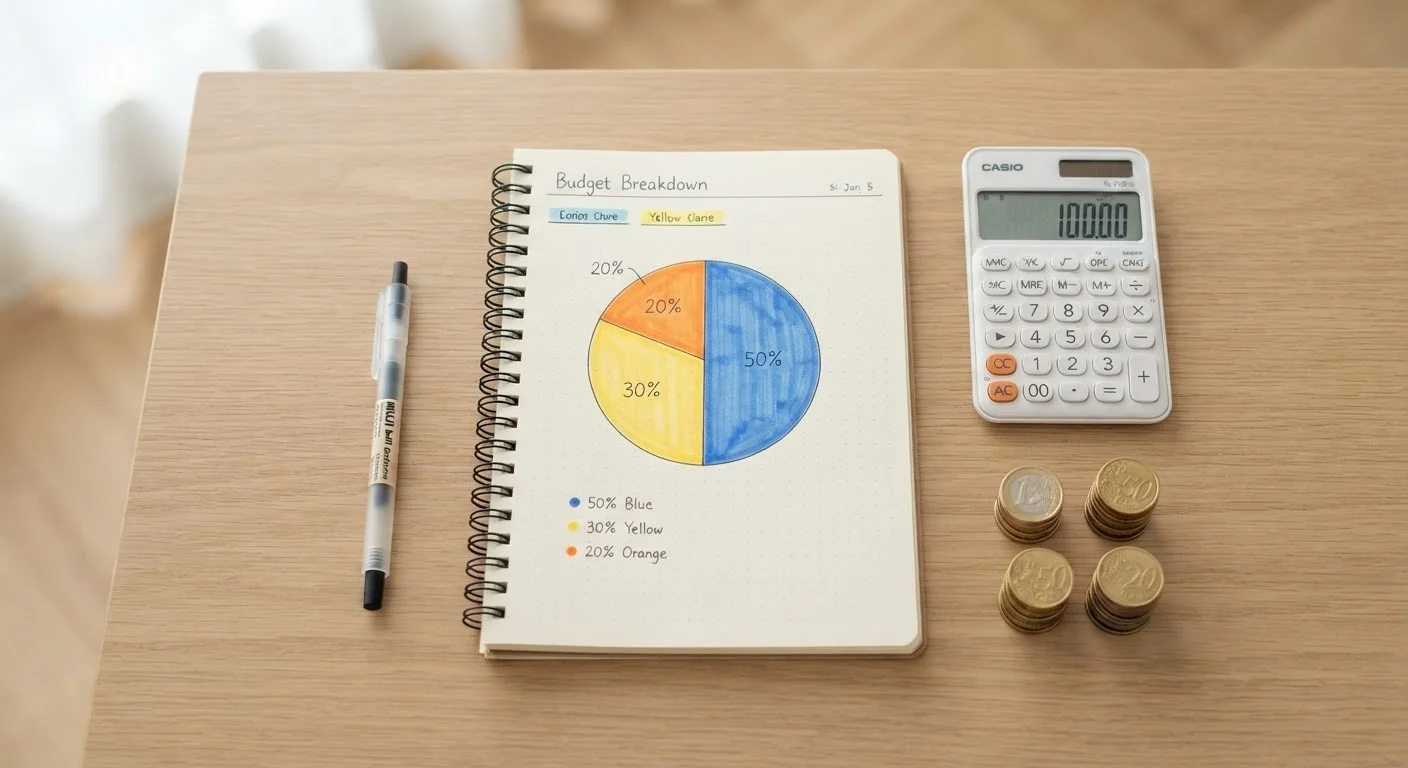
Photo: FaqExplorer.net | Informative Website editorial
Key Takeaways
- The 50/30/20 rule splits after-tax income into needs, wants, and savings or debt repayment.
- It works best as a starting framework, not a rigid prescription for every household.
- High-cost-of-living areas often make the 50% needs target difficult to achieve on average incomes.
- Saving 20% can cover both an emergency fund and longer-term goals like retirement contributions.
- The rule can be adjusted - many financial educators suggest tilting the percentages to fit your situation.
- Combining this framework with deeper tracking can help identify where budgets commonly break down.
How the Three Categories Actually Work
The simplicity of 50/30/20 is intentional. Rather than creating line-item categories for every expense, the framework groups all spending into three broad buckets applied to your monthly after-tax income.
50% - Needs
This covers expenses that are essential for basic functioning: housing costs, utilities, groceries, health insurance premiums, minimum loan payments, and essential transportation. The test is straightforward - if you stopped paying it, serious consequences would follow quickly.
30% - Wants
Wants are discretionary expenses: dining out, streaming services, gym memberships, travel, hobbies, and non-essential clothing. Many of these feel habitual, but they are optional in a financial emergency. The 30% allocation gives you meaningful room to enjoy your income without guilt.
20% - Savings and Debt Repayment
The final fifth is reserved for building financial resilience - contributions to an emergency fund, retirement accounts such as a 401(k) or IRA, and debt repayment beyond minimums. This is the bucket most directly tied to long-term financial security and reaching milestones like home ownership or a funded retirement.
34%
Americans with no emergency savings
A Bankrate survey conducted in 2024 found roughly one in three Americans had no emergency savings at all, underscoring the challenge of consistently funding the 20% savings bucket.
30%+
Renters spending over 30% on housing alone
The U.S. Census Bureau reports that nearly half of all renters are "cost-burdened," spending more than 30% of income on housing - often pushing needs beyond the 50% threshold before other essentials are counted.
~15%
Median household savings rate (pre-pandemic)
The U.S. personal savings rate averaged roughly 7-8% in pre-pandemic years, well below the 20% target, suggesting most households need to actively build toward this guideline rather than meet it automatically.
Where This Rule Works Well - and Where It Strains
For households earning a middle-range income in a moderately priced market, 50/30/20 can serve as a clear, low-friction starting point. It avoids the paralysis of hyper-detailed budgets while still directing money toward savings intentionally. It's also flexible - adjusting a percentage by five points is far easier than rewriting an entire zero-based budget from scratch.
That said, the framework has documented limitations. In cities where one-bedroom apartments routinely exceed 40% of a median paycheck, housing alone can breach the 50% needs ceiling before groceries or utilities are counted. Lower-income households may find that needs consume 60-70% of take-home pay, leaving little margin for wants or savings at the prescribed levels.
The rule also treats all debt repayment as a single category. For someone carrying high-interest credit card balances, the 20% savings allocation may need to be redirected heavily toward debt before any meaningful savings accumulation happens. This is a reasonable adaptation, not a failure of the framework. Common budgeting myths often include the idea that a budget must be followed perfectly to be useful - the 50/30/20 rule works best when treated as a directional guide rather than a pass/fail test.
Adjust the Percentages to Fit Your Reality
Using 50/30/20 to Plan for Major Life Milestones
One practical strength of this framework is that the 20% bucket scales with income. As earnings grow, the absolute dollar amount directed to savings grows proportionally - making it a reasonable engine for milestone planning over time.
For someone saving toward a home down payment, the 20% category can be split between a high-yield savings account earmarked for that goal and ongoing retirement contributions. For couples planning for a child, it creates a built-in prompt to assess whether savings room exists before expenses expand. Our article on budgeting as a couple explores how to align these priorities when two incomes and two sets of preferences are involved.
If your budget never seems to hold together month to month, it's worth examining whether one category is quietly overrunning the others. The most common reasons household budgets fail often come down to under-estimated needs or untracked wants - both of which a 50/30/20 audit can surface quickly.
This article is for general informational and educational purposes only. It is not personalized financial advice. Consult a licensed financial professional for guidance specific to your circumstances.
Frequently Asked Questions
The content on this site is provided for informational purposes only and should not be considered a substitute for professional advice. While we strive to provide accurate and up-to-date information, we make no guarantees regarding its completeness or accuracy. Always consult a qualified professional for advice specific to your circumstances before making any decisions.