
Movement for Desk Workers: Approaches for Countering a Sedentary Workday

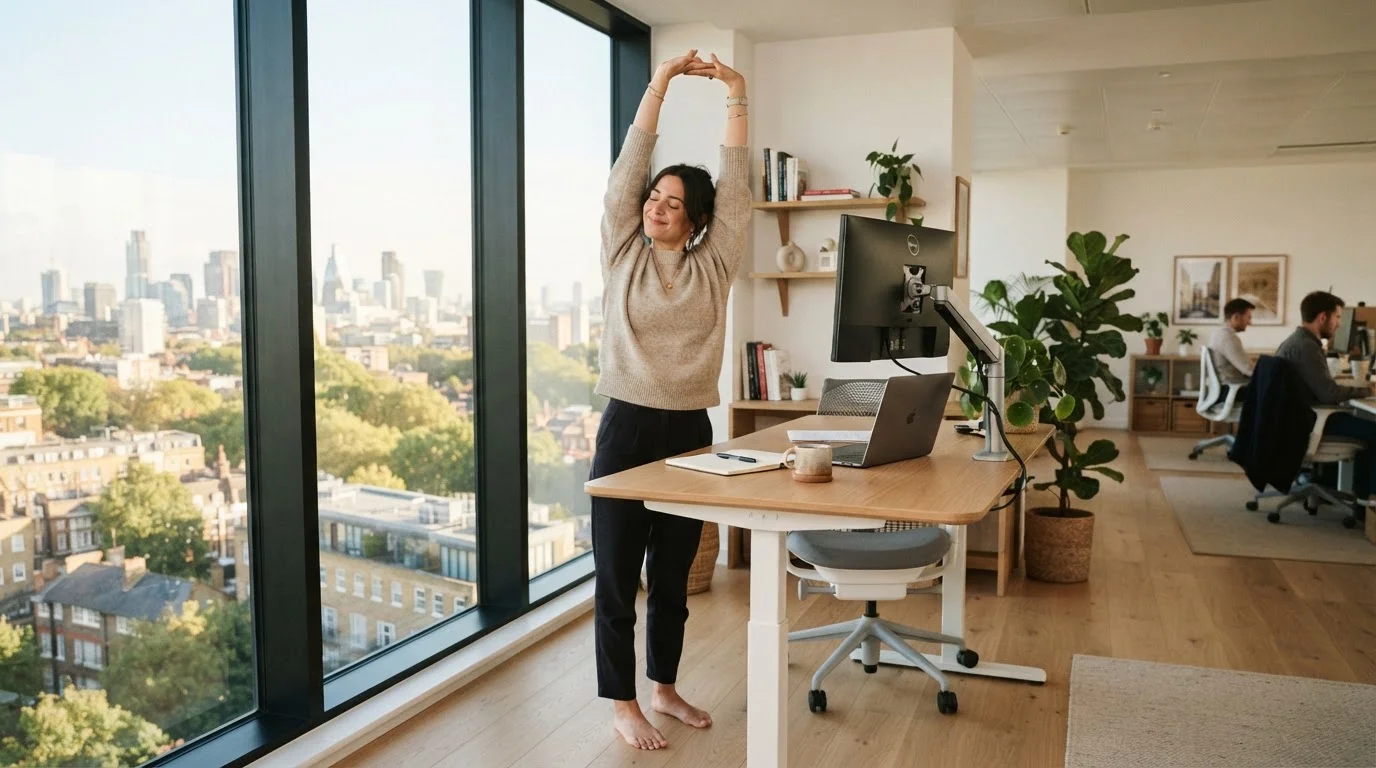
Photo: FaqExplorer.net | Informative Website editorial
Key Takeaways
- Prolonged sitting is associated with measurable health risks independent of overall physical activity levels.
- Breaking up sedentary time with brief, frequent movement is more effective than one long exercise session later.
- Simple habit cues - like timers or calendar blocks - make movement breaks easier to sustain long-term.
- Postural variation, not just step count, matters for reducing musculoskeletal strain in desk workers.
- Consult a healthcare provider before beginning any new exercise program, especially if managing a chronic condition.
Why Sitting All Day Is a Distinct Health Challenge
Research consistently shows that prolonged uninterrupted sitting carries health risks separate from whether a person exercises regularly. Metabolic markers, cardiovascular strain, and musculoskeletal tension can all be affected by extended desk time - even in people who work out after hours. This makes movement during the workday a distinct priority, not a substitute for structured exercise.
The encouraging news is that the threshold for benefit is low. Studies published in journals such as Medicine & Science in Sports & Exercise suggest that interrupting sitting every 30 minutes with even light activity - a short walk, standing, gentle stretching - can improve blood sugar regulation and reduce fatigue compared to sitting continuously for hours. You don't need a gym or a long lunch break to make a meaningful difference.
The approaches below are grounded in established exercise science and occupational health guidance. They're designed to fit realistic office schedules and require no special equipment unless you choose to add it.
Set a Movement Timer Every 30-45 Minutes
The simplest intervention is also one of the most evidence-supported: set a recurring timer and stand or walk briefly when it goes off. Phone alarms, computer reminders, or wearable device nudges all work. The goal is to interrupt unbroken sitting - not to achieve a specific step count in each break.
Even a two-minute walk to refill a water glass or a brief standing stretch counts. The regularity of the interruption matters more than its intensity.
Regularity of movement interruptions matters more than the intensity of each break.
Vary Your Posture, Not Just Your Position
Standing desks are popular, but standing all day creates its own strain - varicose veins, lower-back fatigue, and joint compression. The research-backed principle is postural variation: rotating between sitting, standing, and light movement throughout the day rather than simply substituting one static posture for another.
If a sit-stand desk is available, aim to alternate positions roughly every hour. If not, periodic chair adjustments, brief kneeling stretches, or perching on the edge of your seat can introduce enough variation to reduce sustained loading on the spine.
Rotating between sitting, standing, and moving is more effective than simply swapping one static posture for another.
Use Walking Meetings When Possible
One-on-one phone calls and informal check-ins are natural candidates for walking. A 20-minute walking meeting provides genuine cardiovascular benefit and, for many people, supports clearer thinking - consistent with research on movement and cognitive function.
This approach works best for discussions that don't require note-taking or screen sharing. Flagging the format in advance sets expectations and normalizes movement in workplace culture.
Walking meetings are a practical way to add genuine cardiovascular activity without extending your day.
Incorporate Desk-Friendly Stretches for Key Tension Zones
Desk work concentrates tension in predictable places: the neck and upper trapezius, hip flexors (shortened from sitting), and wrists and forearms (from sustained keyboard use). Targeted stretching for these areas during breaks can reduce cumulative strain.
A few examples supported by occupational physiotherapy guidance:
- Neck lateral stretch: Tilt one ear toward your shoulder and hold for 20-30 seconds per side.
- Hip flexor stretch: Step one foot forward into a shallow lunge at your desk edge, keeping your torso upright.
- Wrist extension: Extend one arm, palm up, and gently pull fingers back with the opposite hand.
None of these require a mat or dedicated space - they can be done in or immediately beside your chair.
Targeting the neck, hip flexors, and wrists addresses the tension zones most affected by extended desk work.
Build Movement Into Transition Moments
Rather than adding movement on top of an already-full schedule, anchor it to transitions already in your day. Walking to a colleague's desk instead of messaging them, taking stairs instead of elevators, or parking slightly farther away are classic examples - and they accumulate meaningfully over time.
Occupational health researchers sometimes call this incidental physical activity: movement that occurs as a byproduct of daily tasks rather than as a planned exercise session. Evidence suggests it contributes positively to daily energy expenditure and metabolic health without requiring extra schedule space.
Incidental activity - movement embedded in existing routines - accumulates into meaningful daily totals.
Strengthen the Posterior Chain to Counteract Sitting Posture
Extended sitting tends to weaken the posterior chain - the glutes, hamstrings, and lower-back muscles that support upright posture - while shortening the hip flexors and anterior muscles. This imbalance is a primary driver of the lower-back discomfort many desk workers experience.
Simple bodyweight exercises done at home or during longer breaks - glute bridges, bird-dogs, and deadbugs - can help restore this balance over time. These require no equipment and are widely recommended by physical therapists for desk workers. If you're new to these movements or have existing back pain, getting guidance from a qualified physiotherapist before starting is worthwhile.
Strengthening glutes and hamstrings helps correct the muscular imbalances that accumulate from hours of sitting.
Making the Habit Stick
Movement strategies only help if they become consistent. The biggest obstacle for desk workers isn't knowledge - it's the pull of deep focus and back-to-back meetings that make an hour disappear before you've shifted position. Pairing movement cues with existing routines (a habit sometimes called "habit stacking") significantly improves follow-through.
Try Habit Stacking for Movement Cues
For a broader framework on weaving movement into a full desk-worker schedule, see building a weekly movement habit. Combining that weekly structure with the intra-day strategies above creates a more complete picture of sustainable activity.
This article is for general informational and educational purposes only and is not a substitute for professional medical advice. If you have an existing health condition or injury, consult a qualified healthcare provider before making changes to your physical activity routine.
The content on this site is provided for informational purposes only and should not be considered a substitute for professional advice. While we strive to provide accurate and up-to-date information, we make no guarantees regarding its completeness or accuracy. Always consult a qualified professional for advice specific to your circumstances before making any decisions.