
Earnest Money, Down Payments, and Escrow: The Money You Hand Over Before Closing

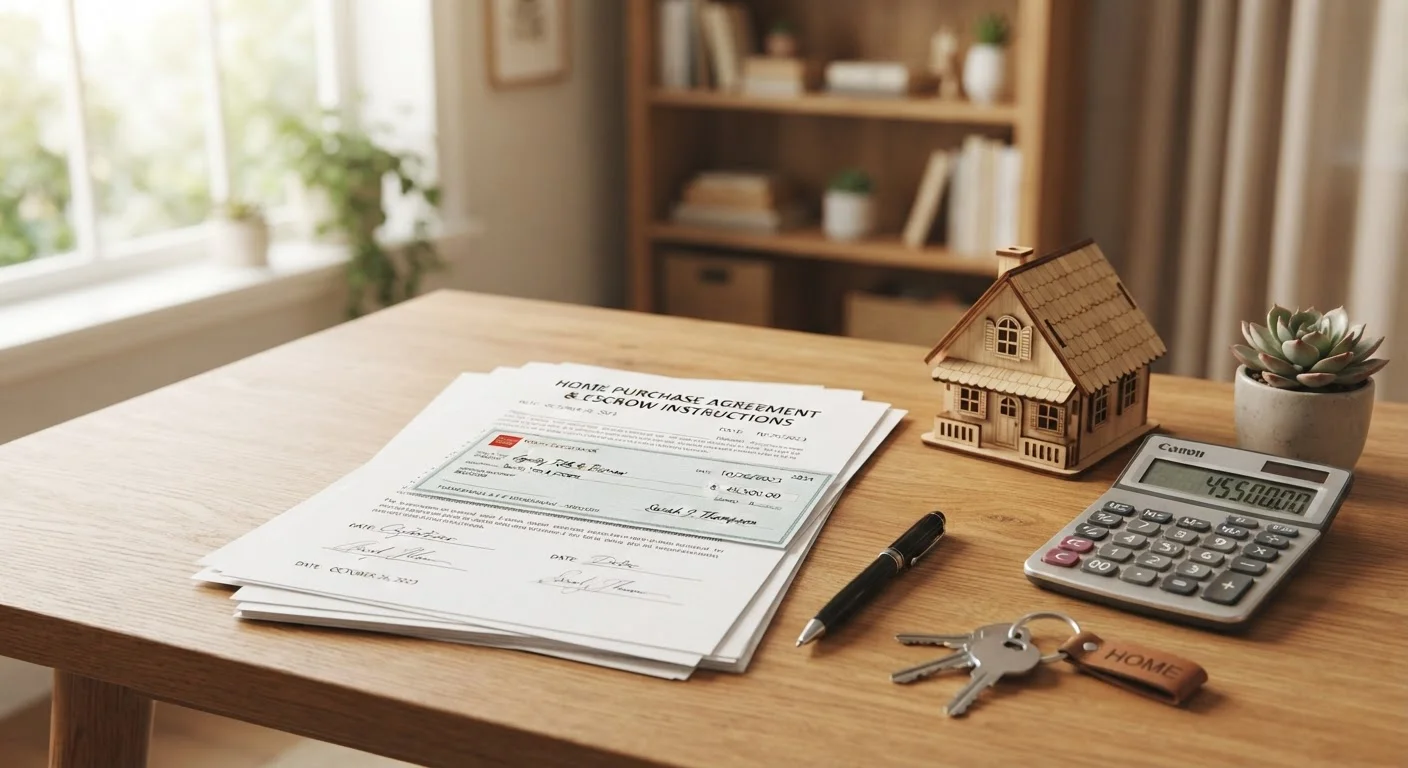
Photo: FaqExplorer.net | Informative Website editorial
Key Takeaways
- Earnest money is a good-faith deposit paid shortly after your offer is accepted, typically 1-3% of the purchase price.
- Your down payment is paid at closing and represents your initial ownership stake in the home.
- Escrow is a neutral third-party account that holds funds and documents until all contract conditions are met.
- Earnest money is usually credited toward your closing costs or down payment at settlement.
- Losing earnest money is possible if you back out for reasons not covered by your contract contingencies.
- Escrow accounts are also used after closing to collect property tax and homeowners insurance payments.
Earnest Money: Your Good-Faith Deposit
Once a seller accepts your offer, you'll usually have 24 to 72 hours to submit an earnest money deposit - a check or wire transfer that signals you're a serious buyer, not a tire-kicker. Think of it as putting skin in the game.
Earnest money amounts vary by market, but 1% to 3% of the purchase price is a common range. In highly competitive markets, buyers sometimes offer more to stand out. The funds go into a neutral escrow or trust account - not directly to the seller - and sit there until the deal closes or falls apart.
Your purchase contract will include contingencies - conditions that must be met for the sale to proceed. Common ones include a home inspection contingency, a financing contingency, and an appraisal contingency. If the deal collapses because a contingency isn't satisfied, you are generally entitled to your earnest money back. Walk away without a valid contingency, and the seller may keep it.
Protect Your Deposit With the Right Contingencies
For a fuller picture of what your agent can do to protect your interests - including negotiating contingency terms - see our article on working with a buyer's agent.
Down Payments: Your Ownership Stake at Closing
The down payment is the lump sum you contribute from your own funds at the closing table. It represents the portion of the home's purchase price you're not financing through a mortgage. If you're buying a $350,000 home with a 10% down payment, you're bringing $35,000 - and borrowing the remaining $315,000.
1-3%
Typical earnest money deposit range
Industry practice across most U.S. markets, though competitive metros may see higher deposits to strengthen offers.
3%
Minimum down payment on some conventional loans
Fannie Mae and Freddie Mac guidelines allow as little as 3% down for qualifying first-time buyers on conforming loans.
3 days
Minimum notice before closing for Closing Disclosure
Under the TRID rule (TILA-RESPA Integrated Disclosure), lenders must provide your Closing Disclosure at least three business days before settlement.
Down payment requirements depend heavily on your loan type:
- Conventional loans: As low as 3% for qualifying first-time buyers, though 20% avoids private mortgage insurance (PMI).
- FHA loans: 3.5% minimum for borrowers with a qualifying credit score.
- VA and USDA loans: No down payment required for eligible borrowers.
A common misconception is that 20% down is always required. That's not true - and home buying myths like this one can prevent qualified buyers from even attempting to enter the market. Down payment assistance programs also exist at the state and local level for income-qualifying buyers.
Your earnest money deposit is typically credited toward your down payment or closing costs at settlement, reducing the cash you need to bring on closing day.
Escrow: The Neutral Holder That Protects Everyone
Escrow is not a payment - it's a process and an account. During a home purchase, escrow refers to a neutral third-party arrangement in which a title company, escrow company, or attorney holds funds and key documents until all contractual conditions are satisfied. Neither the buyer nor the seller can access those funds unilaterally.
Once all contingencies are cleared, the lender funds the loan, the buyer brings their remaining cash, and the escrow officer disburses payments to all parties - the seller receives their proceeds, agents receive their commissions, and service providers receive their fees. The deed then transfers to the buyer.
Post-Closing Escrow Is Different
After closing, escrow continues in a different form. Most lenders require an impound account (also called an escrow account) where a portion of your monthly mortgage payment is set aside to cover property taxes and homeowners insurance when they come due. This is separate from the transaction escrow used during the purchase.
All the fees that move through escrow at closing appear on your Closing Disclosure - a standardized document your lender must provide at least three business days before closing. For a line-by-line explanation of those charges, see our guide to closing costs decoded.
How All Three Connect at the Closing Table
Here's how the timeline typically unfolds:
- Offer accepted: You wire your earnest money deposit into escrow within a few days.
- Under contract: Contingencies are worked through - inspection, appraisal, final loan approval.
- Closing day: You bring (or wire) the remainder of your down payment and closing costs. Your earnest money is credited against what you owe.
- Escrow closes: Funds are disbursed, the deed is recorded, and you receive the keys.
Understanding these three pieces before you make an offer puts you in control. You'll know exactly how much cash to have ready, what protects your deposit, and who is holding your money at every step.
This article is for general informational purposes only and does not constitute financial or legal advice. Consult a qualified real estate attorney or licensed financial professional regarding your specific situation.
Frequently Asked Questions
The content on this site is provided for informational purposes only and should not be considered a substitute for professional advice. While we strive to provide accurate and up-to-date information, we make no guarantees regarding its completeness or accuracy. Always consult a qualified professional for advice specific to your circumstances before making any decisions.