
What a Home Equity Loan Actually Does to Your Property

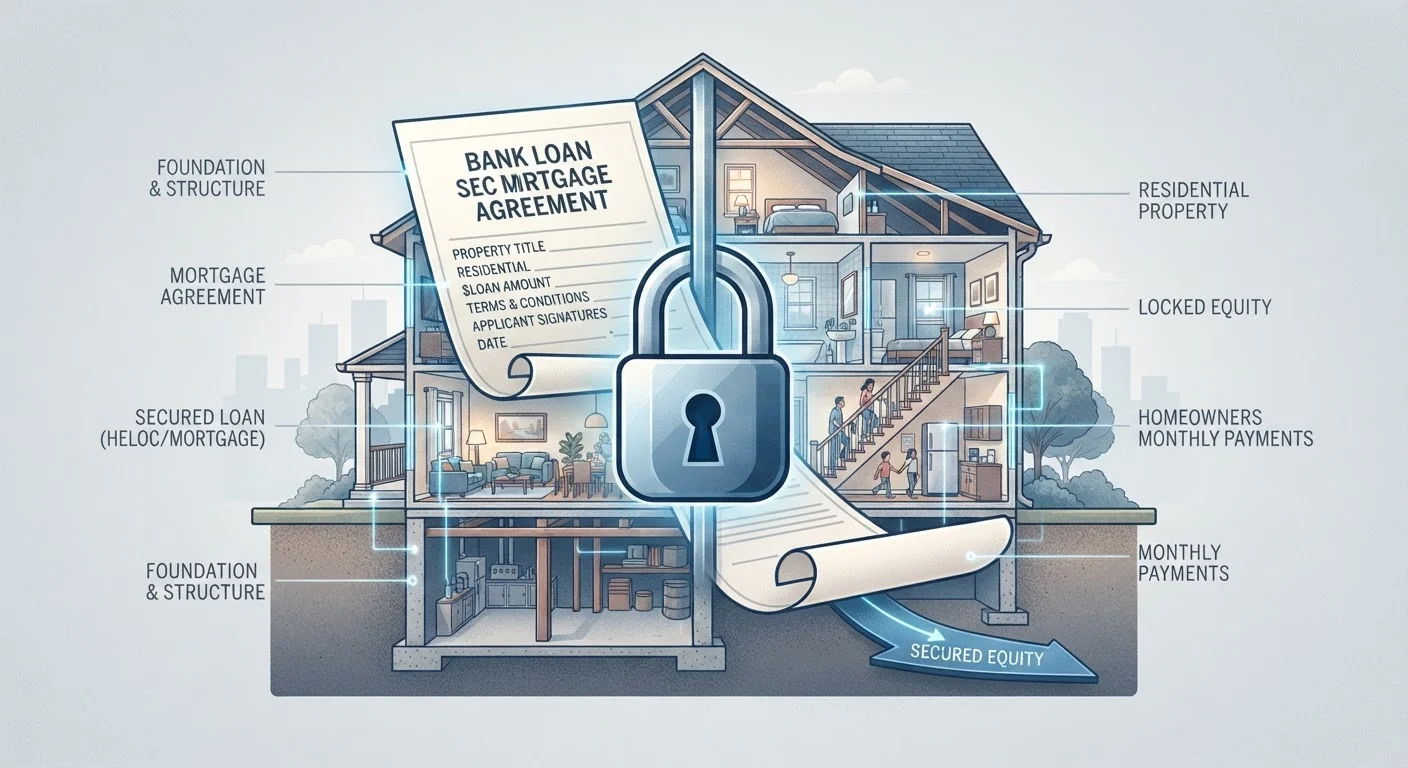
Photo: FaqExplorer.net | Informative Website editorial
Key Takeaways
- A home equity loan converts a portion of your ownership stake into cash, secured by your property.
- Defaulting on a home equity loan can trigger foreclosure, even if your primary mortgage is current.
- Interest rates are typically fixed and lower than unsecured loans because the lender has collateral.
- A new lien is placed on your title, which affects your ability to sell or refinance freely.
- Lenders generally require at least 15-20% equity remaining after the loan to protect their position.
- Consult a licensed financial professional before using your home as collateral for any borrowing decision.
How the Lien Mechanism Works
When you take out a home equity loan, your lender files a lien against your property with the county recorder's office. This lien is a legal claim that attaches to your home's title - it's not abstract. Anyone doing a title search, including future buyers or refinancing lenders, will see it immediately. Until the loan is repaid in full, you don't hold an unencumbered title to your property.
This is what separates a home equity loan from an unsecured borrowing option like a personal loan. With unsecured debt, a lender has a claim against your income and assets generally; with a home equity loan, they have a specific legal right to your property. That distinction gives lenders confidence to offer lower rates, but it transfers meaningful risk to you as the homeowner.
If you're comparing secured and unsecured borrowing strategies, the role personal loans play in a repayment plan offers a useful counterpoint to understand what you give up - and gain - with each approach.
Check Your Combined Loan-to-Value Before Applying
What Changes for Your Ownership After You Borrow
Your name still appears on the deed and you retain occupancy rights, but your equity position shrinks immediately. If your home is worth $400,000 and you owed $250,000 on your primary mortgage, you had $150,000 in equity. Borrowing $60,000 against it reduces your accessible equity to roughly $90,000 - and that figure fluctuates further with market value changes.
That erosion of equity matters in practical scenarios: if you need to sell quickly during a market downturn, you may have less cushion than you expect. If you want to refinance your primary mortgage, lenders will account for the outstanding home equity loan in their calculations. Your combined loan-to-value ratio - the total debt against your home's value - becomes a key number lenders scrutinize.
80-85%
Maximum combined loan-to-value most lenders allow
Most lenders cap total mortgage debt - including a home equity loan - at 80-85% of the home's appraised value, per standard underwriting guidelines.
15-20%
Minimum equity typically required post-loan
Lenders generally require borrowers to retain at least 15-20% equity after the home equity loan closes, acting as a buffer against market value declines.
Fixed Rate
Standard interest structure for home equity loans
Unlike HELOCs, home equity loans almost universally carry fixed interest rates, providing predictable monthly payments for the full loan term.
Your credit profile also plays a major role in determining your rate and terms. The factors lenders weigh in your credit history are especially relevant here, since home equity products are underwritten with similar rigor to first mortgages.
The Real Risk: Foreclosure Is on the Table
The most critical thing to understand is that a home equity loan, like your primary mortgage, can lead to foreclosure if you stop paying. This surprises some borrowers who assume that because it's a "second" loan, the consequences are softer. They are not. State laws vary, but in most jurisdictions a second-lien holder can initiate foreclosure proceedings independently, or the first-lien holder may do so if your overall financial situation deteriorates.
This risk profile is meaningfully different from credit card debt or a personal loan. If you default on those, lenders can pursue judgments and garnishment - serious consequences, but your home isn't immediately on the line. With a home equity loan, the collateral is your residence. That asymmetry deserves clear-eyed consideration before signing.
For those weighing this option as part of a broader strategy to manage existing obligations, understanding what debt consolidation actually does can help clarify whether converting unsecured debt to home-secured debt is the right direction.
This article is for general informational purposes only and does not constitute financial, legal, or tax advice. Consult a licensed financial professional before making decisions about borrowing against your home.
Frequently Asked Questions
The content on this site is provided for informational purposes only and should not be considered a substitute for professional advice. While we strive to provide accurate and up-to-date information, we make no guarantees regarding its completeness or accuracy. Always consult a qualified professional for advice specific to your circumstances before making any decisions.