
Robot Vacuums: What They Handle Well and Where They Fall Short

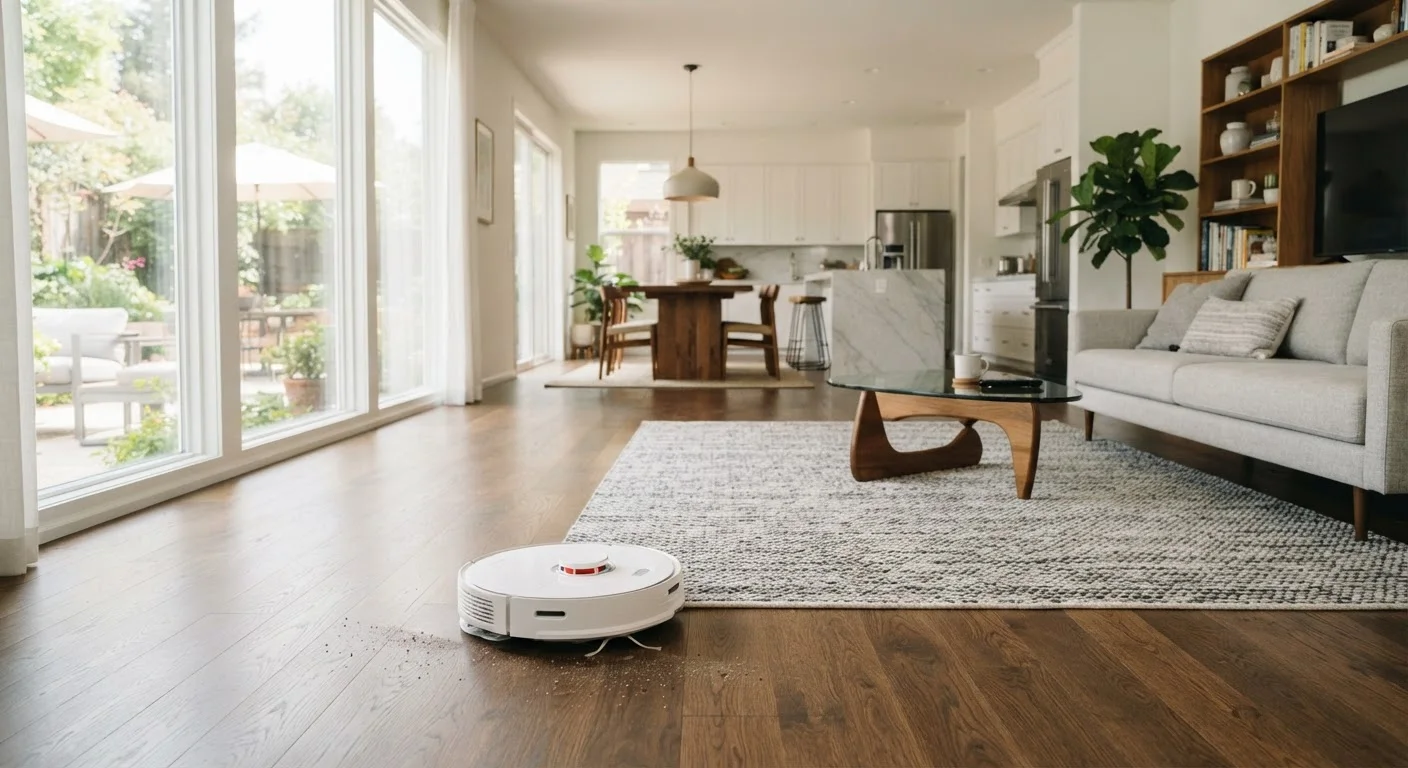
Photo: FaqExplorer.net | Informative Website editorial
Key Takeaways
- Robot vacuums excel at maintaining daily cleanliness on hard floors and low-pile carpet.
- Most models struggle with thick carpet, high thresholds, and cluttered floor layouts.
- Ongoing bin emptying and scheduled maintenance are still required from the owner.
- Navigation technology varies significantly between price tiers, affecting reliability.
- A robot vacuum supplements - but rarely replaces - a traditional upright or canister vacuum.
Automates daily floor maintenance without manual effort
Scheduled runs keep hard floors and low-pile carpet consistently cleaner between deeper cleaning sessions, reducing visible dust and pet hair accumulation.
Particularly effective for pet-hair management
Daily passes prevent pet hair from building up into mats on hard floors, which is a significant time-saver for multi-pet households.
Smarter navigation in higher-end models
LiDAR and camera-based mapping allows methodical, room-by-room coverage rather than random bouncing, improving both efficiency and floor coverage.
Can operate while owners are away from home
Scheduling via app means cleaning happens during work hours or overnight, with no active involvement required from the user during the cycle.
App-controlled no-go zones add flexibility
Most current models allow virtual boundaries to be drawn in the companion app, protecting sensitive areas like pet water bowls or home office cable setups.
Weak suction on thick or high-pile carpet
Robot vacuums generally can't replicate the deep agitation and airflow of a full-size upright on plush carpets, leaving embedded dirt behind.
Cannot navigate stairs or multiple levels unaided
Multi-story homes require the unit to be manually carried between floors, which significantly reduces the hands-free convenience for many households.
Floor clutter causes frequent stalls and tangles
Cables, socks, small toys, and pet accessories are common culprits for tangled brush bars or stuck units, requiring owner intervention mid-cycle.
Small dustbin capacity demands regular emptying
Standard dustbins fill quickly in high-debris homes. Self-emptying stations solve this but add meaningfully to the total purchase cost.
Ongoing brush and filter maintenance is required
Hair wraps around brush bars and filters clog over weeks of use; skipping this maintenance reduces suction performance noticeably and shortens component life.
Budget models often use inefficient navigation
Bounce-and-redirect navigation found in lower-cost units results in redundant passes and missed areas, reducing overall cleaning reliability.
What Robot Vacuums Actually Do Well
The core promise of a robot vacuum is routine maintenance cleaning on autopilot, and in the right environment, that promise holds up. On hardwood, tile, laminate, and low-pile carpet, most robot vacuums pick up everyday debris - crumbs, pet hair, dust, and tracked-in dirt - with reasonable effectiveness when run on a daily or near-daily schedule.
Their biggest real-world advantage is consistency. Unlike a traditional vacuum that requires intentional effort, a robot vacuum can be scheduled to run while you're at work, keeping floors visibly clean between deeper cleaning sessions. Homes with pets that shed constantly tend to see the most immediate benefit, since daily passes prevent hair from accumulating into mats.
Automates daily floor maintenance without manual effort
Scheduled runs keep hard floors and low-pile carpet consistently cleaner between deeper cleaning sessions, reducing visible dust and pet hair accumulation.
Particularly effective for pet-hair management
Daily passes prevent pet hair from building up into mats on hard floors, which is a significant time-saver for multi-pet households.
Smarter navigation in higher-end models
LiDAR and camera-based mapping allows methodical, room-by-room coverage rather than random bouncing, improving both efficiency and floor coverage.
Can operate while owners are away from home
Scheduling via app means cleaning happens during work hours or overnight, with no active involvement required from the user during the cycle.
App-controlled no-go zones add flexibility
Most current models allow virtual boundaries to be drawn in the companion app, protecting sensitive areas like pet water bowls or home office cable setups.
Newer models with LiDAR or camera-based navigation map rooms methodically rather than bouncing randomly, covering floor space more efficiently and learning to avoid recurring obstacles. Many current devices also support no-go zones set via a smartphone app, letting you protect areas like pet bowls or charging cables.
Where Robot Vacuums Consistently Fall Short
Understanding the limitations is just as important as recognizing the strengths. Robot vacuums operate in a flat, low-to-the-ground world - and anything that disrupts that environment tends to cause problems.
Weak suction on thick or high-pile carpet
Robot vacuums generally can't replicate the deep agitation and airflow of a full-size upright on plush carpets, leaving embedded dirt behind.
Cannot navigate stairs or multiple levels unaided
Multi-story homes require the unit to be manually carried between floors, which significantly reduces the hands-free convenience for many households.
Floor clutter causes frequent stalls and tangles
Cables, socks, small toys, and pet accessories are common culprits for tangled brush bars or stuck units, requiring owner intervention mid-cycle.
Small dustbin capacity demands regular emptying
Standard dustbins fill quickly in high-debris homes. Self-emptying stations solve this but add meaningfully to the total purchase cost.
Ongoing brush and filter maintenance is required
Hair wraps around brush bars and filters clog over weeks of use; skipping this maintenance reduces suction performance noticeably and shortens component life.
Budget models often use inefficient navigation
Bounce-and-redirect navigation found in lower-cost units results in redundant passes and missed areas, reducing overall cleaning reliability.
Thick or high-pile carpet is one of the most common disappointments. Most robot vacuums lack the suction power and brush agitation of a full-size upright, meaning deep-cleaning plush carpet isn't realistic. Similarly, homes with multiple levels require the robot to be manually moved between floors, negating much of the convenience.
Clutter is another persistent enemy. Charging cables, small toys, pet accessories, and loose clothing on the floor can tangle in brushes or cause the unit to get stuck mid-cycle. Owners of robot vacuums quickly learn that a small amount of daily floor-tidying is the price of automated cleaning.
Self-Emptying Bases: Convenience With a Trade-Off
The dustbin on most robot vacuums is also modest in size compared to traditional vacuums. In high-debris households, it may need emptying after a single run. Self-emptying base stations address this - but add significant cost to the overall investment.
The Maintenance Reality Most Buyers Underestimate
Robot vacuums are not truly set-and-forget devices. Owners regularly need to clean the brushes (hair wraps tightly around rotating brush bars), empty or replace filters, wipe sensors, and occasionally untangle the unit from whatever snare it found on its last run. Brush bar replacements and filters are recurring costs, and some components need attention every few weeks in active households.
This isn't a dealbreaker - it's simply the realistic operating picture. Thinking of it as a low-maintenance appliance rather than a zero-maintenance one sets the right expectations and helps buyers make smarter decisions about whether the convenience trade-off works for their lifestyle. The same mindset applies to other automation decisions, like the approach outlined in this piece on automating financial habits - automation reduces friction but doesn't eliminate the need for occasional oversight.
~30 min
Typical runtime per charge on mid-range models
Battery capacity and floor area determine how much ground a robot vacuum can cover per cycle before returning to its dock to recharge.
2-3×
Frequency of brush cleaning recommended by manufacturers
Most robot vacuum manufacturers recommend inspecting and cleaning the brush bar two to three times per week in households with pets or long hair.
Navigation quality, battery runtime, and suction power vary widely across price points. A budget model may use bump-and-redirect navigation and cover the same patch of floor repeatedly, while a mid-range model with mapping may clean methodically in under 30 minutes. Matching the technology tier to the actual floor plan is one of the most practical decisions a buyer can make.
The content on this site is provided for informational purposes only and should not be considered a substitute for professional advice. While we strive to provide accurate and up-to-date information, we make no guarantees regarding its completeness or accuracy. Always consult a qualified professional for advice specific to your circumstances before making any decisions.