
The Skin Barrier: What It Is and Why Every Skincare Decision Starts Here

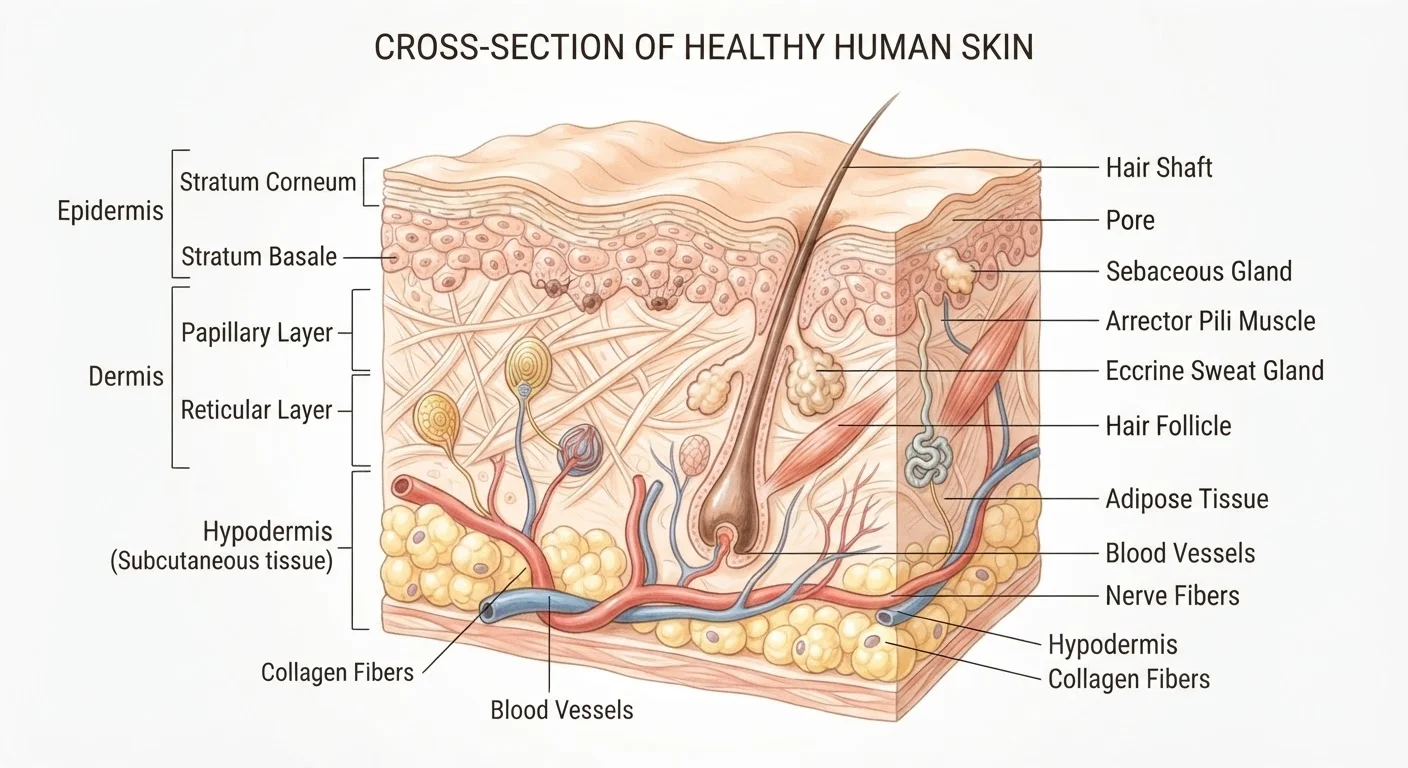
Photo: FaqExplorer.net | Informative Website editorial
Key Takeaways
- The skin barrier regulates hydration and shields skin from environmental damage every day.
- Over-cleansing, harsh actives, and UV exposure are among the most common causes of barrier damage.
- Signs of a compromised barrier include persistent dryness, redness, tightness, and increased sensitivity.
- Ceramides, fatty acids, and humectants like hyaluronic acid are ingredients that support barrier repair.
- Every product you use - from cleanser to SPF - either supports or challenges your skin barrier.
How the Skin Barrier Actually Works
Think of your skin barrier as a carefully organized brick wall. The 'bricks' are corneocytes - tough, protein-filled cells. The 'mortar' between them is a precise blend of lipids: ceramides, cholesterol, and free fatty acids. Together, they form a semi-permeable membrane that allows controlled water exchange while blocking environmental threats.
This layer also maintains the skin's acid mantle - a slightly acidic surface environment (roughly pH 4.5-5.5) that discourages harmful bacteria and supports the enzymes responsible for natural skin cell turnover. When the pH is disrupted, even beneficial processes can go wrong.
Understanding this structure clarifies why so many skincare decisions trace back to the barrier. Every product you apply either works with this system or against it. That's why building a routine from the ground up should start with barrier-friendly fundamentals, not the most potent active ingredients available.
~50%
Of stratum corneum lipids are ceramides
Research on skin lipid composition consistently identifies ceramides as the dominant lipid class in the stratum corneum, making them a primary target for barrier-repair formulations.
4.5-5.5
Healthy skin surface pH range
Studies on skin physiology show that the acid mantle's slightly acidic pH is critical for enzyme function, microbiome balance, and barrier defense; disruptions shift skin toward sensitivity and irritation.
2-3 weeks
Typical natural skin cell turnover cycle
Dermatological literature describes the skin's natural renewal process as roughly 2-3 weeks in younger adults, slowing with age, underscoring why aggressive exfoliation can outpace the barrier's ability to recover.
What Damages the Skin Barrier
Barrier damage is more common than most people realize - and many well-intentioned skincare habits are the cause. Over-cleansing with harsh, high-pH surfactants strips the lipid layer repeatedly, leaving skin exposed. Using too many exfoliating acids or retinoids without adequate recovery time accelerates cell turnover faster than the barrier can compensate.
Environmental factors compound the problem. UV radiation degrades lipids and proteins in the stratum corneum. Cold, low-humidity air draws moisture out of the skin faster than the barrier can replenish it. Air pollution deposits oxidative stressors that gradually erode the barrier's integrity.
Genetic conditions like eczema (atopic dermatitis) involve structurally impaired barriers from the outset - often due to mutations in the protein filaggrin, which is essential to corneocyte structure. For these individuals, the barrier challenge is ongoing rather than episodic. This is general educational information; anyone managing a skin condition should work with a qualified dermatologist for personal guidance.
Signs Your Barrier Needs a Reset
Rebuilding and Protecting Your Barrier
When the barrier is compromised, the most effective intervention is usually the simplest one: reduce complexity and prioritize repair. Strip your routine back to a gentle, low-pH cleanser, a barrier-supportive moisturizer, and a broad-spectrum SPF. Avoid active ingredients - retinoids, AHAs, BHAs - until the barrier has had time to recover.
Look for moisturizers that mimic the barrier's own lipid composition. Ceramides directly replenish the mortar between skin cells. Cholesterol and fatty acids round out the lipid profile. Humectants like hyaluronic acid and glycerin attract water to the skin, while occlusives like petrolatum or squalane seal that hydration in place.
Once your barrier is stable, you can reintroduce actives gradually and thoughtfully. Understanding what each product category actually does helps you evaluate whether every step in your routine is supporting or stressing the barrier. For a deeper look at specific ingredients and what research supports their use, the active ingredients glossary is a useful reference. And don't overlook daily SPF - daily UV protection is one of the most evidence-backed ways to preserve barrier integrity over time.
This article is for informational purposes only and does not constitute medical or dermatological advice. Consult a qualified healthcare professional for concerns about your skin health.
Frequently Asked Questions
The content on this site is provided for informational purposes only and should not be considered a substitute for professional advice. While we strive to provide accurate and up-to-date information, we make no guarantees regarding its completeness or accuracy. Always consult a qualified professional for advice specific to your circumstances before making any decisions.