
Decoding a Vehicle History Report

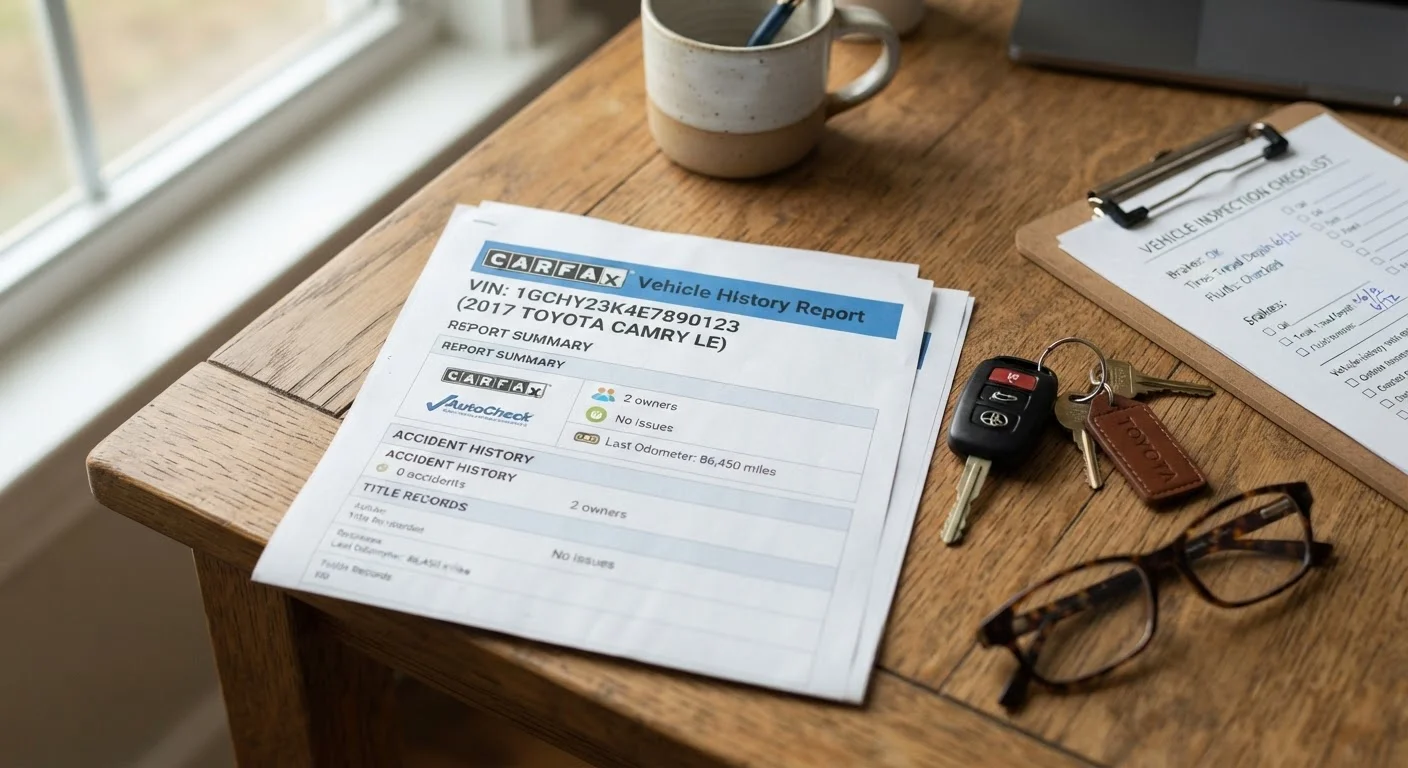
Photo: FaqExplorer.net | Informative Website editorial
What a Vehicle History Report Actually Contains
A vehicle history report aggregates data from government agencies, insurance companies, auto auctions, repair shops, and inspection stations into a single document tied to a car's VIN. Understanding what each section means - and what it can't tell you - is essential before committing to a used car purchase.
| Report Data Sources | DMV records, insurance claims, auto auctions, inspection stations, repair shops |
| Key Identifier | 17-character VIN (Vehicle Identification Number) |
| Title Brands Follow the Vehicle | Permanently, across all state transfers |
| Odometer Fraud Law | Federal Truth in Mileage Act prohibits rollbacks and requires disclosure at every sale |
| Report Limitation | Only captures disclosed/reported events - cash repairs and private incidents often go unrecorded |
| Recommended Next Step | Independent pre-purchase inspection by a qualified mechanic |
Most reports are organized around four core areas: title history, accident and damage records, odometer readings, and ownership and service history. Each section carries different weight depending on the vehicle and how you plan to use it. For a broader look at how buying used compares to buying new overall, see what the trade-offs actually look like.
Title Brands: The Flags That Matter Most
Title brands are legally recorded designations that follow a vehicle for life. They are among the most consequential items on any history report. Common brands include:
- Salvage: The insurer declared the vehicle a total loss after damage. The car has been rebuilt if it's on the market, but insurers often limit coverage on salvage-titled vehicles.
- Rebuilt/Reconstructed: A salvage vehicle that passed a state inspection after repairs. Quality of those repairs varies significantly.
- Flood/Water Damage: Water intrusion - especially above the floor level - causes long-term electrical and corrosion problems that may not surface for months.
- Lemon Law Buyback: A manufacturer repurchased the vehicle due to chronic defects. The underlying issue may or may not be resolved.
- Odometer Rollback: A recorded discrepancy between reported and actual mileage - a serious red flag and a federal offense under the Truth in Mileage Act.
VIN
Vehicle Identification Number - a unique 17-character code assigned to every motor vehicle at manufacture. It's the key that ties all history report data to a specific car.
Salvage Title
A designation applied when an insurer declares a vehicle a total loss, typically because repair costs exceed a percentage of the car's value. Salvage vehicles require inspection and re-titling before they can be legally driven.
Odometer Rollback
The illegal practice of reducing a vehicle's recorded mileage to inflate its apparent value. Federal law requires accurate odometer disclosure at every ownership transfer.
Lemon Law Buyback
A vehicle repurchased by the manufacturer under state lemon law statutes due to a defect that could not be repaired within a reasonable number of attempts. The title must reflect this history in most states.
Title Brand
A permanent, legally recorded designation on a vehicle's title that flags significant events such as flood damage, salvage status, or odometer discrepancy. Brands follow the vehicle regardless of future ownership or state transfers.
Any title brand should prompt a deeper look. A rebuilt title isn't automatically a dealbreaker, but the repair quality must be verified by a qualified mechanic before purchase.
Accident Records and Damage History
Accident entries on a history report reflect incidents reported to insurance companies or police. Minor fender-benders disclosed and professionally repaired often have little lasting impact. What raises concern is a different pattern entirely.
Watch for: multiple accident records in a short timeframe, structural or frame damage notation, airbag deployment records, or damage that aligns with major mechanical systems like the engine compartment or suspension mounting points. These scenarios increase the likelihood of lasting safety or reliability issues.
Keep in mind that a clean accident history doesn't guarantee a clean vehicle. Cash repairs, private transactions, and minor collisions often go unreported. That's exactly why a pre-purchase inspection checklist by an independent mechanic is indispensable - the report tells you what was disclosed, not everything that happened.
Odometer Readings and Ownership Gaps
Odometer fraud remains a documented problem in the used car market. A vehicle history report logs mileage readings each time they were recorded - at registration renewals, inspections, and dealer auctions. Look for a consistent upward progression. Any reading that is lower than a prior entry signals a potential rollback.
Ownership history tells a parallel story. Frequent short-term ownership can suggest repeated dissatisfaction with the vehicle. A car that bounced through three owners in two years warrants a closer look. Geography matters too - a vehicle that spent time in high-salt coastal or road-salt-heavy northern climates may carry corrosion risks that a visual inspection can confirm.
Service records, when present, are a positive signal. Regular oil changes, scheduled maintenance entries, and consistent dealer visits indicate a vehicle that was cared for. Gaps of two or more years between service entries - especially during active ownership - deserve an explanation. For questions to raise with the seller before signing, see questions worth asking before any car deal.
The content on this site is provided for informational purposes only and should not be considered a substitute for professional advice. While we strive to provide accurate and up-to-date information, we make no guarantees regarding its completeness or accuracy. Always consult a qualified professional for advice specific to your circumstances before making any decisions.