
New Car vs. Used Car: What the Trade-Offs Actually Look Like

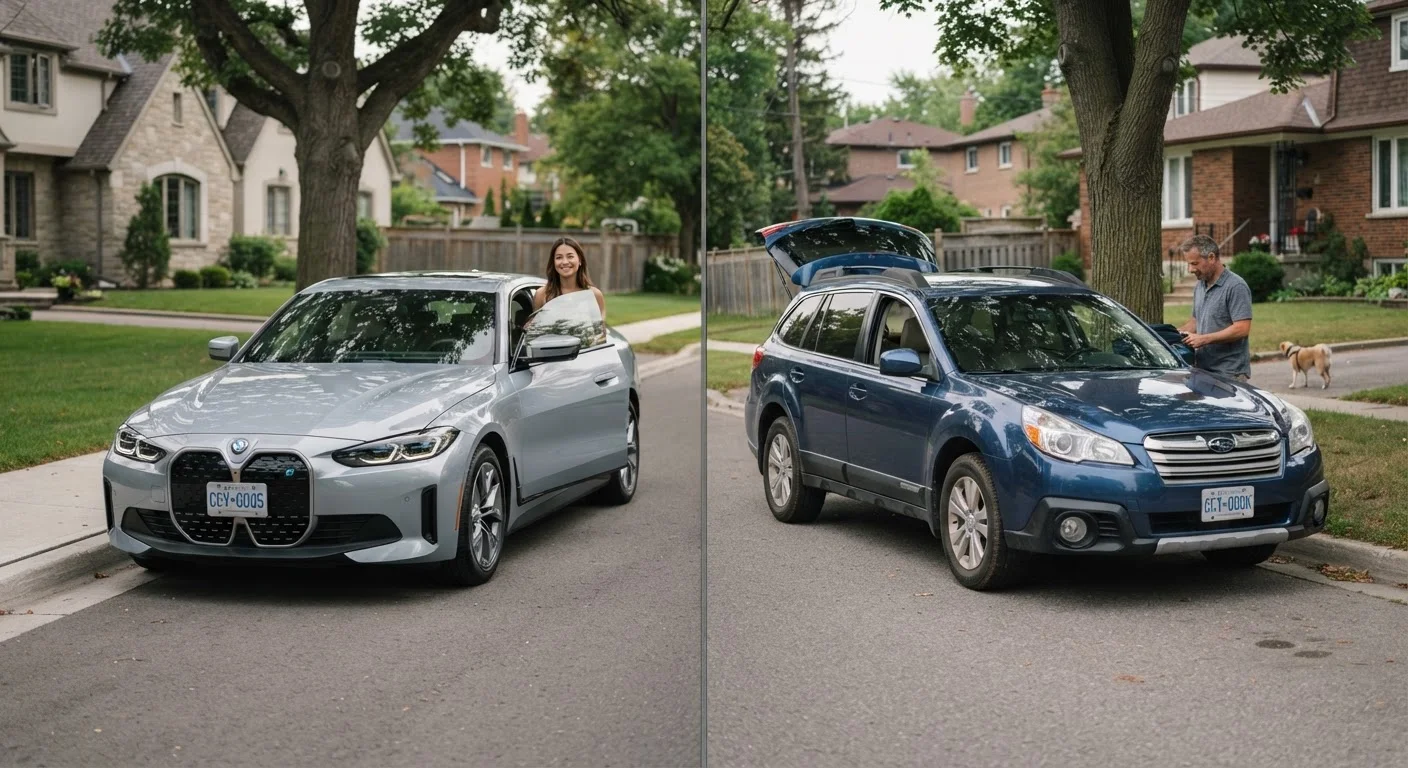
Photo: FaqExplorer.net | Informative Website editorial
Key Takeaways
- New cars typically cost more upfront but come with full manufacturer warranties and the latest safety features.
- Used cars sidestep the steepest depreciation drop, which usually happens in the first two to three years of ownership.
- Certified Pre-Owned (CPO) vehicles offer a middle path with inspections and limited warranty coverage.
- Financing rates for new cars are sometimes lower than those for used vehicles, narrowing the cost gap.
- Long-term ownership costs - including insurance, repairs, and fuel - matter as much as the sticker price.
The Depreciation Gap: Where the Real Money Goes
Depreciation is the single biggest financial factor separating new from used. A new vehicle can lose a significant portion of its value in the first year alone, with the sharpest drop typically occurring in years one through three. By the time a car reaches its third birthday, it may be worth considerably less than its original transaction price - and that loss falls entirely on the first owner.
Buying used means someone else absorbed that initial hit. A three-year-old vehicle with moderate mileage can deliver most of the practical utility of a new model at a meaningfully lower cost. That said, depreciation rates vary by make, model, and market conditions. Some vehicles hold their value far better than others, so the gap isn't uniform across all segments.
~20%
Estimated first-year depreciation for many new vehicles
Industry estimates commonly cite a 15-25% value drop in year one, though rates vary significantly by brand and model segment.
3 yrs
Period of steepest depreciation for most new cars
Automotive analysts generally identify the first three years as when a vehicle sheds the largest share of its original value.
~$5,000+
Typical price gap between new and comparable used models
The gap varies widely by segment; trucks and SUVs often show larger differences than economy sedans depending on market conditions.
For buyers considering how depreciation interacts with financing and lease structures, our comparison of buying vs. leasing lays out the cost structures in detail.
Warranty and Reliability: Managing the Unknown
New cars come with a manufacturer's warranty - typically a bumper-to-bumper coverage period and a separate powertrain warranty that extends longer. This provides a defined window of low-risk ownership where most mechanical failures are covered at no additional cost.
Used cars carry more uncertainty. Older vehicles may have no remaining factory warranty, meaning repair bills fall directly on the owner. The risk isn't evenly distributed: a well-maintained, lower-mileage used vehicle from a brand with a strong reliability record may go years without a significant repair, while a neglected or high-mileage example could generate costs quickly.
Certified Pre-Owned programs attempt to bridge this gap. CPO vehicles go through manufacturer-specified inspections and come with some form of extended warranty coverage. However, the details vary considerably - what's covered, for how long, and with what deductibles differs by brand. Our article on CPO programs breaks down what to look for.
What 'Certified Pre-Owned' Actually Means
Total Cost of Ownership: Beyond the Sticker Price
Purchase price is only one part of the equation. Insurance premiums, registration fees, fuel costs, maintenance schedules, and financing charges all shape what a vehicle actually costs over time.
New cars tend to carry higher insurance premiums because their replacement value is greater. On the financing side, manufacturer incentives occasionally make new-car loans more competitive than used-car loans - but this depends heavily on market conditions and creditworthiness, and it isn't guaranteed.
Maintenance costs follow a different arc. New vehicles typically require only routine service under warranty for the first few years, while older used cars may need more frequent attention. However, a used car with a full service history and reasonable mileage can still be an economical choice when the lower purchase price is factored in.
For ongoing ownership considerations - insurance, upkeep, and long-term management - the Car Ownership hub covers the practical side of keeping any vehicle running well. And if you're weighing what to do with a vehicle you already own, understanding how trade-in value is determined is a useful next step.
Comparing the Two Side by Side
The table below summarizes the key differences across the dimensions most buyers care about. Keep in mind that individual outcomes depend on the specific vehicle, its condition, local market pricing, and your financing situation.
| Criterion | New Car | Used Car |
|---|---|---|
| Purchase Price | Higher - full market value | Lower - reflects depreciation |
| Depreciation Hit | Absorbed by first owner | Largely avoided by buyer |
| Warranty Coverage | Full manufacturer warranty | Limited or none (CPO varies) |
| Safety Technology | Latest available features | Depends on model year |
| Insurance Cost | Typically higher premiums | Often lower premiums |
| Financing Rates | May include manufacturer incentives | Generally higher rates |
| Repair Uncertainty | Low under warranty period | Higher - varies by history |
| Customization Options | Order to spec in some cases | Limited to available inventory |
Where you buy matters too. The private seller vs. dealership comparison explores how the purchase channel affects price, paperwork, and buyer protection for used vehicles specifically.
The content on this site is provided for informational purposes only and should not be considered a substitute for professional advice. While we strive to provide accurate and up-to-date information, we make no guarantees regarding its completeness or accuracy. Always consult a qualified professional for advice specific to your circumstances before making any decisions.