
Building a Car Maintenance Schedule That Actually Works

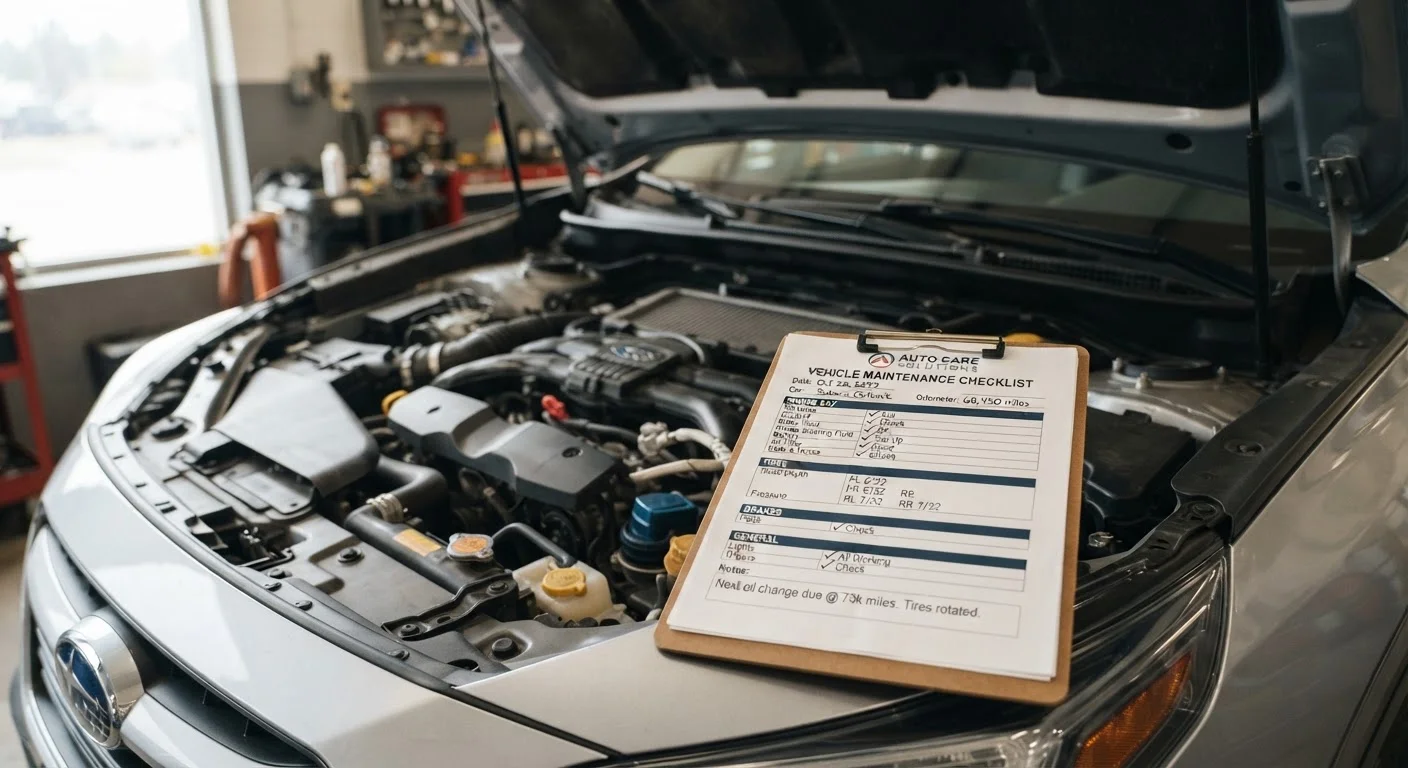
Photo: FaqExplorer.net | Informative Website editorial
Key Takeaways
- Your owner's manual is the most reliable source for vehicle-specific maintenance intervals.
- Driving conditions - not just mileage - determine how often some services are actually needed.
- A written or digital schedule reduces the chance of forgetting time-sensitive maintenance tasks.
- High-mileage vehicles often require more frequent checks than the standard factory recommendations.
- Skipping small maintenance tasks consistently tends to accelerate wear on larger, costlier components.
Why Generic Maintenance Advice Often Falls Short
A maintenance schedule isn't one-size-fits-all. Two identical vehicles driven under different conditions - one hauling a trailer in Arizona heat, one cruising suburban highways in the Pacific Northwest - will have meaningfully different service needs. Generic interval recommendations circulating online or posted at quick-lube shops are averages, and averages don't account for your specific vehicle, driving pattern, or climate.
The more useful approach is to treat maintenance as a system built around three variables: your vehicle's manufacturer specifications, your actual driving conditions, and the vehicle's current age and mileage. Ignoring any one of those variables tends to produce either over-servicing (wasted money) or under-servicing (accelerated wear). The habits that quietly degrade vehicles over time are often rooted in misaligned expectations - see our overview of common mistakes that shorten a car's lifespan for context on what to avoid.
Don't Rely Solely on Mileage Alone
Building a schedule that actually works means going back to the source: your owner's manual, your odometer, and an honest look at how you use the vehicle.
What you will need
What You'll Need Before You Start
Owner's Manual
Contains the manufacturer's specific maintenance intervals and fluid specifications for your vehicle.
Maintenance Log or App
Tracks completed services by date and mileage so you never lose your place in the schedule.
Tire Pressure Gauge
Allows you to verify tire inflation monthly as part of your routine self-inspection.
Dipstick and Clean Rag
Used to check engine oil level and condition between scheduled oil changes.
With these in hand, the process of building a realistic, personalized maintenance schedule is straightforward. The steps below walk you through it in order - from understanding your starting point to setting reminders that stick.
Pull Out Your Owner's Manual and Read the Maintenance Section
Generic advice online is a starting point, not a substitute for your manufacturer's actual specifications. Open your owner's manual to the maintenance schedule section - most manuals list two schedules: one for normal driving and one for severe conditions. Identify which category fits your regular driving patterns.
Note the intervals for the services most critical to engine longevity: oil changes, spark plugs, timing belt or chain, transmission fluid, and coolant flush. Write these down or photograph the pages for easy reference.
Assess Your Actual Driving Conditions
Honestly evaluate how and where you drive. Short daily commutes, frequent idling, dusty or unpaved roads, trailer towing, and extreme climates all count as severe conditions. A vehicle doing mostly highway miles in moderate weather genuinely experiences less stress than one doing urban stop-and-go every day.
This assessment determines whether you follow the normal or severe schedule - a difference that can mean oil changes every 7,500 miles versus every 3,000-5,000 miles, depending on the vehicle and oil type.
Record Your Vehicle's Current Status
Before building forward, establish where you are now. Note your current mileage and gather any existing service records - dealer invoices, quick-lube stickers, or repair shop receipts. If records are incomplete, a trusted mechanic can inspect the vehicle and give you a baseline assessment of what's due or overdue.
Pay particular attention to: last oil change, brake pad thickness, tire condition and age, battery age, air filter condition, and coolant level and color.
Build a 12-Month Rolling Schedule
Map out the year ahead using both mileage triggers and calendar triggers. A practical framework:
- Monthly: Tire pressure, fluid levels (oil, coolant, brake fluid, washer fluid), and a visual walk-around for lights and obvious damage.
- Every 6 months or per mileage interval: Oil and filter change, tire rotation.
- Annually: Cabin and engine air filters, battery load test, wiper blade inspection, brake inspection.
- Every 2-5 years: Coolant flush, transmission fluid, spark plugs (varies widely by vehicle), brake fluid.
Adjust every interval based on what your owner's manual specifies - these are general reference points, not universal rules.
Set Reminders and Keep a Running Log
A schedule only works if you actually follow it. Use calendar reminders on your phone set to repeat at appropriate intervals. Log every completed service - date, mileage, what was done, and by whom. This log protects you in warranty disputes, simplifies resale, and makes your next service appointment faster and more accurate.
If your vehicle is past 100,000 miles, the stakes for staying current are higher. See our guide to keeping a high-mileage car running well for the additional maintenance considerations that apply once a vehicle reaches that threshold.
Severe Driving Conditions Change Everything
Use a Maintenance Tracking App or Spreadsheet
If you plan to purchase a different vehicle and want to factor in long-term maintenance costs from the start, our car-buying resource hub covers what to consider before you sign anything.
The content on this site is provided for informational purposes only and should not be considered a substitute for professional advice. While we strive to provide accurate and up-to-date information, we make no guarantees regarding its completeness or accuracy. Always consult a qualified professional for advice specific to your circumstances before making any decisions.