
Tire Care Myths That Could Be Costing You Money

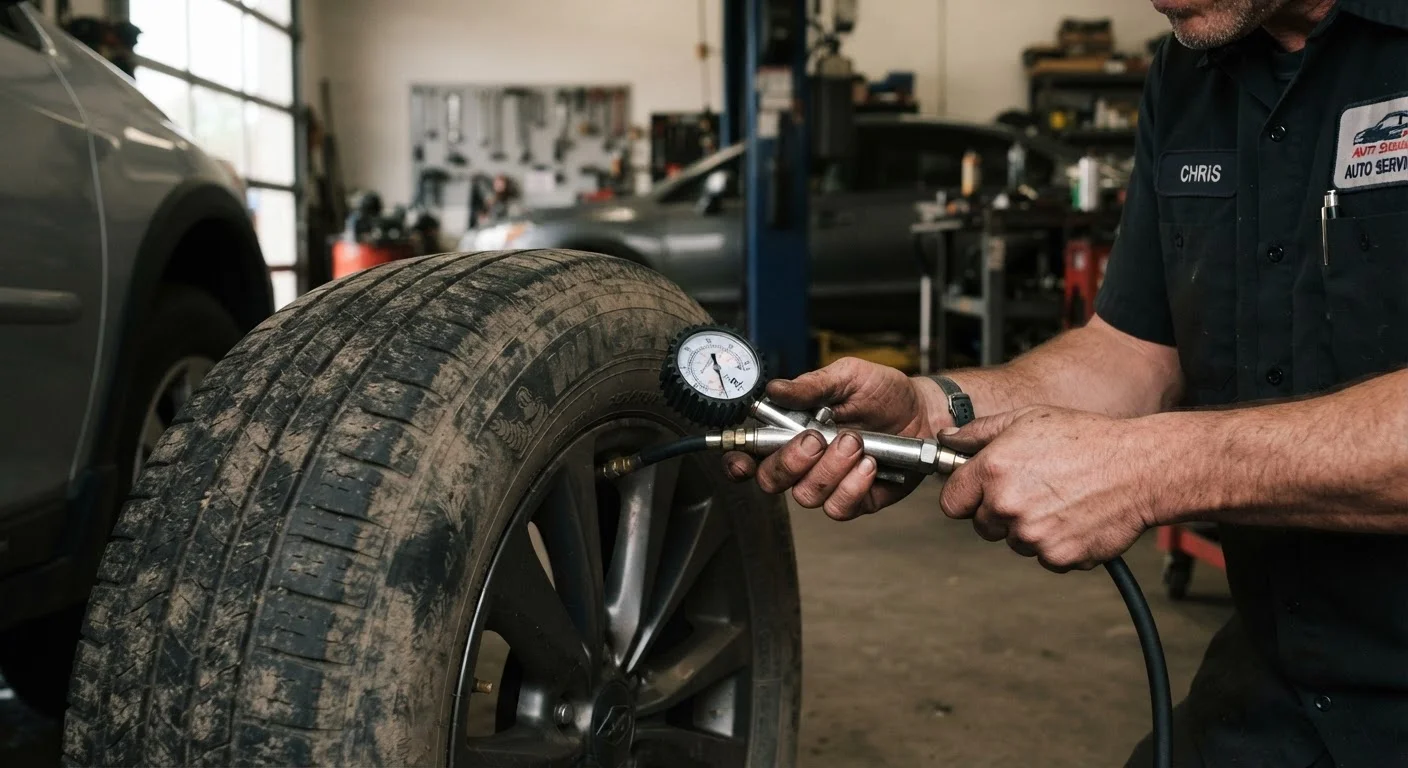
Photo: FaqExplorer.net | Informative Website editorial
Key Takeaways
- Tire pressure should be set to your vehicle's spec, not the number printed on the tire sidewall.
- The penny test is a rough guide only - tread depth gauges give far more reliable readings.
- Rotating tires every 5,000-7,500 miles prevents uneven wear that shortens tire life significantly.
- A tire that holds air after a puncture may still be structurally compromised and unsafe to keep.
- All-season tires do not perform equivalently to dedicated winter tires in severe cold or snow.
Why Tire Myths Are More Expensive Than They Look
Tires are one of the most safety-critical - and frequently misunderstood - components on any vehicle. Misinformation about how to care for them doesn't just lead to premature wear; it can quietly drain your wallet through reduced fuel economy, accelerated tire replacement costs, and preventable repair bills. Driving on incorrect tire pressure alone is estimated to reduce tread life by up to 25%, according to tire industry data.
Many of these myths feel intuitive or get passed down as garage wisdom. The problem is that some of them are decades out of date, and others were never accurate to begin with. For a broader look at how common maintenance habits can quietly degrade a vehicle, see our piece on mistakes that shorten a car's lifespan.
Myth
You should inflate your tires to the pressure listed on the tire's sidewall.
Fact
The sidewall number is the maximum pressure the tire can safely handle - not the recommended operating pressure for your vehicle.
Your vehicle's recommended tire pressure is set by the manufacturer based on vehicle weight, handling dynamics, and load ratings. It's printed on the door jamb sticker or in the owner's manual, and it's often considerably lower than the tire's maximum capacity. Over-inflating to the sidewall number reduces the tire's contact patch with the road, causing handling problems, a harsher ride, and uneven center wear that shortens tire life.
Myth
The penny test is a reliable way to know when to replace your tires.
Fact
The penny test only tells you when tires are dangerously worn - it does not indicate when performance has meaningfully degraded.
Inserting a penny into a tread groove and checking whether Lincoln's head is covered detects roughly 2/32" of remaining tread - the legal minimum in most U.S. states. However, wet-road braking performance begins to deteriorate significantly around 4/32". A quarter (which measures approximately 4/32") gives a more safety-conscious benchmark. A proper tread depth gauge, available at most auto parts retailers, provides the most accurate reading.
Myth
You only need to rotate tires when they start to look uneven.
Fact
Uneven wear is already well underway by the time it's visible - regular rotation prevents it rather than reacting to it.
Front and rear tires wear at different rates depending on drivetrain layout and steering load. On a front-wheel-drive vehicle, front tires wear considerably faster. Most manufacturers recommend rotation every 5,000 to 7,500 miles. Waiting until wear is visible means the damage to tread life has already been done, often requiring earlier replacement of the worn set.
Myth
If a tire holds air after being plugged or patched, it's safe to keep using.
Fact
Holding air confirms only that the puncture is sealed - it says nothing about structural integrity.
A puncture, particularly one near the sidewall or shoulder, can compromise the internal structure of a tire even after it's been repaired externally. Industry standards from organizations such as the Tire Industry Association specify that only punctures in the central tread area, no larger than 1/4 inch, are candidates for a proper plug-patch repair - and only after an internal inspection. Sidewall punctures are generally considered non-repairable for good reason: the sidewall flexes constantly under load, and a compromised one can fail suddenly.
Myth
All-season tires are good enough for winter driving.
Fact
All-season tires are a compromise for mild conditions - they are not engineered to match dedicated winter tires in snow, ice, or sustained cold.
All-season tires use a harder rubber compound that stiffens significantly as temperatures drop below roughly 45°F, reducing grip even on dry pavement. Dedicated winter tires use softer compounds and tread patterns specifically designed for low-temperature flexibility and snow evacuation. For drivers in regions with significant winter weather, the difference in stopping distance and handling can be substantial - and a mismatched understanding of all-season capability is a genuine safety risk.
Putting the Facts to Work
Correcting these myths doesn't require expensive equipment or professional know-how for most routine checks. A quality tire pressure gauge costs a few dollars, and your vehicle's recommended pressure is printed on a sticker inside the driver's door jamb - not on the tire itself. Make a habit of checking pressure monthly and before any long highway trip, since tires lose roughly 1 PSI for every 10°F drop in ambient temperature.
For rotation and tread wear, stick to the interval in your owner's manual - most fall between 5,000 and 7,500 miles. If you're unsure whether a puncture-repaired tire is still road-worthy, have a licensed tire technician inspect it rather than relying on whether it holds air. Structural damage to the sidewall or inner liner often isn't visible from outside.
Cold Weather Drops Tire Pressure Fast
The bottom line: consistent, myth-free tire maintenance is one of the most cost-effective things you can do as a vehicle owner. It's also directly connected to broader smart-ownership habits - just as DIY oil changes aren't always the savings they appear, cutting corners on tire care tends to cost more in the long run than the shortcuts save.
The content on this site is provided for informational purposes only and should not be considered a substitute for professional advice. While we strive to provide accurate and up-to-date information, we make no guarantees regarding its completeness or accuracy. Always consult a qualified professional for advice specific to your circumstances before making any decisions.