
The Pros and Cons of Strict Budgeting

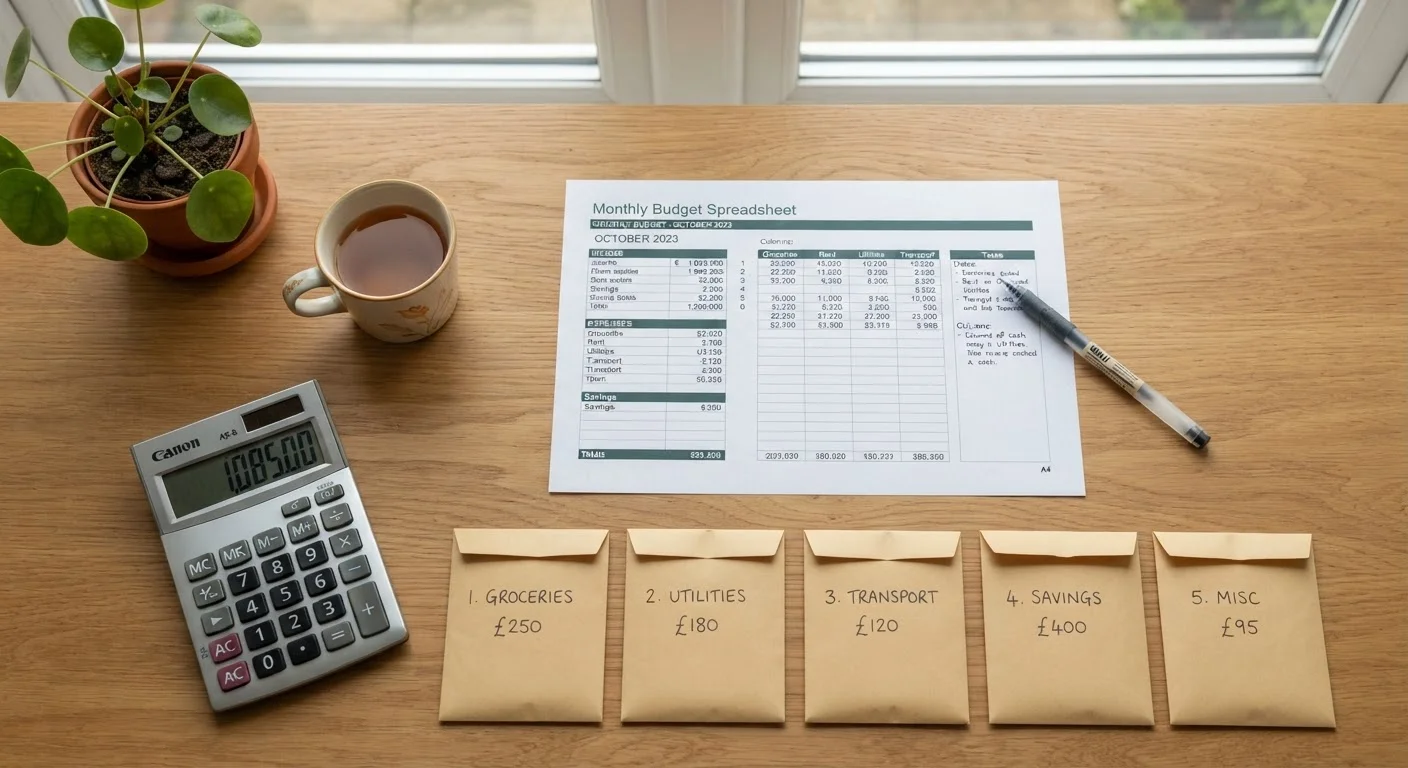
Photo: FaqExplorer.net | Informative Website editorial
Key Takeaways
- Strict budgeting builds financial discipline and makes spending patterns highly visible.
- Rigid category rules can lead to frustration and budget abandonment if life doesn't cooperate.
- The most effective budgets balance structure with enough flexibility to handle real-world surprises.
- Strict budgeting works best as a short-term tool for debt payoff or savings goals.
- Consulting a financial adviser can help tailor a budget framework to your specific situation.
Creates full visibility into spending habits
Assigning every dollar to a category forces you to confront where money actually goes, often revealing surprising patterns like subscription creep or frequent small purchases that add up quickly.
Accelerates progress toward specific financial goals
When spending is capped by category, more money reliably flows toward savings or debt repayment, making strict budgeting especially effective during intensive payoff periods.
Reduces in-the-moment spending decisions
Pre-committed limits remove the need to evaluate each purchase from scratch - if the dining-out category is empty, the decision is already made, reducing decision fatigue.
Builds long-term financial discipline
Consistently working within defined limits can reshape spending habits over time, creating a stronger baseline for financial behavior even after the strict phase ends.
Rigid categories struggle with unpredictable expenses
A single unexpected cost - a car repair, medical bill, or home maintenance issue - can blow a category entirely, making the whole budget feel broken even if overall spending is reasonable.
High maintenance burden can lead to abandonment
Tracking every dollar across every category takes consistent effort. When life gets busy, even a few missed entries can make the budget feel too far gone to bother with.
Can create feelings of deprivation and resentment
Budgets that leave no room for discretionary enjoyment can feel punishing rather than empowering, increasing the likelihood of reactive overspending as a release valve.
May cause friction in shared households
When one partner imposes or dominates the budget structure, the other may feel controlled rather than collaborative, turning the budget into a source of relationship tension.
What Is Strict Budgeting?
Strict budgeting means assigning every dollar of your income to a specific spending category - groceries, rent, transportation, entertainment - and committing to stay within each limit throughout the month. Unlike looser approaches that simply track spending after the fact, strict budgets are prescriptive: you decide in advance exactly how much goes where.
Common frameworks that lean strict include zero-based budgeting, where income minus all assigned expenses equals zero, and envelope-style systems, where you physically or digitally separate money into labeled buckets. If you want to compare these structures in more depth, see how zero-based budgeting compares to the 50/30/20 rule.
The core promise of strict budgeting is clarity: you always know how much you have left in any given category. But that clarity comes with trade-offs worth examining honestly.
The Advantages of a Strict Budget
For many people, a strict budget is the first time they truly see where their money goes. That visibility alone can be transformative.
Creates full visibility into spending habits
Assigning every dollar to a category forces you to confront where money actually goes, often revealing surprising patterns like subscription creep or frequent small purchases that add up quickly.
Accelerates progress toward specific financial goals
When spending is capped by category, more money reliably flows toward savings or debt repayment, making strict budgeting especially effective during intensive payoff periods.
Reduces in-the-moment spending decisions
Pre-committed limits remove the need to evaluate each purchase from scratch - if the dining-out category is empty, the decision is already made, reducing decision fatigue.
Builds long-term financial discipline
Consistently working within defined limits can reshape spending habits over time, creating a stronger baseline for financial behavior even after the strict phase ends.
74%
Americans without a detailed monthly budget
According to a survey by the National Foundation for Credit Counseling, the majority of U.S. adults do not follow a detailed written or digital budget each month.
~3 months
Typical time before a new budget is abandoned
Financial behavior research consistently suggests most people who start budgeting abandon the habit within the first few months, often due to rigidity rather than a lack of intent.
Strict budgets also tend to accelerate progress toward specific financial milestones. When every dollar has a job, it's harder for money to silently drift toward impulse purchases. This makes strict budgeting particularly effective during debt-repayment pushes or when building an emergency fund from scratch.
There's also a behavioral benefit: the act of pre-committing to spending limits can reduce decision fatigue. Instead of weighing every purchase in the moment, you already have a rule in place.
The Drawbacks You Should Know
Strict budgeting's greatest strength - its rigidity - is also its most common failure point. Life rarely follows a neat monthly script. An unexpected car repair, a medical co-pay, or a friend's wedding can blow a category completely, and without built-in flexibility, the whole system can feel broken.
Rigid categories struggle with unpredictable expenses
A single unexpected cost - a car repair, medical bill, or home maintenance issue - can blow a category entirely, making the whole budget feel broken even if overall spending is reasonable.
High maintenance burden can lead to abandonment
Tracking every dollar across every category takes consistent effort. When life gets busy, even a few missed entries can make the budget feel too far gone to bother with.
Can create feelings of deprivation and resentment
Budgets that leave no room for discretionary enjoyment can feel punishing rather than empowering, increasing the likelihood of reactive overspending as a release valve.
May cause friction in shared households
When one partner imposes or dominates the budget structure, the other may feel controlled rather than collaborative, turning the budget into a source of relationship tension.
Budget burnout is a real phenomenon. When people feel they can never spend freely or that one misstep invalidates the whole plan, they often abandon budgeting altogether. This is one of the predictable patterns explored in why budgets rarely survive the full month.
Strict budgets can also create tension in shared households. When one partner feels micromanaged or unheard in how money is allocated, the budget becomes a source of conflict rather than a shared tool. Budgeting as a couple requires approaches that keep both partners genuinely engaged.
Making Strict Budgeting Work in Practice
The goal isn't to choose between discipline and flexibility - it's to design a budget that delivers both. A few practical adjustments can make a strict framework far more sustainable:
- Build a buffer category. Include a small "miscellaneous" or "buffer" line item - even $50 to $100 per month - to absorb minor surprises without derailing other categories.
- Review and adjust monthly. A budget should be a living document. Recalibrate category amounts based on what actually happened last month, not what you hoped would happen.
- Use the right tools. Whether you prefer a spreadsheet or an app, the tracking method should reduce friction, not add it. Spreadsheets and budgeting apps each have real trade-offs worth weighing before you commit.
- Treat it as a phase, not a lifestyle. Strict budgeting is often most valuable as an intensive short-term strategy during financial recovery or goal-focused saving, not necessarily a permanent state.
When to Consider a Less Strict Approach
This article is for general informational purposes only and does not constitute personalized financial advice. For guidance specific to your financial situation, consult a licensed financial adviser.
The content on this site is provided for informational purposes only and should not be considered a substitute for professional advice. While we strive to provide accurate and up-to-date information, we make no guarantees regarding its completeness or accuracy. Always consult a qualified professional for advice specific to your circumstances before making any decisions.