
Zero-Based Budgeting: Giving Every Dollar a Job

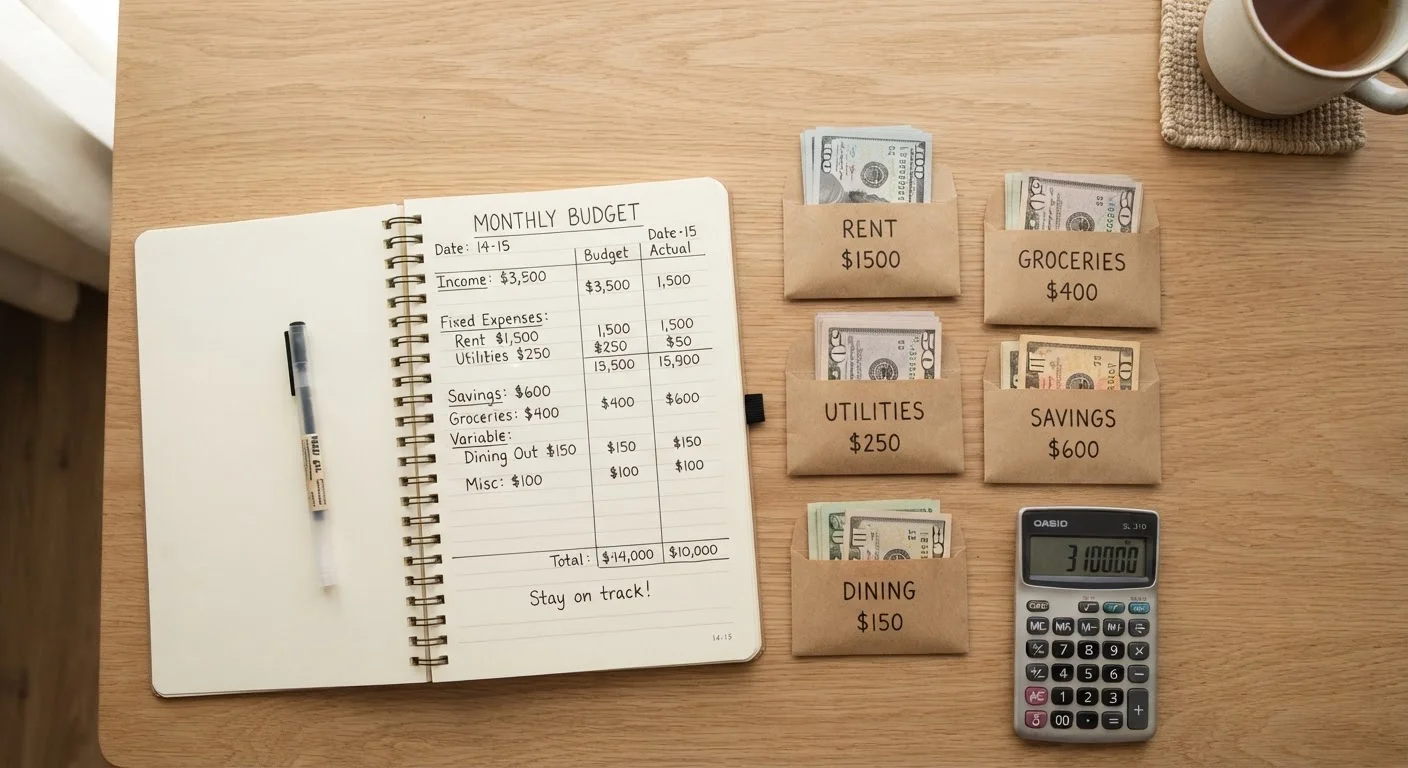
Photo: FaqExplorer.net | Informative Website editorial
Key Takeaways
- Every dollar of income gets a named category before the month starts - including savings.
- A zero-based budget balances to zero, not because all money is spent, but because all money has a plan.
- The method requires more active tracking than percentage-based approaches.
- It is particularly effective for people with variable expenses or those trying to eliminate debt.
- Digital apps and spreadsheets have made the method accessible without pen-and-paper math.
How Zero-Based Budgeting Works
The mechanics are straightforward: start with your total monthly take-home income, then list every category of spending - rent, groceries, utilities, transportation, subscriptions, debt payments, and savings - and assign a dollar amount to each. Keep adjusting until the sum of all categories equals your income exactly. That balance point is the "zero" in zero-based budgeting.
Unlike approaches that rely on rough percentages, this method forces you to confront every line item. If you earn $3,800 a month, every single one of those dollars needs a named destination before you spend the first one. Categories are not limited to expenses: a $200 contribution to your emergency fund is just as valid an assignment as a $200 electricity bill.
If you are new to building a budget from the ground up, our guide on building your first monthly budget from scratch covers the foundational steps in detail.
65%
Americans living paycheck to paycheck
According to surveys conducted by LendingClub and PYMNTS, roughly 65% of U.S. consumers reported living paycheck to paycheck in recent years, underscoring the need for intentional spending plans.
$1,000
Typical monthly untracked 'discretionary' spending
The U.S. Bureau of Labor Statistics Consumer Expenditure Survey consistently finds that a large share of household spending falls into categories many consumers do not actively monitor or plan for.
Why the Method Works
Most people operate with a vague sense of their spending rather than a precise map. Money leaks into subscriptions, impulse purchases, and convenience spending without conscious decision-making. Zero-based budgeting closes those leaks by making passivity impossible - every dollar either has a job or you actively choose to give it one.
The practice also builds awareness over time. When you sit down each month and justify every category, you naturally notice where your values and your spending diverge. That insight is often more motivating than any savings rule, because it is personal and specific rather than generic.
“A budget is telling your money where to go instead of wondering where it went.”
— John C. Maxwell, Leadership author and speaker, widely cited in personal finance literature
Research in behavioral economics consistently shows that people who actively plan their spending - regardless of the specific method - tend to save more and carry less high-interest debt than those who track after the fact. Zero-based budgeting is one of the more structured ways to implement that planning discipline.
Who Benefits Most - and Where It Gets Hard
This method shines for people with a clear goal: eliminating credit card debt, saving for a down payment, or gaining control after a period of financial drift. The specificity that makes it powerful also makes it demanding. You need to revisit the budget regularly and reconcile actual spending against your plan - at minimum once a week.
People with irregular income - freelancers, gig workers, or those with commission-based pay - can still use the method, but they need a consistent baseline to plan from. A practical approach is to budget using your lowest expected monthly income and treat any surplus as a separate decision when it arrives.
It is also worth knowing that zero-based budgeting is not the only framework worth considering. If the level of detail feels unsustainable for your lifestyle, a broader approach like the envelope method or a percentage-based rule may fit better. Our article on envelope budgeting in a digital world explores a close cousin of this method that some people find easier to maintain.
Getting Started: Practical First Steps
Begin by calculating your actual monthly take-home income - what lands in your bank account after taxes and deductions. If income varies, use a conservative estimate. Next, list your fixed expenses: rent or mortgage, loan payments, insurance premiums. These are non-negotiable and go in first.
Then list variable expenses - groceries, dining, fuel, entertainment - using recent bank or card statements as a reality check rather than guessing. Finally, add savings goals and any irregular expenses you anticipate, like car registration or a dental visit, spread across the months you expect them.
Adjust until the total equals zero. In your first month, you will likely need to revise several categories. That revision process is the point: it surfaces trade-offs you were previously making unconsciously.
For a broader look at how this fits within a complete household financial plan, see The Complete Guide to Household Budgeting. And if you have heard that budgeting is too restrictive or only necessary when money is tight, the truth behind common budgeting myths addresses those concerns directly.
This article is for general informational and educational purposes only and does not constitute personalized financial advice. Consider consulting a qualified financial professional for guidance specific to your situation.
Frequently Asked Questions
The content on this site is provided for informational purposes only and should not be considered a substitute for professional advice. While we strive to provide accurate and up-to-date information, we make no guarantees regarding its completeness or accuracy. Always consult a qualified professional for advice specific to your circumstances before making any decisions.