
Envelope Budgeting in a Digital World

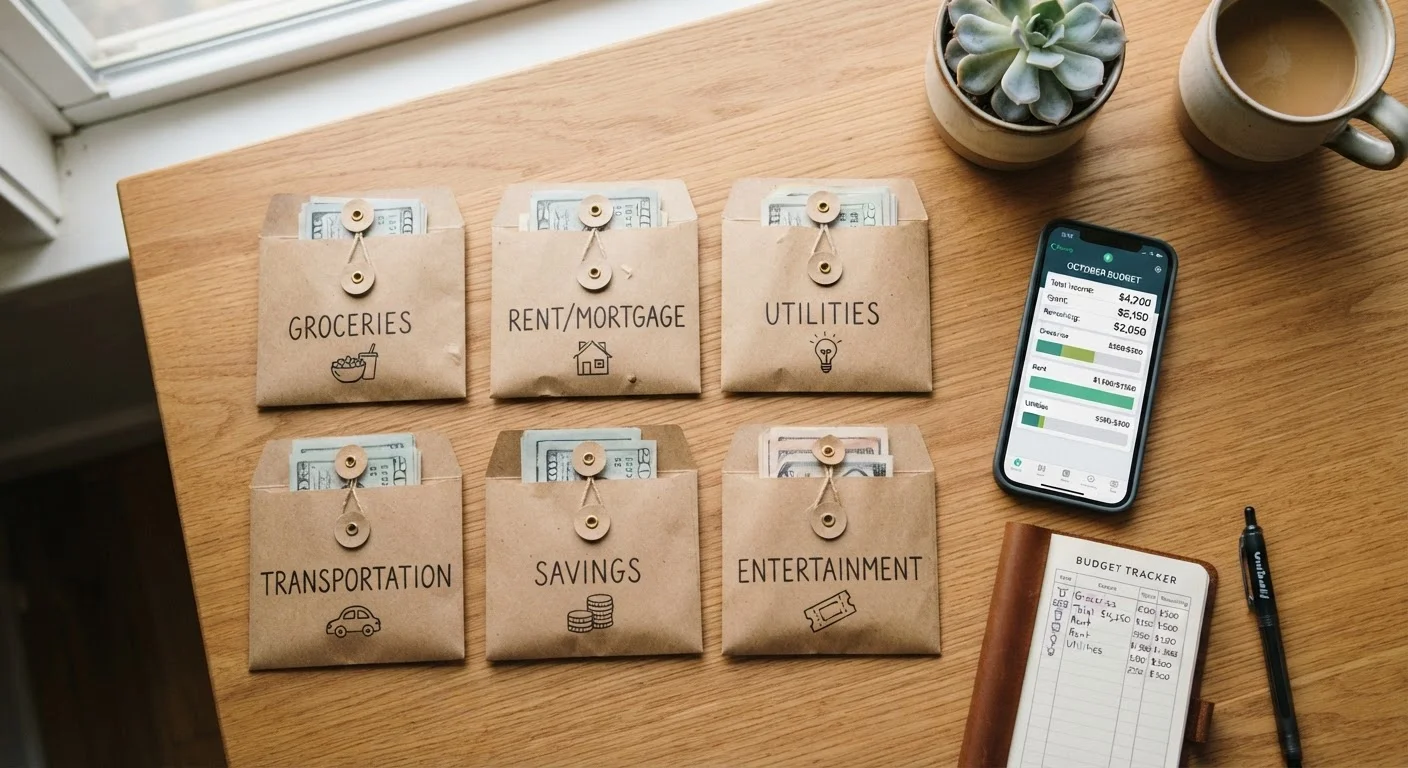
Photo: FaqExplorer.net | Informative Website editorial
Key Takeaways
- Envelope budgeting works by assigning a fixed dollar amount to each spending category before the month begins.
- The system's power comes from making spending limits tangible, whether you use cash or a digital equivalent.
- Digital tools can replicate the envelope method without requiring you to carry physical cash.
- The method pairs well with a spending audit to identify which categories actually need a limit.
- Envelope budgeting is most effective for variable expenses like groceries, dining, and entertainment.
Where the Envelope Method Comes From
Envelope budgeting predates personal finance apps by decades. The method became widely popular in the mid-twentieth century when most American households operated primarily on cash. The logic was simple: put this week's grocery money in one envelope, the utility fund in another, and the moment an envelope was empty, that category was closed for the period.
The system stuck around because it works on a fundamental psychological level. Cash feels real in a way that a debit card swipe does not. When you hand over the last bills from your grocery envelope, the transaction registers differently than tapping a card against a reader. That tactile friction is the whole point.
Today, fewer Americans rely on cash for daily purchases. But the envelope method's underlying architecture - pre-allocating dollars to categories before spending begins - remains as effective as ever. It just looks different. If you're new to structured budgeting generally, building your first monthly budget is a useful place to start before layering in an envelope system.
How the Core Mechanic Actually Works
The method has three steps, regardless of whether you use paper envelopes or a digital equivalent:
- Identify your variable spending categories. Fixed expenses like rent, insurance, and loan payments don't need envelopes - their amounts are set. Envelopes are most useful for categories that fluctuate: groceries, dining out, gas, entertainment, clothing, personal care.
- Assign a dollar amount to each category. This is your ceiling for the month. Base it on past spending - a spending audit can reveal what you're actually spending versus what you assume.
- Stop spending when the envelope is empty. If you exhaust your dining envelope mid-month, you either cook at home or deliberately move money from another category. Every decision becomes explicit.
The system doesn't require a perfect budget from day one. Most people adjust their category amounts after a month or two once they see where real-life spending lands.
Start With Just Three or Four Envelopes
Translating Envelopes into Digital Practice
For card-based spenders, several approaches replicate the envelope effect without cash:
- Separate savings sub-accounts: Some banks allow you to create named sub-accounts within a single checking account. Funding each sub-account at the start of the month mirrors putting cash into envelopes.
- Budgeting apps with category tracking: A number of apps are built explicitly around the envelope concept, letting you create digital categories, fund them at the start of each month, and track spending against each allocation in real time. For a broader comparison of tools, see spreadsheet budgets vs. budgeting apps.
- Manual tracking in a spreadsheet: A simple table with category columns, a starting balance row, and running totals accomplishes the same thing with zero app dependency.
None of these approaches is inherently superior. The right choice is whichever format you'll actually maintain consistently. The envelope method fails only when the tracking stops.
Digital Doesn't Mean Automatic
Envelope Budgeting vs. Other Frameworks
Envelope budgeting is a spending-control method, not a complete financial plan. It tells you where a fixed pool of money goes but doesn't, on its own, address savings goals, debt repayment, or long-term planning - those require additional structure.
Compared to the 50/30/20 rule, which divides income into broad buckets (needs, wants, savings), envelope budgeting operates at a more granular level. The two can work together: use 50/30/20 to allocate your income at a high level, then use envelopes to manage the detail within your 'wants' category.
Zero-based budgeting shares the most DNA with envelope budgeting - both methods require intentional pre-allocation of every dollar before the month begins. Many people describe envelope budgeting as a practical implementation of zero-based principles. Understanding common budgeting myths can also help you approach any system with realistic expectations.
This article provides general financial education and is not personalized financial advice. Consider consulting a qualified financial professional for guidance tailored to your situation.
Frequently Asked Questions
The content on this site is provided for informational purposes only and should not be considered a substitute for professional advice. While we strive to provide accurate and up-to-date information, we make no guarantees regarding its completeness or accuracy. Always consult a qualified professional for advice specific to your circumstances before making any decisions.