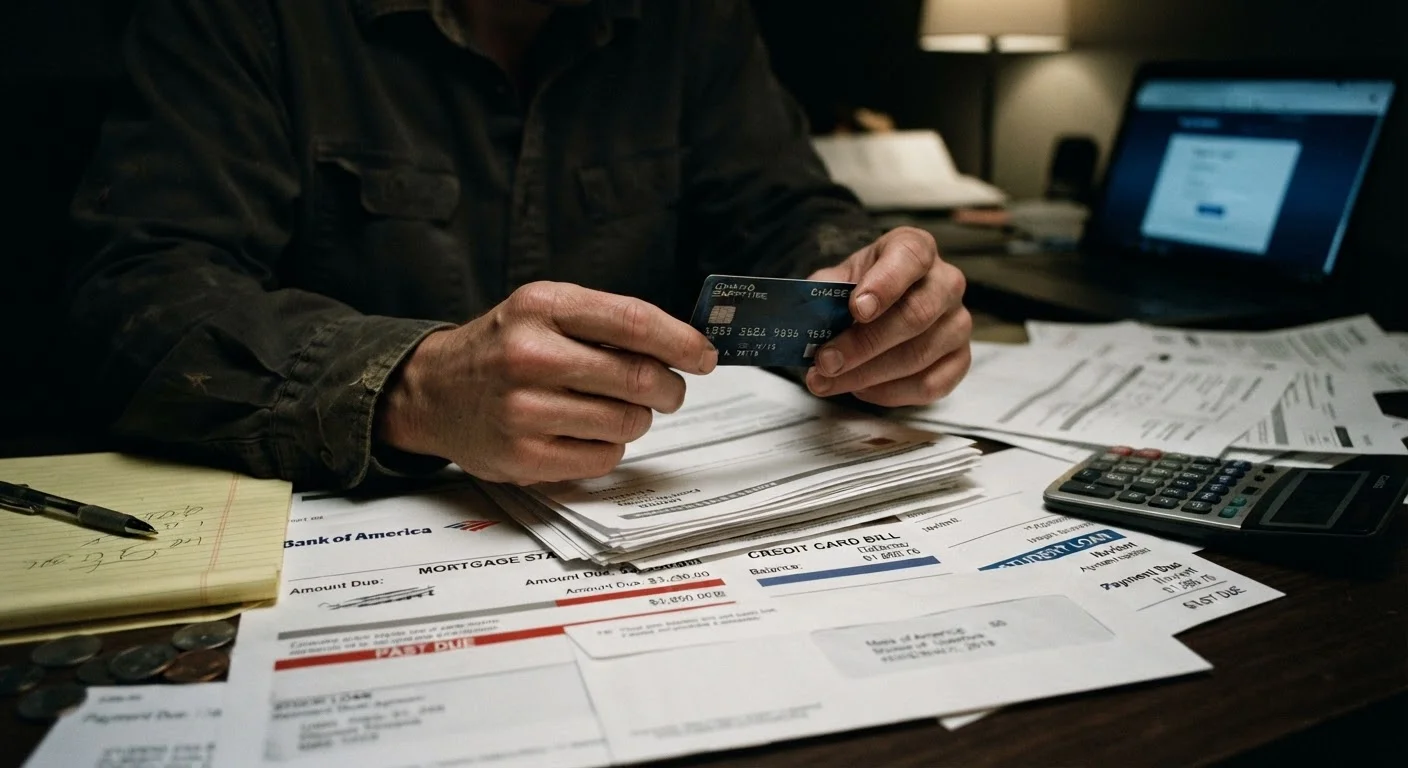
Minimum payments, deferred interest, and loan rollovers are among the common patterns that quietly deepen debt. Here's how each one works.
Why Debt Traps Are Built Into Normal Products
Most borrowing traps aren't exotic schemes - they're features baked into mainstream financial products that are entirely legal and widely used. The problem isn't that the products are fraudulent; it's that the structures are optimized for the lender's revenue, not the borrower's repayment speed. Understanding the mechanics of each pattern is the most reliable protection.
The mistakes below represent the most common ways borrowers inadvertently make debt harder to pay off. Each one has a logical-sounding justification in the moment - and each one carries costs that compound quietly until they become difficult to reverse.
1
Making only the minimum payment on a revolving credit card balance each month.
Why it happens: Minimum payments are marketed as flexibility, and the monthly dollar amount feels manageable - so many cardholders treat it as the intended payment rather than a floor.
How to avoid: Always pay more than the minimum, even modestly. Use your card issuer's online calculator or a debt payoff tool to see exactly how much interest accumulates under minimum-only payments versus a fixed higher amount. Targeting the highest-rate balance first - the debt avalanche method - reduces total interest over time.
2
Misunderstanding deferred interest promotions on retail or medical financing.
Why it happens: Offers like '0% interest for 18 months' sound identical to true 0% APR deals, but deferred interest means the interest is accruing in the background - it's just waived if the balance hits zero before the deadline.
How to avoid: Read the fine print carefully before accepting any promotional financing. Divide the full balance by the number of months in the promotional window and pay at least that amount every month. If you cannot realistically clear the balance in time, evaluate whether the purchase makes sense at all, or seek an alternative financing option.
3
Rolling over a payday loan or short-term high-fee loan instead of repaying it in full.
Why it happens: When the due date arrives and the full repayment isn't affordable, rolling over feels like the only option. Borrowers often don't calculate how quickly fees compound across multiple rollovers.
How to avoid: Before taking any short-term loan, map out the total repayment cost including all fees across potential rollovers. If you cannot comfortably repay in full on the original due date, consider alternatives such as a payment plan with the creditor, a nonprofit credit counseling session, or a lower-cost personal loan if you qualify.
4
Using credit card cash advances as a routine cash source.
Why it happens: Cash advances are physically easy - just use the card at an ATM - so it's tempting to treat them like a debit withdrawal. Most people don't realize cash advances carry a separate, higher APR and begin accruing interest immediately with no grace period.
How to avoid: Reserve cash advances strictly for genuine emergencies when no other option exists. Build even a small emergency fund - even a few hundred dollars - to reduce reliance on high-cost short-term credit. See our
budgeting basics hub for strategies on setting aside a starter cushion.
5
Consolidating debt without changing the spending behavior that created it.
Why it happens: Consolidation feels like resolution - a single lower payment, organized balances - so borrowers sometimes relax their spending discipline, only to accumulate new balances on the cards they just paid off.
How to avoid: Treat consolidation as a tool for reducing interest cost, not as a reset.
Debt consolidation has real limits - it restructures what you owe but doesn't address why the debt formed. Pair any consolidation move with a concrete budget and, if helpful, close or limit access to the accounts you've just cleared.
6
Ignoring how secured versus unsecured debt differ in risk when prioritizing payments.
Why it happens: All debt feels equally urgent when bills pile up, so people sometimes deprioritize mortgage or auto payments in favor of credit card minimums, not realizing that defaulting on secured debt can mean losing the underlying asset.
How to avoid: Understand that
secured debt carries different consequences - a missed mortgage payment puts your home at risk in a way that a missed credit card payment does not. Prioritize secured obligations, then address higher-rate unsecured balances strategically using a structured repayment method.
Choosing a Smarter Path Out
Recognizing these patterns is only useful if it leads to a different decision. Once you've identified which traps apply to your current debt, a structured repayment strategy becomes far more valuable. The debt avalanche and debt snowball methods each offer a systematic way to direct payments that actually reduces balances rather than treading water.
For borrowers carrying multiple high-rate balances, a personal loan may help restructure repayment - but only if the underlying habits change alongside it. No single financial product eliminates debt on its own.
This Is General Information, Not Financial Advice
The content in this article is educational and intended to explain how common debt structures work. It is not personalized financial, legal, or tax advice. For guidance specific to your situation, consult a licensed financial adviser or credit counselor.
This article is for general informational and educational purposes only and does not constitute personalized financial, legal, or tax advice. Consult a licensed financial professional for guidance tailored to your situation.
The content on this site is provided for informational purposes only and should not be considered a substitute for professional advice. While we strive to provide accurate and up-to-date information, we make no guarantees regarding its completeness or accuracy. Always consult a qualified professional for advice specific to your circumstances before making any decisions.