
Credit Utilization: The Ratio That Has an Outsized Impact on Your Score

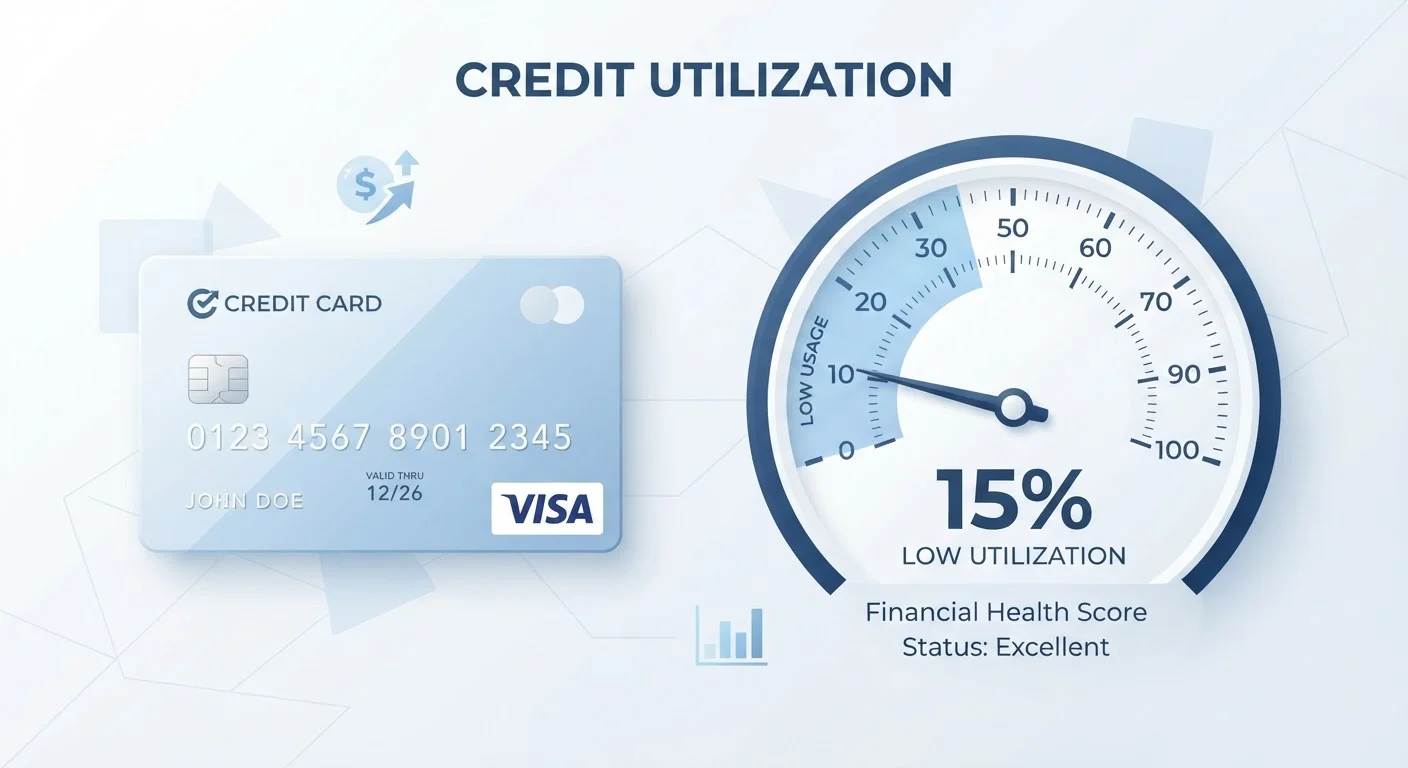
Photo: FaqExplorer.net | Informative Website editorial
Key Takeaways
- Credit utilization typically accounts for roughly 30% of a FICO score, making it the second most influential factor.
- Keeping utilization below 30% is a common guideline; those with excellent scores often stay below 10%.
- Utilization is calculated both overall and per individual card - a maxed-out single card can drag your score down.
- Because most issuers report balances monthly, your ratio can change relatively quickly when you pay down balances.
- Closing a credit card reduces your total available credit and can raise your utilization ratio unexpectedly.
Why Utilization Carries So Much Weight
When a lender evaluates your creditworthiness, they're assessing risk. High credit utilization signals that a borrower may be stretched financially - relying heavily on credit to cover expenses. Scoring models treat a high ratio as a warning flag, while a low ratio suggests measured, controlled borrowing behavior.
As explained in our overview of the five credit scoring factors, utilization typically represents about 30% of a FICO score - second only to payment history. That weighting means even borrowers with long credit histories and spotless payment records can see meaningful score drops if their balances climb.
Crucially, utilization has no memory in the same way payment history does. A missed payment from two years ago still shows on your report. But utilization reflects only your current snapshot - the balances lenders see when they pull your report. That makes it one of the more actionable factors in your credit profile.
~30%
Share of FICO score tied to utilization
According to FICO's published scoring criteria, amounts owed - which is primarily utilization - accounts for approximately 30% of a standard FICO score.
<10%
Utilization common among highest scorers
Data published by FICO indicates that consumers with scores above 800 tend to use a very small fraction of their available revolving credit.
30%
Widely cited utilization threshold
Consumer financial education sources broadly cite staying below 30% utilization as a general guideline for maintaining a healthy credit score.
How the Calculation Actually Works
The basic formula is straightforward: divide total revolving balances by total revolving credit limits, then multiply by 100 to get a percentage. If your three credit cards have limits of $3,000, $4,000, and $3,000, your combined limit is $10,000. If you carry balances totaling $2,500, your aggregate utilization is 25%.
But scoring models also evaluate each card individually. If two of those cards have zero balances and one has a $2,500 balance against a $3,000 limit, that single card's utilization is over 83% - a number that will likely affect your score even though your overall ratio appears moderate.
This per-card calculation is why spreading balances across multiple cards, rather than concentrating debt on one, can be more favorable for scoring purposes - though carrying debt on any card still has a cost in interest.
Your credit report lists the credit limit and current balance for each revolving account, giving you the raw data needed to calculate both your overall and per-card utilization at any time.
Practical Ways to Manage Your Ratio
Understanding utilization is only useful if it informs behavior. Several approaches can help bring the ratio down or prevent it from rising unexpectedly.
- Pay before the statement closes. Most issuers report the balance shown on your statement. Paying down balances before that date lowers what gets sent to the bureaus, even if you'd otherwise pay in full.
- Request a credit limit increase. A higher limit on an existing card lowers your utilization ratio if your balance stays the same. Issuers sometimes require a hard inquiry for this, which has a small, temporary impact on your score.
- Avoid closing old accounts casually. Closing a card eliminates that limit from your total available credit, potentially raising your utilization instantly. This is one of the reasons financial educators suggest keeping older accounts open, even if rarely used.
- Think twice before opening multiple new accounts quickly. While adding new credit can raise your total limit, multiple new accounts in a short span also affects other scoring factors, including the average age of accounts.
For readers planning a major loan application - such as a mortgage - be aware that lenders scrutinize utilization closely. Our article on how your credit profile shapes your mortgage options explains how this ratio influences lending decisions specifically in home buying contexts.
Check Your Utilization Before Applying for Credit
This article is for general informational and educational purposes only and does not constitute personalized financial or credit advice. Consult a qualified financial professional for guidance specific to your situation.
Frequently Asked Questions
The content on this site is provided for informational purposes only and should not be considered a substitute for professional advice. While we strive to provide accurate and up-to-date information, we make no guarantees regarding its completeness or accuracy. Always consult a qualified professional for advice specific to your circumstances before making any decisions.