
What Happens to Your Credit When You Miss a Payment

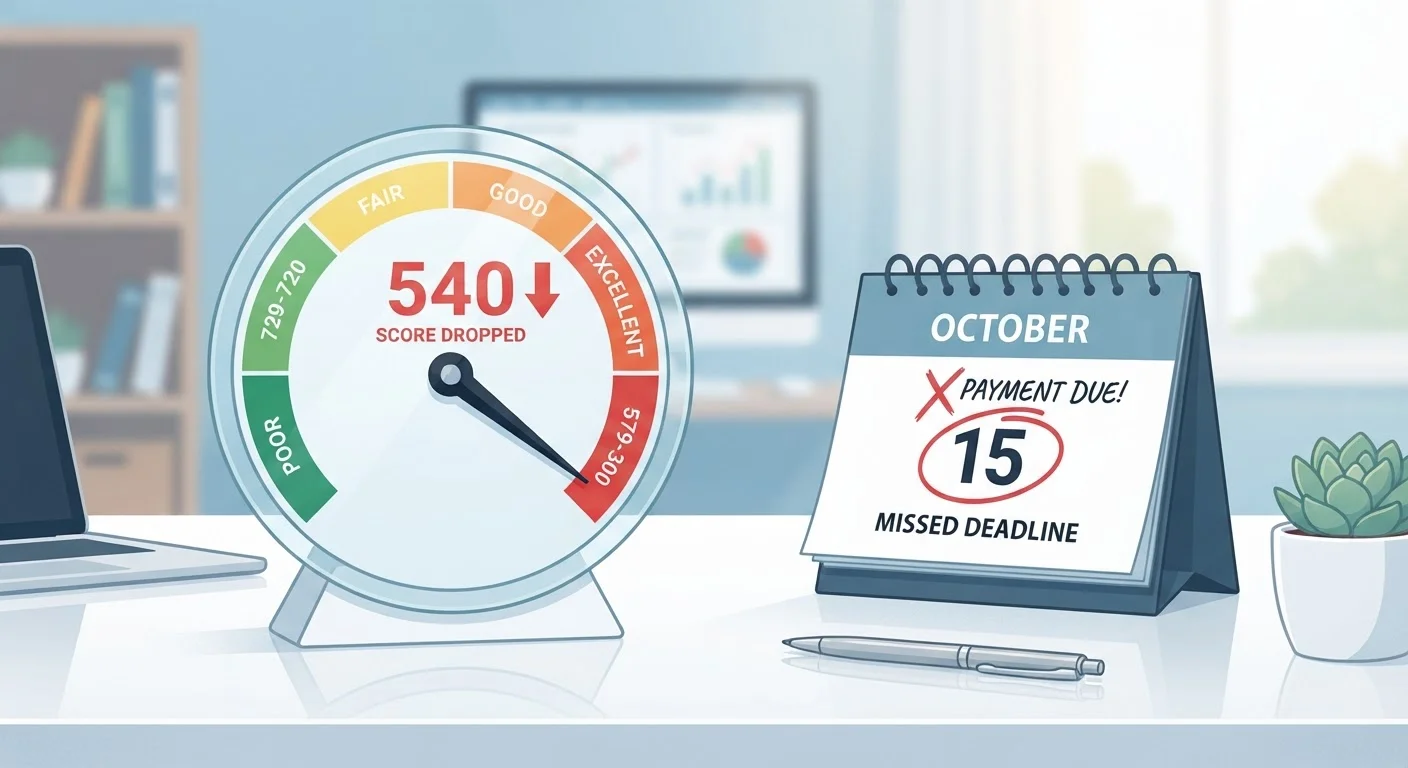
Photo: FaqExplorer.net | Informative Website editorial
Key Takeaways
- Lenders typically report a payment as late only after it is at least 30 days past due.
- A single 30-day late payment can lower your credit score by 50 to 100 points or more, depending on your starting score.
- The more recent a missed payment, the greater its negative impact on your score.
- Late payments stay on your credit report for up to seven years, though their effect fades over time.
- Contacting your lender before missing a payment may help you avoid a delinquency being reported at all.
The First 30 Days: A Grace Period You May Not Know You Have
Missing a payment due date does not immediately trigger a credit bureau report. Most lenders wait until an account is at least 30 days past due before reporting it as delinquent. That window matters. If you realize you missed a payment and can bring the account current before hitting that threshold, your credit score may remain unaffected - though you could still owe a late fee.
What trips up many borrowers is assuming the due date and the reporting date are the same. They are not. Understanding this distinction gives you a narrow but real opportunity to act fast and limit the damage. The moment you notice a missed payment, contact your lender. Some creditors offer one-time late-fee waivers for borrowers with otherwise strong payment histories.
Payment history is the single most influential factor in most credit scoring models, accounting for roughly 35% of a standard FICO score. See how each credit factor is weighted to understand why this category carries such outsized consequences.
35%
Weight of payment history in FICO scoring
According to FICO, payment history is the single largest factor in calculating a standard credit score.
7 years
How long late payments stay on your credit report
The Fair Credit Reporting Act (FCRA) allows most negative items, including delinquencies, to remain on file for up to seven years.
30 days
Minimum delinquency threshold for bureau reporting
Most creditors do not report a payment as late to the credit bureaus until it is at least 30 days past the due date.
What Happens Once a Late Payment Is Reported
Once a lender reports a delinquency to the credit bureaus - Equifax, Experian, and TransUnion - the late payment becomes part of your official credit file. From that point, your score can drop substantially. The exact impact depends on several variables:
- Your starting score: Higher scores tend to fall further because a missed payment is a greater statistical anomaly in an otherwise clean history.
- How late the payment is: A 60-day delinquency is more damaging than a 30-day one, and 90-day or 120-day delinquencies are more severe still.
- How many accounts are affected: One missed payment on one account is far less damaging than multiple late payments across several accounts.
- How recent the delinquency is: Scoring models weigh recent negative information more heavily than older items.
To understand how this appears in your file, it helps to know what your credit report actually contains and how lenders read each section.
Act Before the 30-Day Mark
The Long Tail: How Delinquency Ages on Your Report
Under federal law, most negative information - including late payments - can remain on your credit report for up to seven years from the original delinquency date. That sounds alarming, but the practical impact is not static throughout that period.
Credit scoring models generally weight recent behavior more heavily than older history. A late payment from five years ago, surrounded by years of on-time payments since, carries considerably less scoring weight than a late payment from six months ago. Consistent, positive behavior after a delinquency is the most reliable way to gradually rebuild your score.
If a missed payment contributes to broader financial difficulty, the downstream effects extend beyond your credit score. A damaged credit profile can affect mortgage eligibility and loan terms. Learn more about how your credit history shapes mortgage options.
For borrowers facing income disruption - the most common cause of missed payments - protecting your credit during a job loss or income drop outlines practical steps to take before accounts fall behind.
This article is for general informational purposes only and does not constitute personalized financial or legal advice. For guidance specific to your situation, consult a qualified financial professional.
Frequently Asked Questions
The content on this site is provided for informational purposes only and should not be considered a substitute for professional advice. While we strive to provide accurate and up-to-date information, we make no guarantees regarding its completeness or accuracy. Always consult a qualified professional for advice specific to your circumstances before making any decisions.