
Why Your Credit Score Can Vary Across Bureaus and Scoring Models

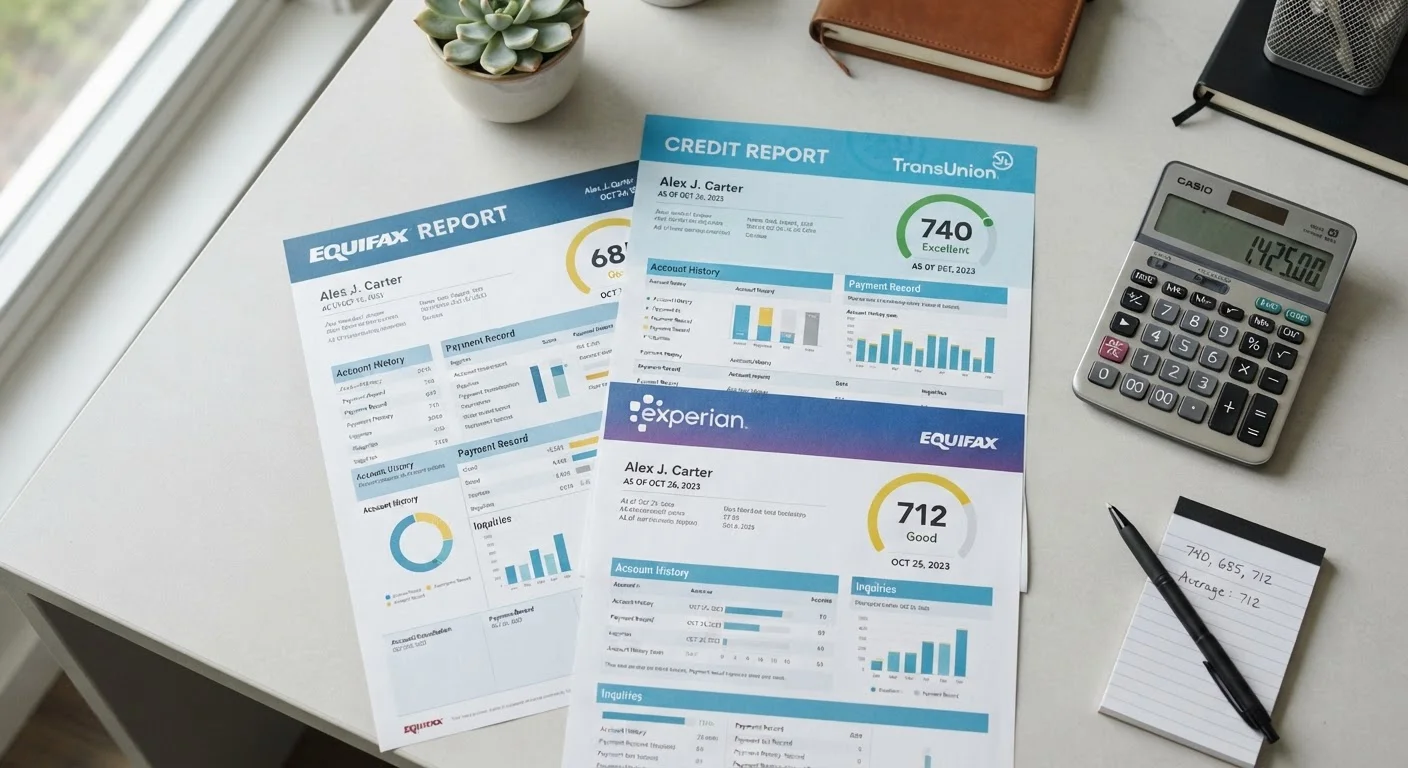
Photo: FaqExplorer.net | Informative Website editorial
Key Takeaways
- The three major credit bureaus - Equifax, Experian, and TransUnion - operate independently and may hold different data.
- Different scoring models, such as FICO and VantageScore, apply different formulas to produce a score.
- Not all creditors report to all three bureaus, creating legitimate data gaps between them.
- Score differences of 20-50 points across bureaus are common and usually not a cause for alarm.
- When applying for a major loan, ask which bureau and scoring model the lender uses.
- Reviewing all three credit reports helps catch errors that may be dragging one score down.
Three Bureaus, Three Independent Files
Most people assume their credit information is stored in one central database. In reality, Equifax, Experian, and TransUnion are separate private companies that each maintain their own files. They collect data from lenders, credit card companies, and other creditors - but no creditor is legally required to report to all three. Some report to only one or two.
The result: your credit file at Experian may include an account that never appears at TransUnion. A medical collection that reached Equifax might not have been reported to Experian at all. These differences are not mistakes - they are a built-in feature of how the system operates. To understand what information each bureau is working with, see our guide on what's on your credit report and why it matters.
Timing Can Also Create Temporary Differences
How Scoring Models Amplify the Differences
Even if two bureaus held identical data, your score could still differ - because the scoring model matters just as much as the underlying information. FICO and VantageScore are the two dominant scoring frameworks, and each uses its own proprietary algorithm to weigh factors like payment history, credit utilization, and length of credit history.
Beyond that, FICO publishes multiple versions of its model (FICO 8, FICO 9, FICO 10, and others), and industry-specific variants exist for mortgages, auto loans, and credit cards. A lender pulling your FICO Auto Score 8 from Experian is measuring something meaningfully different from a card issuer checking your base FICO 9 at TransUnion. For a breakdown of how those underlying factors are weighted, see the five factors that shape your credit score.
60+
Distinct FICO scoring models in use
FICO publishes dozens of model versions, including base scores and industry-specific variants for mortgages, auto loans, and credit cards.
3
Independent major credit bureaus in the U.S.
Equifax, Experian, and TransUnion each maintain separate consumer credit files; no single agency consolidates all data.
20-50 pts
Typical score gap across bureaus
Consumer finance experts generally consider a difference of this magnitude to be within the normal range of bureau-to-bureau variation.
What Score Gaps Mean in Practice
A difference of 20-50 points across bureaus is common and rarely signals a problem. But the gap can matter when you are applying for credit. If your score sits near a lender's approval threshold, which bureau they pull - and which scoring model they apply - can influence whether you qualify and at what interest rate.
For large borrowing decisions, this is especially relevant. Your credit profile shapes your mortgage options in ways that go beyond a single number - lenders commonly review scores from all three bureaus and use the middle score for qualification. Knowing this in advance lets you focus improvement efforts where they will count most.
If you notice an unusually low score at one bureau, it may reflect an error in that bureau's file. You have the right to dispute inaccurate information. Our walkthrough on disputing errors on your credit report explains the formal process step by step.
What You Can Do With This Knowledge
Understanding score variation shifts you from passive recipient to informed participant. Before applying for a significant loan, ask the lender which bureau they pull and which scoring model they use. Then review your report at that specific bureau for errors or outdated information.
Checking your own score is always a soft inquiry and never affects your credit, so reviewing all three bureaus costs you nothing in score impact. For a grounded explanation of what your score is actually measuring - before you focus on improving it - see credit scores explained: what the number actually measures.
This article is for general informational and educational purposes only and does not constitute personalized financial or legal advice. For decisions specific to your situation, consult a qualified financial professional.
Frequently Asked Questions
The content on this site is provided for informational purposes only and should not be considered a substitute for professional advice. While we strive to provide accurate and up-to-date information, we make no guarantees regarding its completeness or accuracy. Always consult a qualified professional for advice specific to your circumstances before making any decisions.