
Training at Home Without Equipment: A Practical Framework

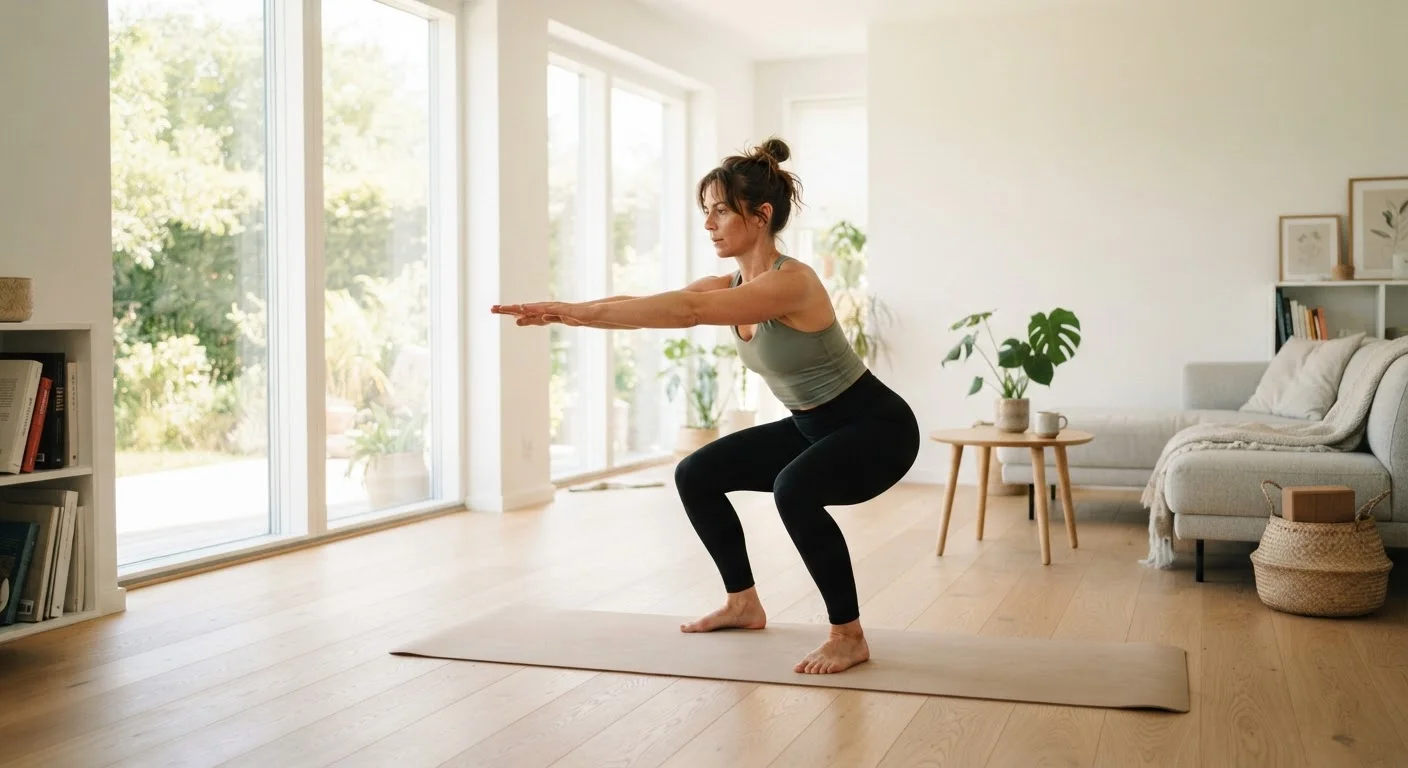
Photo: FaqExplorer.net | Informative Website editorial
Key Takeaways
- Bodyweight training can build meaningful strength and endurance without any equipment.
- Progressive overload - gradually increasing challenge - is essential for continued progress at home.
- A simple three-day-per-week structure is enough for most beginners to see real results.
- Rest and recovery are not optional; they are built-in components of an effective program.
- Consistency over weeks and months matters far more than intensity on any single day.
Why Bodyweight Training Is a Legitimate Starting Point
There is a common assumption that real strength or fitness progress requires a gym full of machines. The evidence does not support that view. Bodyweight training - exercise that uses your own mass as resistance - can develop muscular strength, cardiovascular conditioning, mobility, and body composition when programmed with intention. Research consistently shows that training volume and progressive challenge are the primary drivers of adaptation, not the source of the resistance itself.
What home training does require is structure. Without a program, sessions tend to drift toward whatever feels comfortable, which limits progress over time. The framework in this guide addresses that directly, giving you a repeatable system rather than a collection of isolated exercises. If you're also weighing whether home training fits your lifestyle long-term, home versus gym trade-offs is worth reviewing before committing to either setting.
What you will need
What You'll Need and How to Follow the Steps
The equipment list for this framework is intentionally short. A timer and enough floor space are the only non-negotiable items. Optional additions like a mat or a sturdy chair expand your exercise options slightly but are not prerequisites for meaningful training. Below are the tools that can help, followed by the step-by-step program structure.
Exercise mat or folded blanket
Provides cushioning for floor-based movements like planks, push-ups, and core work.
Phone or timer
Used to track work and rest intervals during timed circuits or interval sessions.
Sturdy chair or low table
Can be used to modify push-up difficulty or assist with balance during single-leg exercises.
Workout log or notebook
Records sets, reps, and perceived effort so you can apply progressive overload systematically.
Define a clear, realistic goal
Before your first session, write down one primary goal - improving general fitness, building functional strength, or increasing daily energy levels are all valid starting points. A focused goal shapes every decision that follows, from exercise selection to session frequency. Keep it specific enough to be measurable (for example, completing three full push-ups) but grounded in what is genuinely achievable in four to six weeks.
Choose a weekly schedule and protect it
Three non-consecutive training days per week - for example, Monday, Wednesday, and Friday - is a well-supported starting structure for beginners. This frequency allows adequate recovery between sessions while maintaining enough stimulus for adaptation. Block the time in your calendar as a standing commitment. Treat scheduling as part of the training itself, not a formality.
Build each session around movement patterns, not just exercises
Structure every workout around foundational human movement patterns: a push (push-up variations), a pull (inverted rows using a table edge), a hinge (hip hinges, glute bridges), a squat (bodyweight squats, split squats), and a carry or core stabilization movement (planks, dead bugs). Covering these patterns ensures balanced development and reduces the risk of overuse in one area. Aim for two to three exercises per pattern per session when starting out.
Apply progressive overload each week
Progressive overload is the principle of gradually increasing training demand over time - it is how the body is prompted to adapt and improve. At home without equipment, you apply it by: adding one or two repetitions per set, reducing rest periods, slowing the tempo of each repetition, or progressing to a harder exercise variation (for example, moving from knee push-ups to standard push-ups to decline push-ups). Record your work in a log so you can make informed decisions each week rather than guessing.
Incorporate a warm-up and a cool-down
Spend five minutes before each session on dynamic movement: leg swings, arm circles, hip rotations, and light marching. This increases blood flow to working muscles and primes the nervous system. After training, spend five minutes on static stretching, holding each position for 20 to 30 seconds. These bookends are not optional extras - they support tissue health and help manage recovery between sessions.
Plan rest days and monitor recovery signals
Rest days are training days for your body's repair systems. On rest days, light walking, gentle stretching, or low-intensity movement can support circulation without adding significant stress. Pay attention to how you feel across weeks: persistent fatigue, declining performance, or disrupted sleep can signal that recovery is insufficient and volume should be reduced temporarily. Progress is built during recovery, not only during exercise.
Staying Consistent Over the Long Term
The most sophisticated training program in the world produces no results if it is not followed consistently. Motivation fluctuates - that is normal and expected. What sustains a habit when motivation dips is a system with low friction: short, defined sessions, a clear location, and a log that makes skipping feel more effortful than showing up.
Supporting your training with foundational nutrition habits amplifies your results without requiring a restrictive diet. Nutrition basics for fitness beginners covers the key concepts in accessible terms. For those who find solo training isolating over time, group classes versus solo training offers a balanced comparison of both approaches.
Progress Slowly to Last Longer
This article is for general informational and educational purposes only and does not constitute medical or professional fitness advice. Consult a qualified healthcare professional before starting any new exercise program, particularly if you have existing health conditions, injuries, or have been inactive for an extended period.
The content on this site is provided for informational purposes only and should not be considered a substitute for professional advice. While we strive to provide accurate and up-to-date information, we make no guarantees regarding its completeness or accuracy. Always consult a qualified professional for advice specific to your circumstances before making any decisions.