
Mindfulness and Meditation: Overlapping Practices, Different Goals

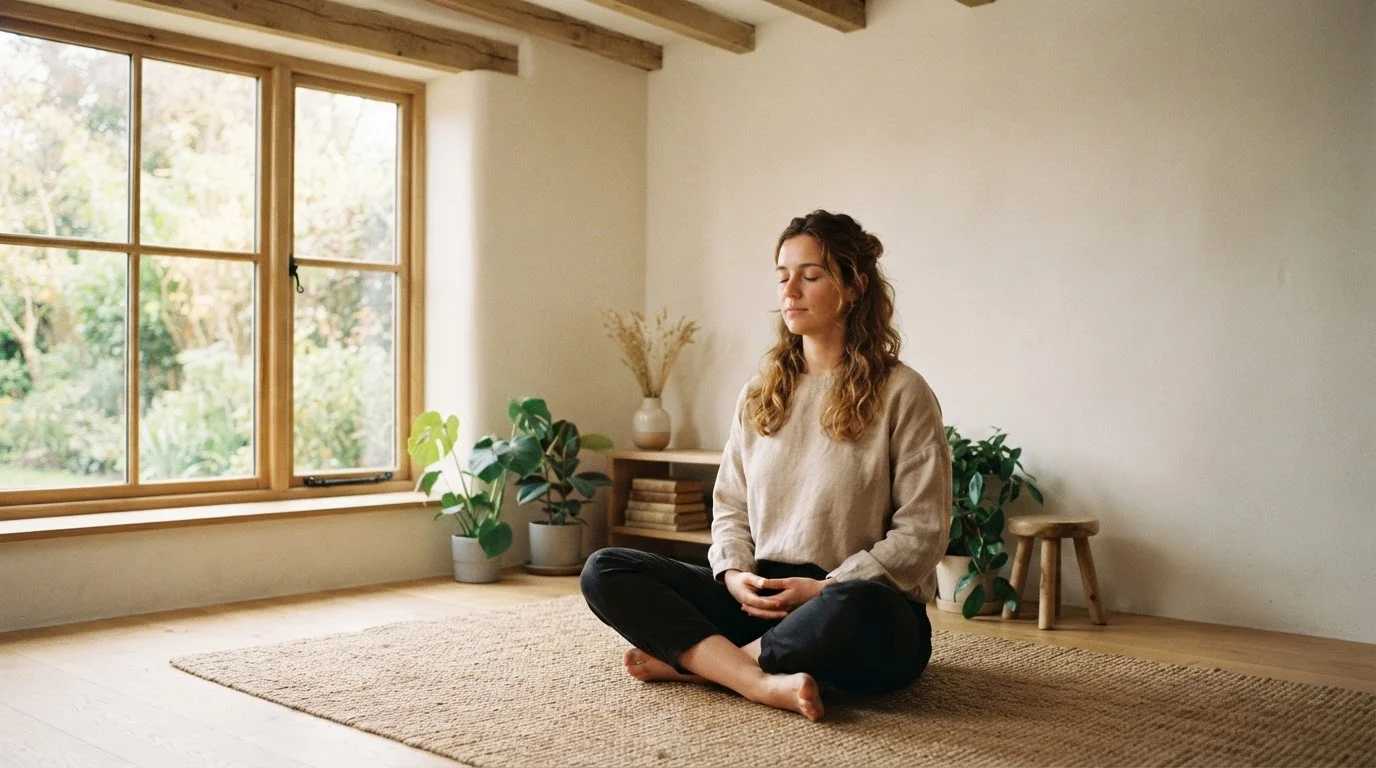
Photo: FaqExplorer.net | Informative Website editorial
Key Takeaways
- Mindfulness is a mental quality - the capacity for present-moment awareness - while meditation is a structured practice.
- Meditation is one of the most effective ways to develop mindfulness, but neither requires the other.
- Research supports both practices for reducing stress, improving focus, and supporting emotional regulation.
- Choosing between them depends on your goals, schedule, and comfort with structured vs. informal practice.
- Neither mindfulness nor meditation replaces professional mental health care for clinical conditions.
Two Terms, One Frequent Confusion
Walk into any wellness conversation and you'll hear mindfulness and meditation used as if they're the same thing. They're closely related, but conflating them can lead people to misuse both. Understanding the distinction helps you apply each more effectively - and sets realistic expectations for what each can do.
To understand what these practices actually cover, it helps to start with what mental wellness actually means in a broader sense, since both mindfulness and meditation are tools within that larger landscape rather than definitions of it.
| Mindfulness | Meditation | |
|---|---|---|
| What it is | A quality of attention | A structured practice or activity |
| When it happens | Any moment, informally | Defined sessions with a start and end |
| Requires dedicated time | No - embedded in daily life | Yes - typically 10-30 minutes per session |
| Needs instruction to start | Minimal - conceptual understanding helps | Helpful - technique guidance improves results |
| Research support | Strong, especially for stress and focus | Strong, especially in structured programs like MBSR |
| Common pitfall | Forgetting to apply it habitually | Practicing mechanically without genuine attention |
What Mindfulness Actually Is
Mindfulness is a quality of attention - the deliberate practice of noticing what's happening in the present moment without judgment. It isn't a technique you do for 20 minutes and then put away. It's a way of engaging with whatever you're already doing: eating, walking, having a difficult conversation, or washing dishes.
Psychologist Jon Kabat-Zinn, who developed Mindfulness-Based Stress Reduction (MBSR) in the late 1970s, described mindfulness as "paying attention in a particular way: on purpose, in the present moment, and non-judgmentally." That framing has shaped how researchers and clinicians understand it today.
Mindfulness can be practiced informally throughout the day. You don't need a cushion, a quiet room, or a set schedule. What you do need is intention - the repeated choice to bring awareness back when the mind wanders.
Start With One Anchor Point
What Meditation Actually Is
Meditation is a structured practice - a deliberate set of techniques performed with a defined beginning and end. It's an activity, not a trait. Common forms include focused-attention meditation (concentrating on the breath or a mantra), open-monitoring meditation (observing thoughts without attachment), and loving-kindness meditation (cultivating compassion toward self and others).
Many meditation traditions predate modern psychology by centuries, originating across Buddhist, Hindu, Taoist, and contemplative Christian lineages. Contemporary research has examined secular adaptations of these practices and found meaningful associations with reduced physiological stress markers, improved attention, and better emotional regulation - though effect sizes vary and researchers note the need for methodological consistency across studies.
Meditation often cultivates mindfulness, but not always. A person can follow a guided body-scan recording without genuinely paying non-judgmental attention - going through the motions without the attentional quality mindfulness requires.
Where They Overlap - and Where They Diverge
The overlap is real and significant. Mindfulness-based meditation is one of the most researched wellness interventions available, precisely because it combines both: using structured practice to build an awareness quality that then generalizes to daily life. Programs like MBSR and Mindfulness-Based Cognitive Therapy (MBCT) are built on this integration.
The divergence matters too. You can be highly mindful without ever formally meditating - some people develop present-moment awareness through journaling, movement, or simply sustained attentional habits. Conversely, someone can complete daily meditation sessions and still spend most of the day on mental autopilot if they don't carry the attentional intention outside the practice.
If you've tried either approach and struggled to stick with it, you're not alone. The reasons stress relief techniques fail often come down to mismatched expectations - expecting immediate calm rather than a gradually developing skill.
For those drawn to movement-based practices, it's worth noting that yoga and Pilates differ meaningfully in their relationship to mindfulness, with yoga traditions more explicitly incorporating meditative and attentional elements.
Choosing an Approach That Fits Your Life
Neither practice is inherently superior - the right fit depends on what you're trying to build and how you prefer to work.
- If you want flexibility: Informal mindfulness practice can be woven into existing routines with no added time commitment.
- If you want skill progression: Structured meditation provides a measurable framework - session length, technique type, frequency - that some people find easier to sustain.
- If you're managing ongoing stress or sleep difficulty: Both have research support; structured behavioral approaches to sleep offer a useful parallel for understanding when informal habits are enough versus when a more structured intervention may help.
It's also worth repeating: neither mindfulness nor meditation is a clinical treatment. For significant anxiety, depression, trauma, or other mental health conditions, these practices may complement professional care but do not replace it. Always consult a qualified mental health professional for guidance specific to your situation.
This article is for general informational and educational purposes only and is not a substitute for professional mental health advice, diagnosis, or treatment.
The content on this site is provided for informational purposes only and should not be considered a substitute for professional advice. While we strive to provide accurate and up-to-date information, we make no guarantees regarding its completeness or accuracy. Always consult a qualified professional for advice specific to your circumstances before making any decisions.