
Nutrition Myths That Refuse to Die - and What the Evidence Actually Shows

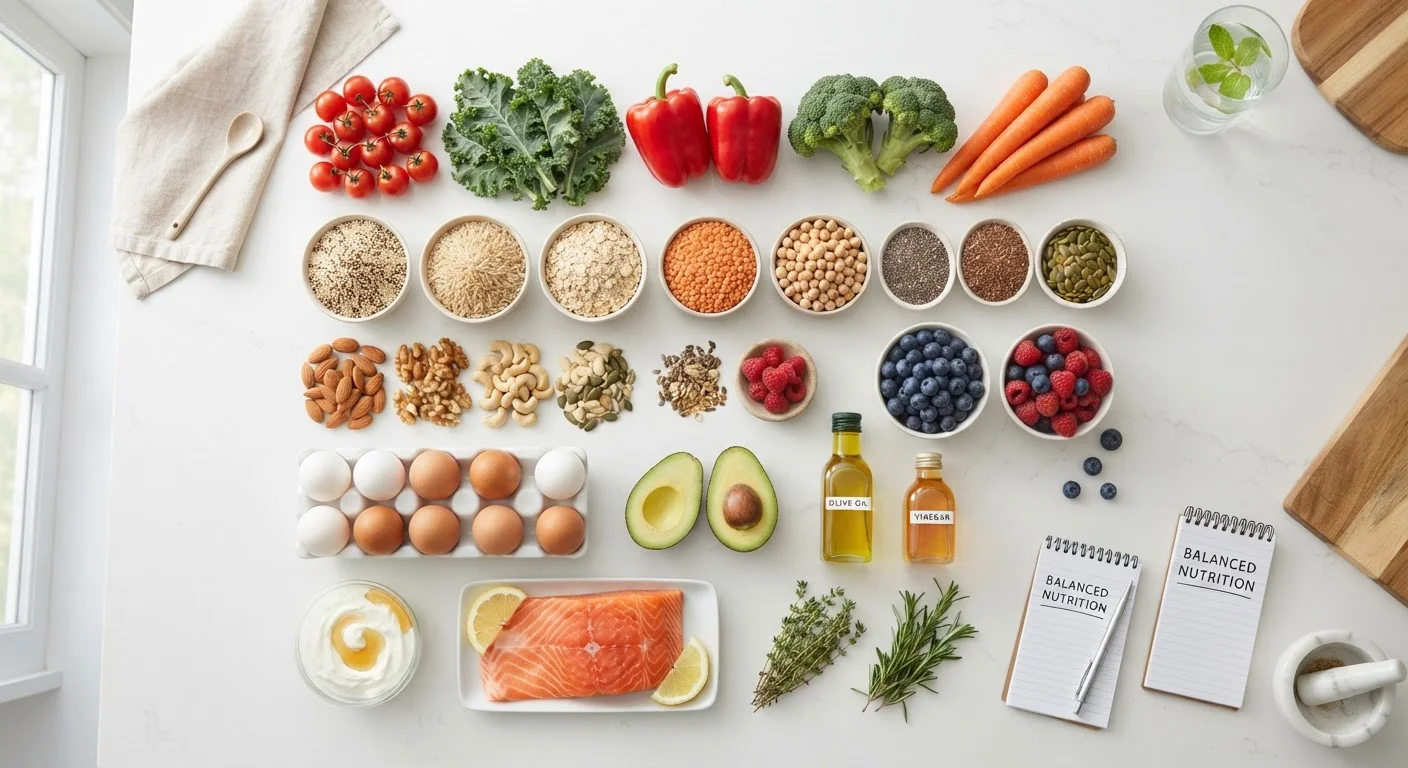
Photo: FaqExplorer.net | Informative Website editorial
Key Takeaways
- Dietary fat does not automatically cause body fat gain - calorie balance and fat type both matter.
- No food or juice regimen can 'detox' the body; the liver and kidneys handle that continuously.
- Carbohydrates are not inherently fattening; quality and overall diet pattern matter far more.
- Eating many small meals does not meaningfully boost metabolism compared with fewer, balanced meals.
- Organic produce is not nutritionally superior to conventionally grown produce, according to current evidence.
Why Nutrition Myths Are So Persistent
Nutrition advice is everywhere - on social media, in wellness blogs, and passed down through families. The problem is that a significant portion of it is wrong, yet it keeps circulating because it sounds plausible. Myths survive not because they are true but because they are simple, emotionally resonant, and repeated often enough to feel like common knowledge.
The evidence base for nutrition science is also genuinely complex. Studies contradict each other, funding sources introduce bias, and population-level findings don't always translate to individual experience. That complexity creates a vacuum that myths happily fill. Understanding what the research actually supports - and where uncertainty honestly remains - is a far more useful foundation than any dietary shortcut.
For a grounding in core nutrition concepts before diving into the myths, see our beginner's guide to nutrition.
Myth
Eating fat makes you fat. Fat is calorie-dense and should be minimized or avoided entirely.
Fact
Dietary fat does not automatically convert to body fat. Overall calorie balance, fat type, and whole diet pattern are what matter.
The idea that fat in food becomes fat on the body is an intuitive but incorrect simplification. Body fat accumulation is driven primarily by a sustained calorie surplus - consuming more energy than the body expends - regardless of which macronutrient provides those calories. Protein and carbohydrates can also contribute to fat storage in a surplus.
Fat type matters considerably. Unsaturated fats - found in foods like olive oil, avocados, and fatty fish - are associated with cardiovascular benefits in research. Artificially produced trans fats, largely phased out of the U.S. food supply, carried documented health risks. Saturated fat remains an area of ongoing research, with current dietary guidance generally recommending moderation rather than elimination.
For a detailed breakdown, see our guide to fat types.
Myth
Detox diets and juice cleanses remove toxins from the body and give your organs a needed rest.
Fact
The liver and kidneys continuously filter waste products. No juice or dietary regimen has been shown to enhance or accelerate this process.
The term 'detox' as used in wellness marketing is not a defined physiological process. The body has sophisticated, continuously operating systems for processing and eliminating waste: the liver metabolizes compounds, the kidneys filter blood and produce urine, and the digestive system moves waste through and out. These organs do not accumulate a backlog that a cleanse can clear.
Juice cleanses may temporarily reduce calorie intake, which some people interpret as feeling 'lighter' or more energetic. But there is no credible clinical evidence that they remove harmful substances beyond what normal organ function already handles. Claims that specific ingredients 'flush' the liver or kidneys are not supported by established science.
If you have concerns about how your body is processing nutrients or metabolizing compounds, a conversation with a healthcare professional is the appropriate starting point - not a commercial cleanse.
Myth
Carbohydrates are inherently fattening and should be drastically reduced or eliminated for good health.
Fact
Carbohydrates are the body's preferred energy source. Overall dietary quality and calorie balance, not carb intake alone, determine health outcomes.
Low-carbohydrate diets can be effective for some individuals in some contexts, but that does not mean carbohydrates themselves are harmful. The research picture is more nuanced: highly processed carbohydrates - white bread, sugary beverages, refined snack foods - have different metabolic effects than whole grains, legumes, fruits, and vegetables, which also provide fiber, vitamins, and minerals.
Fiber, a form of carbohydrate the body cannot fully digest, is associated with improved gut health, blood sugar regulation, and satiety. Most Americans fall well short of recommended fiber intake - a gap with meaningful health implications. See the science of fiber for a closer look.
Eliminating an entire macronutrient group based on fear rather than individual health need is rarely warranted and can create unnecessary dietary restriction.
Myth
Eating many small meals throughout the day keeps your metabolism elevated and is superior to eating fewer meals.
Fact
Meal frequency has minimal impact on metabolic rate for most people. Total daily intake and food quality matter more than how often you eat.
The idea that eating every two to three hours 'stokes the metabolic fire' became popular in fitness culture but is not well supported by controlled research. Metabolic rate is influenced primarily by body composition, genetics, physical activity, and overall energy intake - not meal timing in healthy individuals.
Thermic effect of food (the energy the body uses to digest and process meals) does increase slightly after eating, but it is proportional to the amount consumed. Eating six small meals produces roughly the same total thermic effect as three larger ones containing the same calories and macronutrients.
Some people genuinely do better with more frequent, smaller meals for satiety or blood sugar management reasons - particularly those with certain medical conditions. But this is an individual preference, not a universal metabolic imperative. Consulting a registered dietitian can help identify what pattern works best for a given person's circumstances.
Myth
Organic food is significantly more nutritious than conventionally grown food and is always the healthier choice.
Fact
Current evidence does not consistently show that organic produce is nutritionally superior to conventionally grown equivalents.
Organic certification governs how food is grown and processed - specifically regarding synthetic pesticide use, fertilizers, and genetic modification - but it is not a guarantee of higher nutrient density. Multiple systematic reviews have found no consistent, clinically meaningful difference in vitamin and mineral content between organic and conventional produce.
Concerns about pesticide residues are legitimate and ongoing areas of research, but for most consumers eating a variety of fruits and vegetables, the health benefit of increased produce consumption outweighs the difference between organic and conventional sources. Washing produce thoroughly reduces surface residue regardless of how it was grown.
Choosing organic is a personal and financial decision that may reflect values around environmental impact or agricultural practices - both valid considerations. But the belief that conventional produce is nutritionally inferior or unsafe for general consumption is not supported by current scientific consensus. See micronutrients and food sources for more on getting essential nutrients from everyday foods.
The Broader Pattern: How Myths Shape Eating Habits
Each of the myths above shares a common thread: they take a kernel of nutrition science and distort it into an oversimplified rule. Fat becomes the villain. Carbs become poison. The body is treated as a passive system that can be hacked rather than a dynamic one that responds to overall dietary patterns over time.
95%
Americans not meeting fiber recommendations
Research published in the American Journal of Lifestyle Medicine estimates that the vast majority of U.S. adults fall short of recommended daily fiber intake.
$60B+
Annual U.S. dietary supplement market
The U.S. dietary supplement industry generates tens of billions in annual revenue, much of it driven by products with limited clinical evidence supporting their marketed claims.
What the evidence consistently supports is less dramatic than most diet headlines suggest. Whole foods, adequate fiber, appropriate calorie balance, and variety across food groups remain the cornerstones of sound dietary guidance. These principles aren't exciting enough to go viral, but they hold up under scientific scrutiny in a way that detox cleanses and metabolism-boosting meal schedules simply don't.
Nutrition myths also carry a real cost. They can lead people to cut out nutritious foods unnecessarily, spend money on products with little evidence behind them, or feel shame around normal eating behavior. Understanding what carbs, protein, and fat actually do in the body is a more empowering starting point than fear-based elimination. Similarly, the calorie balance framework is useful but incomplete - the same pattern of oversimplification that drives myths also limits that model.
Myths don't only affect nutrition. The same tendency to latch onto appealing but unsupported claims shows up across health topics - from fitness misconceptions to skincare folklore. Applying the same critical lens across all health information is a skill worth developing.
This article is for general informational and educational purposes only and does not constitute medical or dietary advice. Consult a qualified healthcare professional or registered dietitian for guidance tailored to your individual health needs.
The content on this site is provided for informational purposes only and should not be considered a substitute for professional advice. While we strive to provide accurate and up-to-date information, we make no guarantees regarding its completeness or accuracy. Always consult a qualified professional for advice specific to your circumstances before making any decisions.