
Skincare Myths That Persist Despite the Science

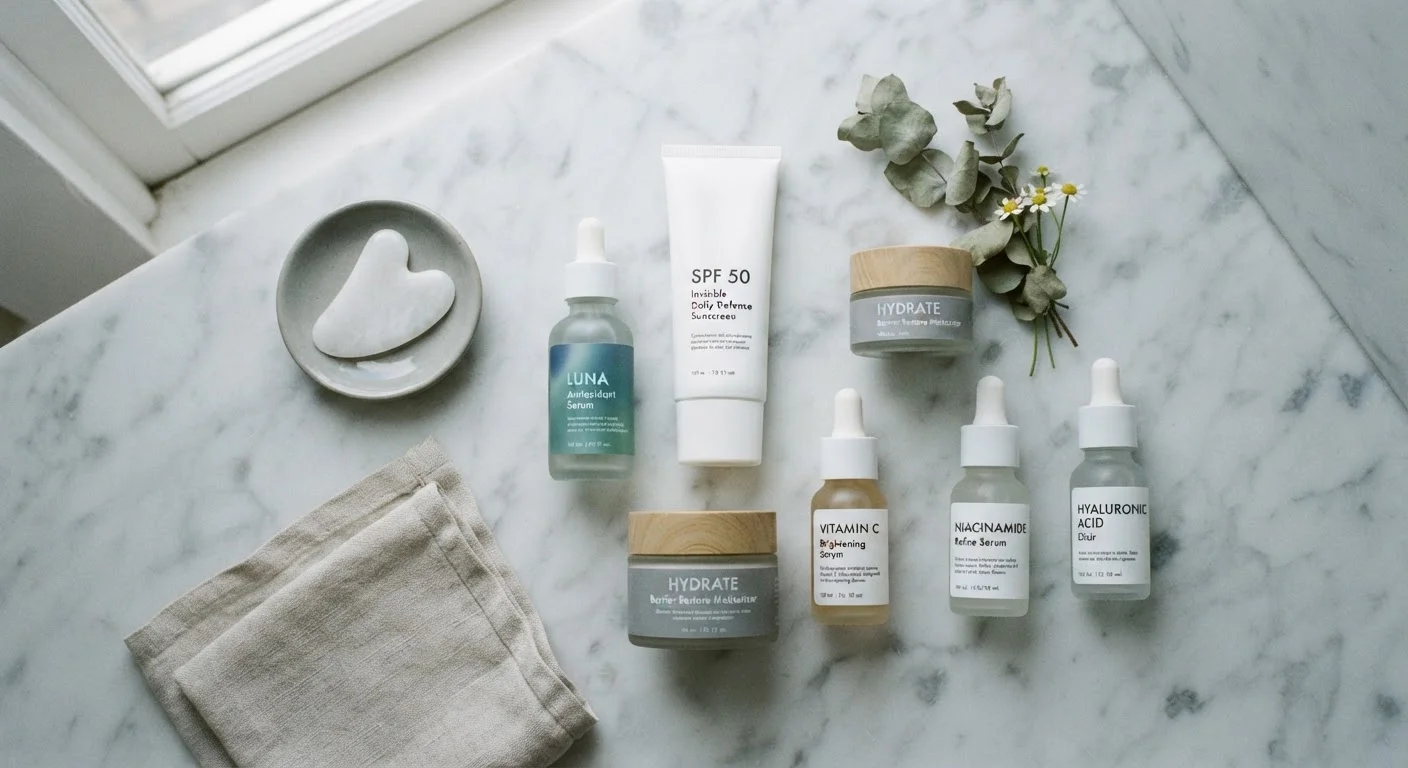
Photo: FaqExplorer.net | Informative Website editorial
Key Takeaways
- Pores do not physically open or close in response to temperature.
- Drinking more water does not directly cure dry or dehydrated skin.
- Natural ingredients are not automatically safer or more effective than synthetic ones.
- SPF protection is necessary year-round, including on cloudy days and indoors near windows.
- More frequent exfoliation does not lead to clearer, healthier skin-over-exfoliation causes damage.
- Oily skin still needs moisturizer; skipping it can worsen oil production.
Why Skincare Myths Are So Persistent
Skincare advice travels fast-through social media, word of mouth, and decades of beauty marketing. The problem is that many widely repeated beliefs contradict what dermatology research actually supports. These myths persist not because people are careless, but because they often contain a kernel of plausibility, or because the correction requires understanding skin biology that isn't always intuitive.
Understanding where these myths come from-and what the evidence shows instead-is a practical step toward building a routine that actually works. For a foundational look at why the skin's biology matters to every decision you make, see our guide to the skin barrier.
Myth
Steam opens your pores, and cold water closes them.
Fact
Pores are not muscles and cannot open or close in response to temperature.
This is one of the most enduring skincare beliefs, but pores lack the muscular structure needed to open and close. What steam may do is soften the debris and sebum inside a pore, making manual extraction feel easier. Cold water may temporarily reduce the appearance of pores by causing mild skin constriction, but it does not change pore size structurally. Pore size is largely determined by genetics, skin type, and age-related changes in elasticity.
Myth
Drinking more water will fix dry or dehydrated skin.
Fact
Skin hydration is regulated primarily by the skin barrier, not by how much water you drink.
While staying adequately hydrated supports general health, the relationship between water intake and visible skin moisture is more indirect than commonly believed. Severe dehydration can affect skin appearance, but drinking extra water beyond normal intake does not meaningfully improve skin hydration levels in most people. The skin barrier-specifically its lipid structure and natural moisturizing factors-is what controls transepidermal water loss. Addressing dry or dehydrated skin usually requires topical approaches: occlusives, emollients, and humectants applied directly to the skin.
Myth
Natural ingredients are always safer and better than synthetic ones.
Fact
Safety and efficacy depend on the specific ingredient, its concentration, and formulation-not its origin.
Many potent allergens and irritants are entirely natural-poison ivy, certain essential oils, and fragrant botanicals are well-documented examples. Conversely, many lab-synthesized ingredients are among the most extensively studied and well-tolerated compounds in skincare. The classification of an ingredient as natural or synthetic says nothing about its safety profile. Evaluating ingredients based on published evidence, patch testing, and individual skin response is a more reliable approach than relying on origin as a proxy for quality. See how fragrance in skincare works for different skin types for one relevant example.
Myth
Oily skin doesn't need moisturizer.
Fact
Oily skin and well-hydrated skin are not the same thing; oily skin can still be dehydrated.
Sebum production (oiliness) and the skin's water content are separate processes. Oily skin can be simultaneously dehydrated-meaning it lacks water, not oil. Skipping moisturizer often signals the skin to compensate by producing more sebum. Lightweight, non-comedogenic formulas can support the barrier without contributing to clogging. The goal is to replenish water content and support barrier integrity, not to add more oil.
Myth
The more you exfoliate, the clearer and smoother your skin will be.
Fact
Over-exfoliation damages the skin barrier, leading to sensitivity, redness, and breakouts.
Exfoliation-whether chemical (AHAs, BHAs) or physical-removes dead skin cells and can improve texture and clarity when used appropriately. But frequency matters enormously. Exfoliating too often strips the skin's protective barrier, disrupts its microbiome, and triggers inflammation. Many people experiencing chronic redness, sensitivity, or unexplained breakouts are over-exfoliating rather than under-exfoliating. The differences between chemical and physical exfoliants also affect how often each can safely be used.
Myth
SPF is only necessary on sunny days or when spending time outdoors.
Fact
UVA radiation penetrates clouds and glass and contributes to photoaging and skin damage year-round.
UVB rays, which cause sunburn, are more intense in summer and direct sunlight-but UVA rays, which penetrate more deeply and are associated with photoaging and DNA damage, are present throughout the year and can pass through window glass. Dermatologists broadly recommend daily broad-spectrum sunscreen as part of a morning routine regardless of season or planned outdoor time. Consistent daily use is considered one of the most evidence-supported steps for long-term skin health.
What the Research Actually Supports
Correcting myths is only half the work. Building a routine around evidence-based principles means prioritizing a few well-studied fundamentals: a gentle cleanser appropriate for your skin type, a moisturizer that addresses your specific barrier needs, and daily broad-spectrum sun protection. On that last point, the evidence is unambiguous-UV exposure accumulates even on overcast days and through glass. For a deeper look at why daily SPF matters beyond beach days, see the case for daily UV protection.
90%
Of visible skin aging attributed to UV exposure
Research published in dermatology literature estimates that approximately 90% of visible skin aging signs are attributable to cumulative UV exposure rather than chronological aging.
~50%
Of people over-exfoliating their skin
Dermatologists frequently report that a significant proportion of patients presenting with sensitivity and barrier disruption are using exfoliants more often than evidence supports.
Actives like retinoids have strong clinical backing for concerns ranging from acne to photoaging, but they're also surrounded by misconceptions about how and when to use them. Our retinoids explainer covers what the research supports. Similarly, the difference between dehydrated and dry skin is frequently confused-and getting it wrong leads to choosing the wrong products. Hydration and moisture are two distinct problems requiring two different solutions.
Skin Barrier Damage Can Sneak Up on You
This article is for general informational and educational purposes only and is not a substitute for personalized advice from a qualified dermatologist or healthcare professional. If you have a skin condition or persistent concerns, consult a licensed professional.
The content on this site is provided for informational purposes only and should not be considered a substitute for professional advice. While we strive to provide accurate and up-to-date information, we make no guarantees regarding its completeness or accuracy. Always consult a qualified professional for advice specific to your circumstances before making any decisions.