
Reading a Nutrition Label Without Getting Lost in the Numbers

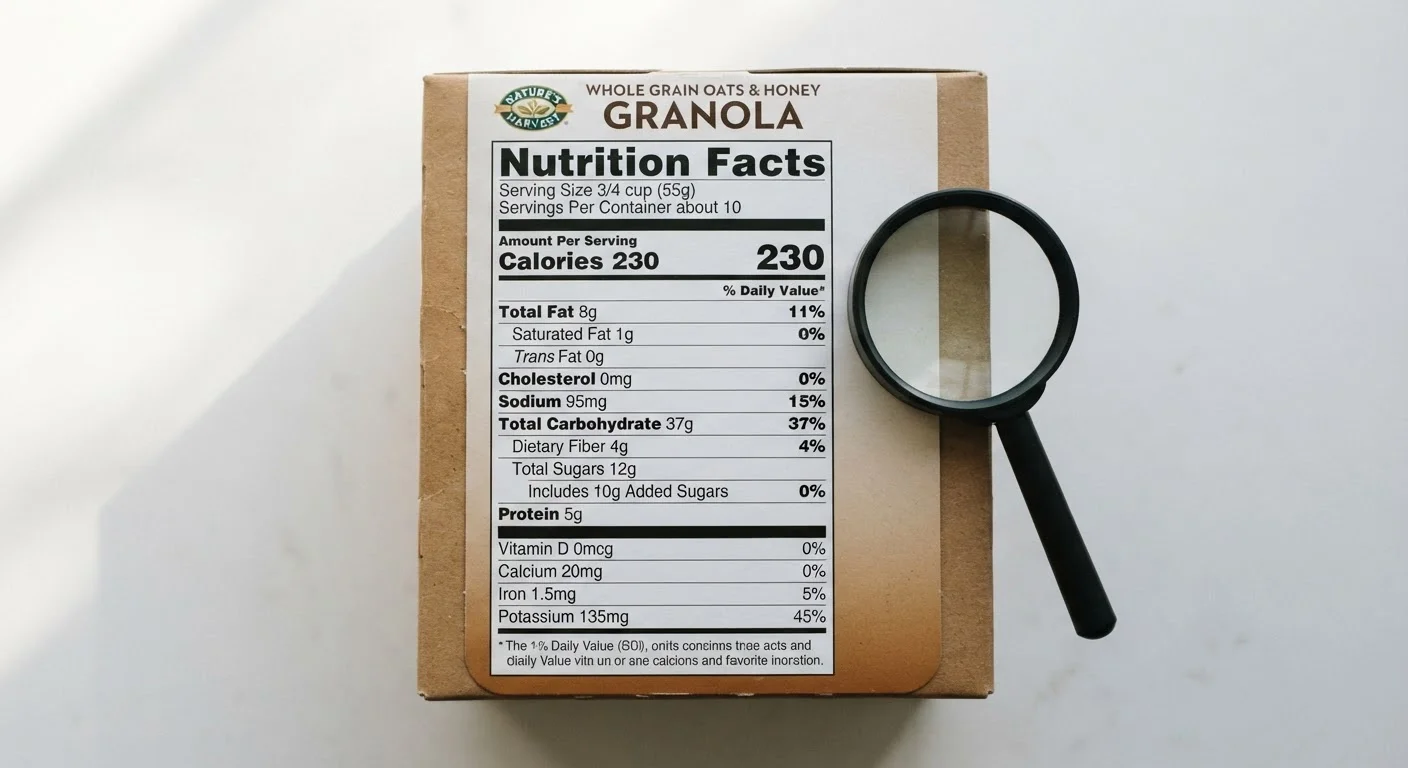
Photo: FaqExplorer.net | Informative Website editorial
Key Takeaways
- Serving size anchors every other number on the label - always check it first.
- The % Daily Value column lets you quickly gauge whether a nutrient amount is high or low.
- Added sugars, sodium, and saturated fat deserve close attention for most eating patterns.
- Fiber and protein are nutrients many Americans fall short on - scanning for them is worthwhile.
- Ingredient lists run in descending order by weight, making the first few ingredients the most telling.
Why the Nutrition Label Matters More Than the Front of the Package
Food packaging is designed to sell, and the claims on the front - 'wholesome,' 'light,' 'made with real ingredients' - are there to attract attention. The Nutrition Facts panel on the back or side is where regulated, standardized information lives. Learning to read it fluently gives you an evidence-based lens that cuts through marketing language.
The panel follows a format standardized by the U.S. Food and Drug Administration (FDA), which means the structure is consistent across products. Once you understand the layout, you can apply the same reading approach to virtually any packaged food in an American grocery store.
Front-of-Package Claims Can Mislead
If you're new to thinking about nutrition more broadly, our beginner's guide to nutrition is a useful starting point before diving into label specifics.
What you will need
How to Read the Label: Step by Step
Work through the Nutrition Facts panel in the order it's presented - the layout is intentional. Having an actual food package in hand as you follow these steps makes the process much more concrete.
Packaged Food Item
Provides a real Nutrition Facts panel to practice reading as you work through each step.
USDA FoodData Central (online database)
Allows you to look up nutrient profiles for foods that don't carry a standard label.
Start with the serving size
The serving size sits at the very top of the Nutrition Facts panel for a reason - every single number below it is calculated based on that amount. Serving sizes are set by the FDA to reflect amounts people typically eat, but they may not match what you actually pour into a bowl or onto a plate.
Check the number of servings per container too. A small bag listed as containing 2.5 servings means you'd need to multiply all the figures by 2.5 if you eat the whole thing.
Read the calorie count in context
Calories tell you how much energy one serving provides. This number matters, but it only makes sense alongside the serving size you just noted. A food with 200 calories per serving is very different nutritionally from one with 200 calories per container.
For a broader picture of how calories fit into your overall eating pattern, see how calorie balance works - and where it has limits.
Examine the macronutrients
Below calories you'll find the three macronutrients: total fat, total carbohydrate, and protein. Each breaks down further into subcategories worth understanding:
- Total fat includes saturated fat and trans fat listed separately. Naturally occurring trans fats differ from artificial trans fats; artificial trans fats have been largely removed from the U.S. food supply. Saturated fat is the figure most dietary guidance focuses on. Learn more in our plain-language breakdown of fat types.
- Total carbohydrate breaks into dietary fiber and total sugars, with added sugars called out separately. Added sugars are those incorporated during processing - not the sugars naturally present in fruit or milk.
- Protein doesn't have a % Daily Value listed, but the gram amount is still useful context.
For a fuller explanation of what each macronutrient does in the body, see macronutrients explained.
Use the % Daily Value column as a quick gauge
The % Daily Value (% DV) column runs down the right side of the label. It tells you how much of a nutrient one serving contributes toward a reference daily intake of 2,000 calories. Use this simple rule of thumb established by the FDA:
- 5% DV or less = low in that nutrient
- 20% DV or more = high in that nutrient
This is especially helpful for sodium, saturated fat, and added sugars - nutrients where most guidance suggests keeping intake in check - as well as for fiber, calcium, iron, and vitamin D, where many people benefit from eating more.
Check the micronutrients
The lower section of the Nutrition Facts panel lists key vitamins and minerals: vitamin D, calcium, iron, and potassium are required by the FDA because Americans tend to consume them in insufficient amounts. Their % DV figures help you quickly spot whether a food contributes meaningfully.
Note that sodium also appears in this section. The American diet tends to run high in sodium, so a % DV above 20% for a single serving is worth registering, particularly if you're eating multiple packaged foods throughout the day.
Scan the ingredient list
The ingredient list appears below the Nutrition Facts panel and follows a strict rule: ingredients are listed in descending order by weight. The first ingredient makes up the largest proportion of the product; ingredients near the end are present in the smallest amounts.
A short ingredient list isn't automatically better, but knowing what comes first gives you an honest picture of what you're mostly eating. If added sugar appears under several different names - cane syrup, dextrose, maltose, fruit juice concentrate - each instance counts separately, so the combined contribution may be larger than any single entry suggests.
Apply these same label-reading skills at the grocery store with our practical grocery shopping checklist.
Label Reading Gets Faster with Practice
Once you're comfortable reading labels, it's also worth understanding where nutrition tracking habits can go astray. See where nutrition tracking goes wrong for a realistic perspective on precision and its limits.
This article is for general informational and educational purposes only and does not constitute medical or dietary advice. Speak with a qualified healthcare professional or registered dietitian for guidance tailored to your individual health needs.
This Is General Information, Not Medical Advice
The content on this site is provided for informational purposes only and should not be considered a substitute for professional advice. While we strive to provide accurate and up-to-date information, we make no guarantees regarding its completeness or accuracy. Always consult a qualified professional for advice specific to your circumstances before making any decisions.