
Grooming a Short-Haired vs. Long-Haired Cat: What's Actually Different

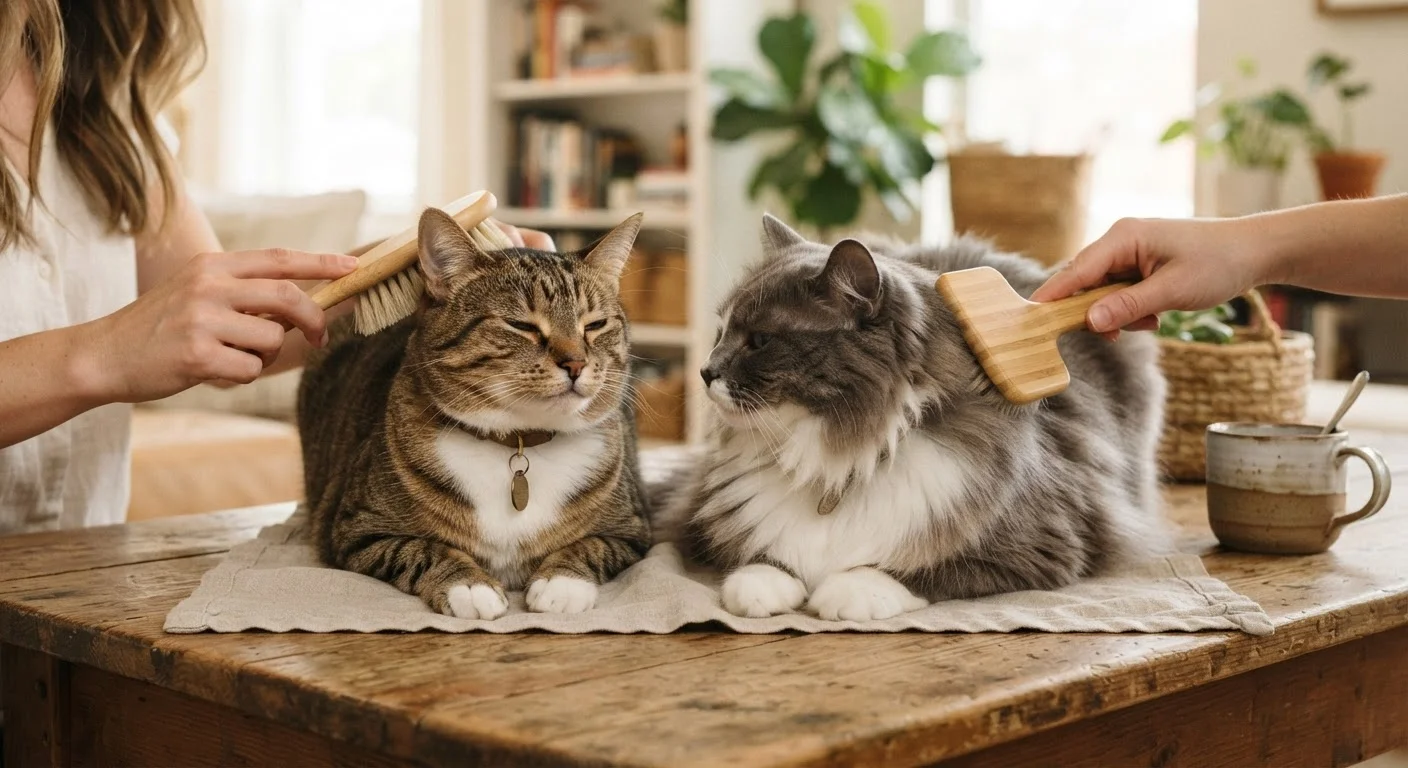
Photo: FaqExplorer.net | Informative Website editorial
Key Takeaways
- Short-haired cats generally self-groom effectively but still benefit from weekly brushing.
- Long-haired cats require daily or near-daily brushing to prevent painful matting.
- Matting is the most serious grooming risk for long-haired breeds and can affect skin health.
- Both coat types shed; the visibility and manageability of shed fur differs significantly.
- A cat's age, health, and lifestyle influence grooming needs regardless of coat length.
Why Coat Length Changes Everything
A cat's coat isn't just an aesthetic trait - it's a functional layer that regulates temperature, protects skin, and communicates health status. Coat length shapes how much assistance a cat needs from you, what tools work best, and what problems can develop when grooming is neglected.
Short-haired cats have a single or double coat with hair typically under two inches long. Their fur is dense enough to offer some insulation but short enough that natural grooming behaviors - licking, head-rubbing, and scratching - are generally effective. Long-haired cats, including breeds like Maine Coons, Persians, and Ragdolls, have coats that can exceed four or five inches in length. That length is beautiful but introduces complications: tangles form easily, debris collects at the skin level, and natural grooming simply cannot keep up.
As cats age, their grooming ability can also decline. See our overview of how cat care needs shift across life stages for a broader look at how physical changes affect daily care.
Brushing Frequency and Tools
For short-haired cats, a once-weekly brush-out is usually sufficient to remove loose fur, distribute natural skin oils, and give you a chance to check for skin irregularities. A soft-bristle brush or rubber grooming mitt works well for most short coats. These sessions are typically low-friction and many short-haired cats come to enjoy them.
Long-haired cats need brushing at minimum every other day, and daily grooming is strongly preferred. The goal is to prevent tangles before they become mats - dense clumps of fur that tighten against the skin and can cause discomfort or even skin irritation. A wide-toothed comb or slicker brush is often recommended for long coats, working from the ends of the fur inward toward the skin rather than dragging through from root to tip.
Start Grooming Early for Best Results
Pay particular attention to areas where long-haired cats mat most frequently: behind the ears, under the armpits, around the collar area, and at the base of the tail. These spots experience the most friction from movement and benefit from extra attention during each grooming session.
Matting: The Primary Risk for Long-Haired Coats
Matting is largely a non-issue for short-haired cats but is one of the most significant health concerns for long-haired breeds. When mats form and are left unaddressed, they can pull on the skin, restrict movement, trap moisture, and create conditions favorable to skin infections or parasite harboring.
Mild tangles can often be gently worked out with a comb and patience. Severe mats - particularly those close to the skin - should be addressed by a veterinarian or professional groomer rather than cut out at home, where the risk of accidentally cutting skin is real. Attempting to pull a tight mat apart can be painful for the cat.
Never Cut Out Mats With Scissors at Home
Prevention through consistent brushing is far easier than dealing with established mats. If a long-haired cat's coat has been neglected for an extended period, a professional groomer or veterinary team may recommend a full shave-down to give the coat a clean start.
Shedding, Bathing, and Skin Checks
Both coat types shed, though the experience differs. Short-haired cats tend to deposit fine, individual hairs that can embed in upholstery and fabric. Long-haired cats shed larger clumps that are often easier to spot and remove from surfaces but more likely to form hairballs when ingested during self-grooming.
Bathing is infrequent for most healthy cats regardless of coat length - cats are effective self-cleaners. When bathing is necessary (after contact with a sticky or toxic substance, for instance), long-haired cats require more thorough drying to prevent damp fur near the skin, which can promote fungal growth. Always use a gentle, cat-formulated cleanser and ensure the coat is fully dry before the cat is in a cool environment.
Regular grooming sessions - for either coat type - are also your primary opportunity to notice changes at skin level: unusual lumps, redness, flakiness, or evidence of external parasites. Understanding your cat's comfort with handling during grooming is easier when you can read their cues accurately; learning to interpret your cat's body language can make grooming sessions calmer and safer for both of you.
Side-by-Side Comparison
The table below summarizes the key grooming differences between short-haired and long-haired cats across the criteria that matter most for everyday care decisions.
| Short-Haired Cats | Long-Haired Cats | |
|---|---|---|
| Brushing frequency | Once weekly | Daily or every other day |
| Matting risk | Very low | High without regular brushing |
| Recommended tools | Soft-bristle brush or rubber mitt | Wide-tooth comb or slicker brush |
| Shedding manageability | Fine hairs embed in fabric | Larger clumps, more visible but removable |
| Bathing drying time | Relatively quick | Extended; risk of damp skin if rushed |
| Professional grooming need | Rarely essential | Periodically recommended |
| Hairball tendency | Moderate | Higher due to more ingested fur |
These differences are generalizations - individual cats within each coat category can vary based on breed, health, age, and temperament. An older short-haired cat with arthritis may need more grooming assistance than a healthy young long-haired cat with an active grooming habit, for instance.
When to Involve a Professional Groomer or Vet
Professional groomers are a practical resource for long-haired cat owners, particularly for tasks like de-matting, sanitary trims (trimming fur around the hindquarters to prevent hygiene issues), and full coat maintenance when home brushing has fallen behind. For short-haired cats, professional grooming is rarely essential but can be useful for cats who are especially resistant to handling.
Any time grooming reveals something unusual - a new lump, skin lesions, persistent scratching at one area, or a coat that has changed in texture or appearance - a veterinary visit is the appropriate next step rather than a home remedy. Coat quality can reflect internal health, including nutritional status and systemic illness, so changes are worth taking seriously.
This article is for general informational purposes only and does not constitute veterinary advice. Consult a licensed veterinarian for guidance specific to your cat's health and care needs.
The content on this site is provided for informational purposes only and should not be considered a substitute for professional advice. While we strive to provide accurate and up-to-date information, we make no guarantees regarding its completeness or accuracy. Always consult a qualified professional for advice specific to your circumstances before making any decisions.