
Reading Your Cat's Body Language

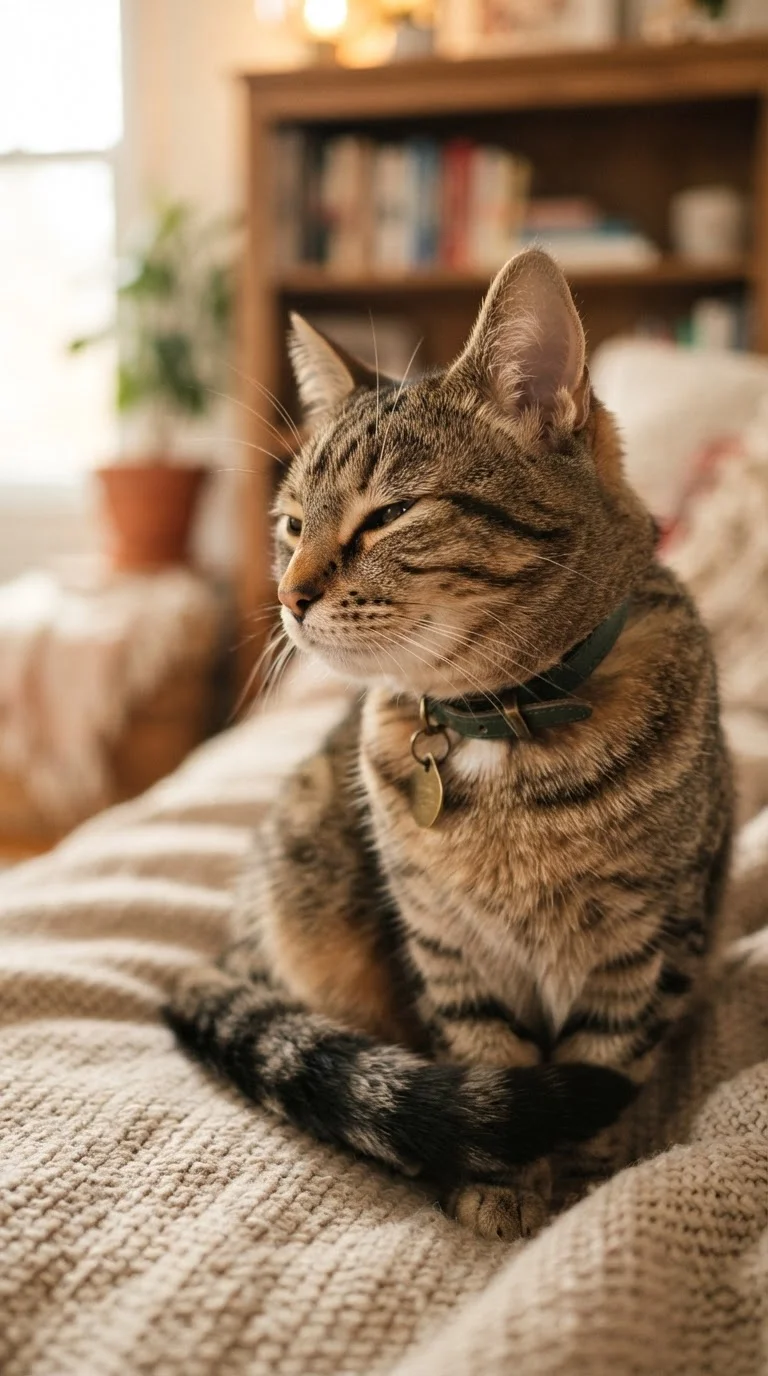
Photo: FaqExplorer.net | Informative Website editorial
Why Body Language Matters More Than Meowing
Cats are remarkably expressive animals - but most of their communication happens silently. While vocalizations like meowing and chirping get plenty of attention, the majority of what a cat is trying to convey comes through physical signals: the set of their ears, the position of their tail, the tension in their whiskers, and the softness (or hardness) of their gaze.
Learning to read these signals accurately does more than satisfy curiosity. It helps you respond to your cat appropriately - respecting boundaries when they're stressed, recognizing contentment, and catching early signs of discomfort before they escalate. As our companion article explains, cats instinctively hide discomfort, making behavioral literacy an important part of responsible ownership.
Piloerection
The involuntary raising of fur along the back and tail, making the cat appear larger. It occurs in response to fear or intense arousal and is controlled by the autonomic nervous system.
Slow blink
A deliberate, relaxed closing and reopening of the eyes used by cats to signal trust and non-aggression toward a person or other animal. It is widely regarded by animal behaviorists as a positive affiliative signal.
Affiliative behavior
Social behaviors that build or maintain bonds - such as head-bunting, grooming, or slow blinking. In cats, these signals indicate comfort and trust with a companion or owner.
Displacement behavior
A seemingly out-of-place action (like grooming mid-interaction) that indicates stress or conflict. In cats, sudden self-grooming during play or petting often means they are overstimulated or uncertain.
A Quick Reference: Key Body Language Signals
No single signal tells the whole story - context and combination matter. Use the guide below as a starting point, and always read multiple cues together.
| Primary communication mode | Body language (posture, ears, tail, eyes) |
| Tail-high greeting signal | Confidence and friendly intent |
| Slow blink meaning | Trust and relaxed affiliation (Animal behavior research, multiple peer-reviewed studies) |
| Belly exposure | Signals trust - not necessarily an invitation to touch |
| Tail lashing or whipping | Irritation or overstimulation |
| Flattened ears | Fear, aggression, or pain - read with other cues |
Tail Position
- Tail held high, tip slightly curved: Confident and content. A common greeting posture toward people they trust.
- Tail puffed (piloerection): Frightened or highly aroused. The cat is trying to appear larger in response to a perceived threat.
- Tail low or tucked: Anxious, submissive, or unwell. Paired with flattened ears, this warrants attention.
- Tail lashing or whipping: Irritation or overstimulation - a clear signal to give your cat space.
Ear Position
- Forward and upright: Alert and interested.
- Rotated sideways ("airplane ears"): Mild anxiety or uncertainty.
- Flattened back against the head: Fear, aggression, or pain. Combine this with other cues before reacting.
Eyes and Slow Blinks
- Slow blink: Often described as a "cat kiss," a slow deliberate blink signals relaxed trust. You can try returning one - many cats respond in kind.
- Dilated pupils in normal light: Excitement, fear, or pain. Not a standalone indicator - lighting conditions always apply.
- Hard, direct stare: A challenge or threat signal, especially toward other animals.
Whiskers and Body Posture
- Whiskers forward, body loose: Curious and at ease.
- Whiskers pinned back, body crouched: Defensive or fearful.
- Belly exposed: Often misread as an invitation to rub - it typically signals trust, not a request for touch. Many cats will swat if you take the bait.
Context Always Changes the Meaning
Body language is a language - and like any language, context shapes meaning. A cat with dilated pupils in a dim room is simply adapting to low light. The same pupils in a bright room during a new-visitor visit suggest anxiety or arousal. Purring, widely associated with happiness, can also occur during stress, illness, or pain - a nuance explored in depth in our piece on common cat health myths that vets want debunked.
It's also worth noting that individual cats vary. A cat who grew up with limited socialization may display fear signals in situations a confident cat would find neutral. Life stage also plays a role - kittens and senior cats often communicate differently, and changes in a cat's typical body language can themselves be a health signal worth discussing with your veterinarian.
When Body Language Signals a Health Issue
This article is for general informational purposes only and is not a substitute for professional veterinary advice. If your cat's behavior changes suddenly or significantly, consult a licensed veterinarian.
The content on this site is provided for informational purposes only and should not be considered a substitute for professional advice. While we strive to provide accurate and up-to-date information, we make no guarantees regarding its completeness or accuracy. Always consult a qualified professional for advice specific to your circumstances before making any decisions.