
Crate Training Done Right: The Logic Behind the Method

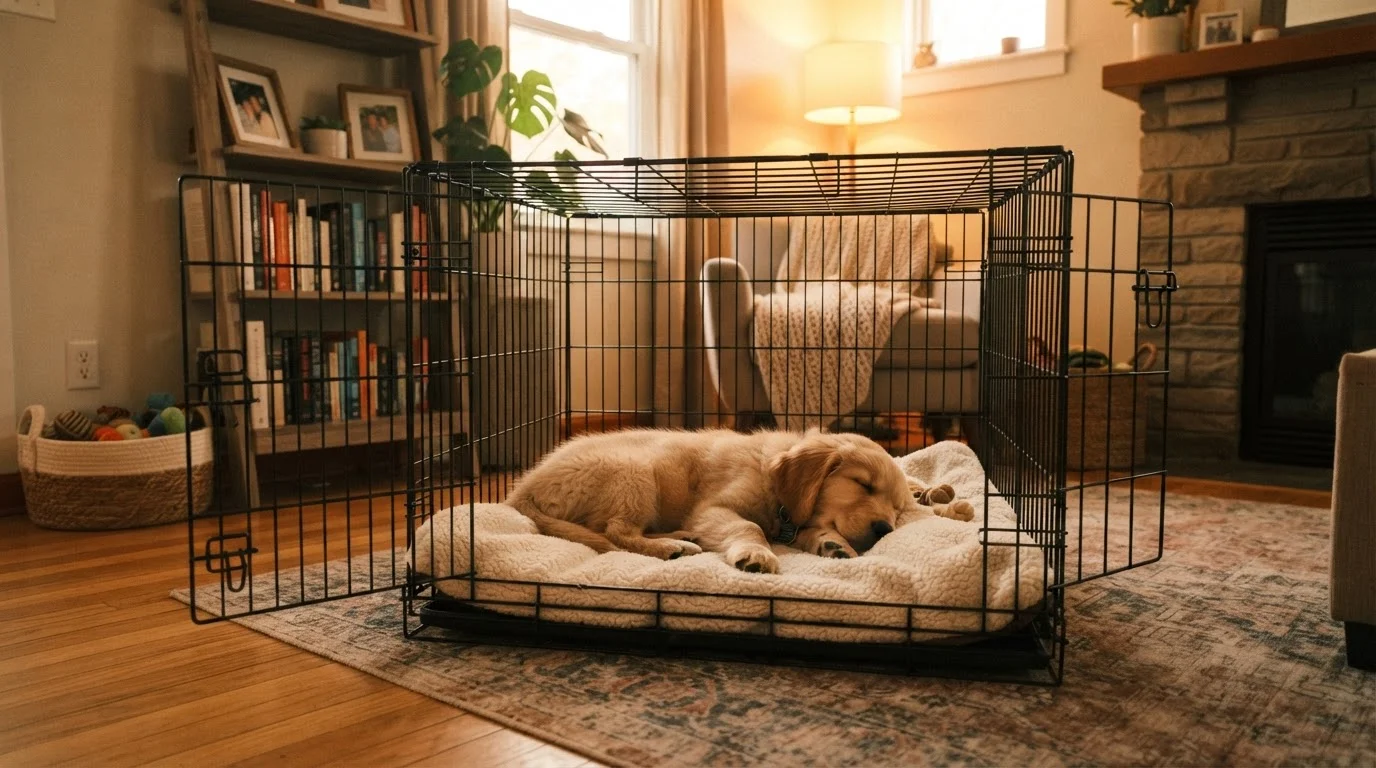
Photo: FaqExplorer.net | Informative Website editorial
Key Takeaways
- Dogs are den animals by nature - crates leverage this instinct rather than fight it.
- Crate training works through gradual, positive association, never force or punishment.
- Correct crate sizing is critical: too large defeats the housetraining purpose.
- Most dogs become reliably comfortable in a crate within one to three weeks.
- A crate should never be used as a disciplinary tool or long-term confinement solution.
Why Crate Training Makes Behavioral Sense
Dogs are descended from animals that sought out small, enclosed spaces for rest and security. A well-introduced crate taps directly into this instinct, giving your dog a defined personal space that belongs entirely to them. Far from being cruel, crate training - done correctly - can reduce anxiety, support housetraining, and prevent destructive behavior when owners are unavailable to supervise.
Understanding why the method works makes it easier to apply it patiently. Dogs don't generalize the way humans do; they learn through consistent repetition and association. If the crate consistently predicts comfort, rest, and occasional food rewards, that's precisely what the dog learns to expect from it. If it's used as punishment, the dog learns to dread it instead. The behavioral logic is straightforward - and it's why veterinary behaviorists and certified trainers broadly support crate training as a welfare-positive tool when used appropriately.
It's worth noting that not every dog adjusts at the same pace. Dogs with prior negative confinement experiences - including many rescues - may require significantly more time and patience. For context on how a dog's living environment more broadly shapes their behavior, see our look at indoor vs. outdoor dog welfare.
A Crate Is Not a Punishment Space
What You'll Need Before Starting
Gathering the right setup before you begin saves you from improvising mid-training, which can disrupt consistency. Crate size is the most commonly misunderstood variable - many owners choose a crate that's far too large, inadvertently giving the dog room to designate a toilet corner, which undermines housetraining entirely.
What you will need
Dog crate (wire or plastic)
The primary training space - sized so the dog can stand, turn around, and lie down comfortably but not much larger.
Soft crate bedding or mat
Provides comfort and makes the crate feel like a resting place rather than an empty box.
High-value treats
Used to create positive associations with the crate during each training phase.
Chew toy or food-stuffed puzzle toy
Keeps the dog calmly occupied during initial closed-door intervals.
Crate cover or blanket
Placed over three sides to create a den-like atmosphere that many dogs find calming.
The Step-by-Step Crate Training Process
Crate training unfolds in phases, each building on the dog's growing comfort with the previous one. Rushing any stage is the most common mistake owners make. Work at your dog's pace - some dogs will progress through all six steps in a week; others, particularly anxious or older dogs, may need a month. Both timelines are normal. Dogs also communicate a great deal through body language, and understanding why they behave in certain ways helps owners respond appropriately - see our piece on puzzling dog behaviors explained for broader context.
Choose and set up the right crate
Select a crate large enough for your dog to stand, turn around, and lie down comfortably - but not so large that one end becomes a bathroom corner. Wire crates offer good ventilation and visibility; plastic travel crates feel more enclosed and suit dogs who prefer a darker den. Place the crate in a room where your family spends time, such as a living room or bedroom. Isolation makes crate training harder.
Introduce the crate with the door open
Place soft bedding inside and let the dog explore at their own pace - never push or lure them in forcefully. Toss a few treats near the entrance, then just inside the threshold. Allow the dog to enter and exit freely. Repeat several times a day over one to two days. The goal at this stage is simple: the dog chooses to approach the crate voluntarily.
Feed meals near and inside the crate
Begin placing the dog's regular meals just inside the crate entrance, gradually moving the bowl further in over successive meals until the dog is eating fully inside with all four paws past the threshold. This uses the dog's natural motivation around food to build a calm, reliable association between the crate interior and good experiences.
Practice short closed-door intervals
Once your dog is eating comfortably inside the crate, gently close the door while they finish their meal. Open it as soon as they're done. Over the following days, extend the time the door stays closed - first by a few minutes, then longer - while you remain in the room. Offer a food-stuffed toy or chew to keep the dog calmly engaged.
Build up to longer intervals and brief absences
When the dog is comfortable for 10 to 15 minutes with you present, begin stepping briefly out of sight. Gradually extend absences from a few minutes to 30 minutes and beyond. Use a calm, matter-of-fact tone when crating - long goodbyes and greetings can heighten anxiety. Most dogs reach a reliable comfort level within one to three weeks of consistent practice.
Use the crate for overnight rest
Place the crate in or near your bedroom initially so the dog can hear and smell you. This is especially important for puppies, who will need a middle-of-the-night bathroom trip. As the dog matures and gains bladder control, you can gradually relocate the crate if preferred. A consistent bedtime routine - exercise, toilet break, then crate - signals that it's time to settle.
Cover the Crate to Mimic a Den
Watch Crate Time Limits Carefully
The content on this site is provided for informational purposes only and should not be considered a substitute for professional advice. While we strive to provide accurate and up-to-date information, we make no guarantees regarding its completeness or accuracy. Always consult a qualified professional for advice specific to your circumstances before making any decisions.