
Common Misconceptions About Smart Home Privacy

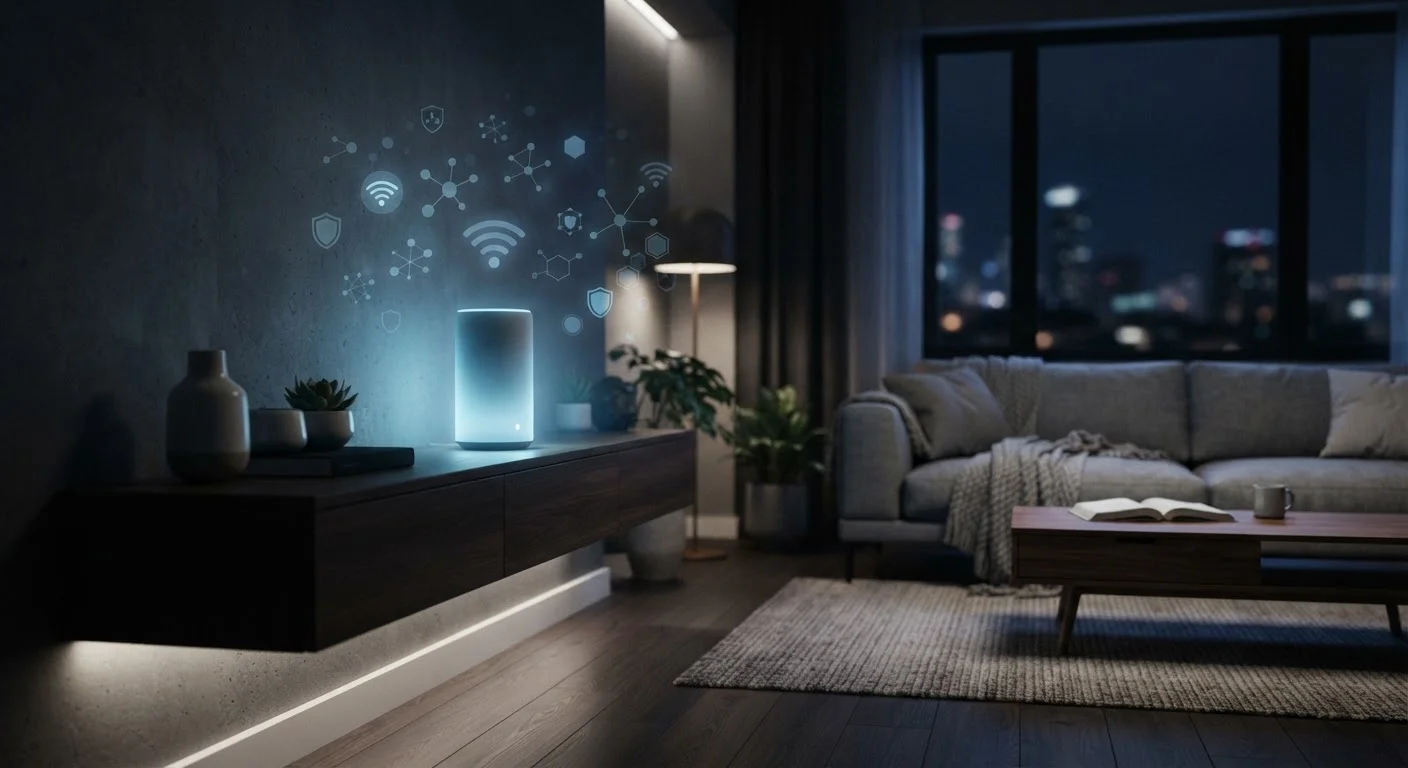
Photo: FaqExplorer.net | Informative Website editorial
Key Takeaways
- Smart speakers only send audio to the cloud after detecting a wake word, not continuously.
- Most smart home data collected is behavioral and anonymized, not personally identifying conversation content.
- Local-processing hubs can significantly reduce how much data leaves your home network.
- Privacy settings in device apps give consumers meaningful, real control over data collection.
- Disabling a microphone or camera physically remains one of the most reliable privacy protections available.
Why Smart Home Privacy Myths Spread - and Why They Persist
Smart home privacy anxiety isn't irrational. These devices do have microphones, cameras, and persistent network connections - and the companies behind them have commercial interests. What's missing from most public discussion, though, is precision. Vague fears about "always-on surveillance" or "selling your data" obscure the specific, addressable realities of how these devices actually function.
The gap between perception and reality has real costs. Consumers either avoid genuinely useful technology based on exaggerated risk, or they adopt it with so little scrutiny that they miss the controls that would actually protect them. Clear, accurate information serves both outcomes better than alarm or dismissal.
Below, we address the most persistent misconceptions directly - what people believe, what's actually true, and why the distinction matters for anyone making decisions about connected devices in their home.
Myth
Smart speakers are always listening and recording everything you say, sending it all to the cloud.
Fact
Smart speakers use on-device wake-word detection and only transmit audio to the cloud after the trigger phrase is recognized.
The microphone in a smart speaker is active, but the processing happens locally on a dedicated chip that listens exclusively for the wake word - phrases like "Hey [device name]." The audio stream is not continuously recorded or uploaded. Only after the wake word is detected does a clip get sent to manufacturer servers for interpretation.
False activations - where the device mishears ambient sound as its wake word - do occur and are a legitimate concern. These clips may be briefly stored and, depending on your account settings, reviewed for accuracy improvements. However, this is categorically different from wholesale surveillance. Most platforms allow you to review and delete your voice history. For a deeper look at why mishearings happen, see why your smart speaker mishears you.
Myth
Smart home manufacturers sell your personal conversations and home data directly to advertisers.
Fact
Major manufacturers' privacy policies generally prohibit selling raw audio or personally identifiable smart home interactions to third-party advertisers.
The reality is more nuanced than either total safety or total exposure. Manufacturers do collect usage data - when devices are triggered, how often features are used, and sometimes behavioral patterns like occupancy schedules from thermostats or motion sensors. This data is primarily used for product improvement, service delivery, and, in some cases, aggregate analytics.
Some platforms tie smart home data into broader advertising ecosystems, particularly when you use free, ad-supported services alongside your devices. Reading a device's privacy policy - specifically the data-sharing and third-party sections - tells you exactly what is and isn't shared. It's less dramatic than the headlines suggest, but it does warrant attention. Smart thermostats, for example, collect detailed occupancy patterns; see how smart thermostats learn and schedule to understand what that data actually looks like.
Myth
Once a smart device is on your network, hackers can easily access your cameras and microphones.
Fact
Modern smart home devices use encrypted communications, and the practical attack surface for most home networks is significantly smaller than popular narratives suggest.
Vulnerabilities in smart home devices do exist and are discovered periodically - that's not in dispute. But the threat model for a typical household differs substantially from high-value targets. Most real-world intrusions exploit weak router passwords, outdated firmware, or reused credentials rather than sophisticated zero-day exploits against specific device hardware.
Practical mitigations are well-established: keep firmware updated, use strong unique passwords, and consider placing smart devices on a separate network segment (a guest network or dedicated IoT VLAN) isolated from computers holding sensitive data. These steps don't require technical expertise. Keeping your connected devices secure covers this in practical detail.
Myth
All smart home data is processed and stored in the cloud, meaning you have no control over it.
Fact
Many modern devices and hubs support local processing, keeping significant amounts of data entirely within your home network.
The cloud-dependency model was dominant in earlier smart home generations, but the ecosystem has shifted. Protocols like Matter and local-first hubs are increasingly designed to function without a persistent cloud connection. Automation routines, device states, and even some voice commands can be processed on hardware sitting in your home rather than on a remote server.
Even cloud-connected devices typically give users access to privacy dashboards where data can be reviewed or deleted. Understanding the distinction between local and cloud processing is a meaningful factor when choosing devices. How smart home hubs manage local vs. cloud processing explains how central controllers handle this trade-off.
Myth
There's nothing practical consumers can do to improve their smart home privacy.
Fact
Several effective, user-accessible controls - from hardware mute switches to granular app permissions - give consumers genuine influence over their data footprint.
Fatalism about smart home privacy is understandable but inaccurate. Physical mute buttons and camera shutters on devices, when used, are hardwired interruptions that software cannot override - they're among the most reliable privacy tools available. Beyond hardware, most platforms offer settings to limit data retention, opt out of human review of audio clips, and restrict third-party data sharing.
Network-level controls add another layer: a router that supports device-level traffic monitoring can reveal exactly what your devices are sending and to where. Starting your smart home setup with privacy considerations built in from the beginning is far easier than retrofitting them later. Setting up a smart home from scratch includes guidance on building a privacy-conscious foundation.
What You Can Actually Do About Smart Home Privacy
Understanding the myths is only half the picture. The practical implication is that smart home privacy is a manageable concern, not an insurmountable one - provided you engage with it deliberately rather than ignoring it entirely.
Default Settings Favor Convenience, Not Privacy
Start at the device level: read the privacy policy for any product before purchase, focusing on what data is collected, how long it's retained, and whether it's shared with third parties. Enable hardware mute or camera shutters when devices aren't in active use. Review and delete stored voice histories periodically using the platform's app.
At the network level, consider router settings that allow you to segment smart devices from the rest of your home network. This limits what any compromised device could access. Understanding smart home protocols like Matter and Zigbee is also useful - protocols with local-first architectures reduce cloud dependency by design.
Privacy in a smart home isn't a binary state. It exists on a spectrum that you can meaningfully influence with informed decisions and consistent habits.
89%
of U.S. smart speaker owners unaware of voice history settings
A survey by NPR and Edison Research found that a large majority of smart speaker users had not reviewed or adjusted their voice history and privacy settings.
~1-3 sec
Typical audio clip length sent to cloud after wake word
Industry documentation from major smart speaker platforms indicates that post-wake-word audio clips transmitted for processing are typically only a few seconds long, not continuous streams.
The content on this site is provided for informational purposes only and should not be considered a substitute for professional advice. While we strive to provide accurate and up-to-date information, we make no guarantees regarding its completeness or accuracy. Always consult a qualified professional for advice specific to your circumstances before making any decisions.