
Hydration vs. Moisture: Two Different Problems, Two Different Solutions

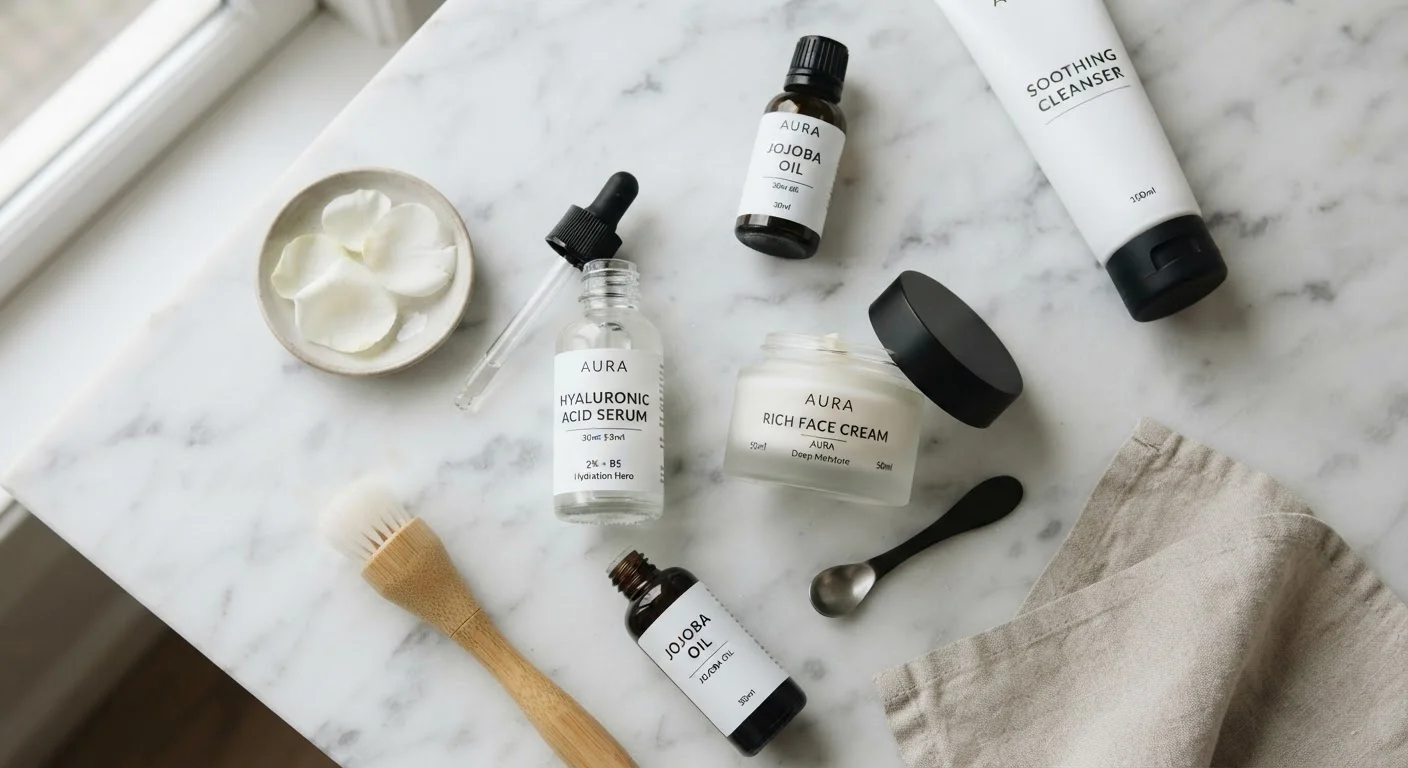
Photo: FaqExplorer.net | Informative Website editorial
Key Takeaways
- Dehydrated skin lacks water; dry skin lacks oil - they require different ingredients.
- Humectants like hyaluronic acid attract water into skin cells to address dehydration.
- Occlusives and emollients - such as ceramides and shea butter - repair and seal the lipid barrier for true dryness.
- Any skin type, including oily skin, can experience dehydration.
- Layering a humectant under a moisturizer addresses both concerns simultaneously.
Why the Confusion Exists
"Hydrating" and "moisturizing" are used interchangeably on product labels, in beauty editorial, and in everyday conversation - but they describe fundamentally different biological processes. Conflating them leads to routines that address the wrong problem, leaving skin still uncomfortable despite consistent product use.
The distinction matters because skin has two separate mechanisms at play: the water content inside skin cells and the lipid structure that keeps that water from evaporating. Fixing one does not automatically fix the other. For a broader look at commonly misunderstood skincare concepts, see our piece on skincare myths that persist despite the science.
Condition vs. Skin Type: A Key Distinction
Dehydrated Skin: A Water-Content Problem
Dehydration is a skin condition, not a skin type. It means skin cells lack sufficient water, leading to a dull appearance, a feeling of tightness, and fine lines that seem more pronounced than usual - particularly around the eyes and mouth. Crucially, any skin type can become dehydrated, including combination and oily skin.
The primary tool for addressing dehydration is a class of ingredients called humectants. These work by attracting water molecules - either from the environment or from deeper skin layers - and holding them near the surface. Common examples include:
- Hyaluronic acid - capable of holding significant amounts of water relative to its molecular weight
- Glycerin - a highly effective, well-researched humectant found in a wide range of formulas
- Aloe vera - a plant-derived humectant also noted for its soothing properties
- Panthenol (provitamin B5) - attracts moisture and is also associated with barrier support
For best results, humectants are typically applied to slightly damp skin so they have surface moisture to bind to. Without a follow-up occlusive or emollient layer, humectants can draw moisture from deeper skin layers if ambient humidity is very low.
~30%
Water content in a healthy stratum corneum
Research in dermatology journals generally cites optimal stratum corneum hydration as being in the range of 20-35%, below which skin begins to show visible signs of dryness and impaired barrier function.
1,000x
Water-holding capacity of hyaluronic acid
Hyaluronic acid is widely cited in dermatological literature as capable of holding up to 1,000 times its weight in water, making it one of the most effective humectant ingredients available.
Dry Skin: A Lipid-Barrier Problem
Dryness is a skin type - a largely genetic characteristic defined by reduced sebum production and an impaired lipid barrier. The outermost layer of skin, the stratum corneum, relies on a mixture of ceramides, fatty acids, and cholesterol to form an effective seal. When that barrier is compromised, water escapes through a process called transepidermal water loss (TEWL), leaving skin rough, flaky, and prone to irritation.
Addressing true dryness requires ingredients that rebuild or reinforce this barrier:
- Ceramides - lipid molecules that are a native component of the skin barrier; topical application can help replenish depleted levels
- Fatty acids (such as linoleic acid and oleic acid) - support barrier integrity and can be found in oils like rosehip and jojoba
- Occlusives (such as petrolatum, squalane, and beeswax) - form a physical film over the skin surface to prevent water evaporation
- Emollients (such as shea butter and cocoa butter) - fill gaps between skin cells, improving texture and flexibility
Understanding your baseline skin type is an important foundation. Our article on identifying your skin type accurately outlines how dermatologists approach this assessment.
Building a Routine That Addresses Both
Many people experience some degree of both concerns - especially during seasonal transitions, after travel, or following overuse of harsh cleansers. The solution is a strategic layering approach rather than searching for a single product that does everything.
A practical framework:
- Cleanse gently - avoid surfactants that strip the skin's natural oils, which further impairs barrier function
- Apply a humectant serum - to damp skin, targeting water replenishment at the cellular level
- Seal with a moisturizer - choose one that contains both emollients (for barrier repair) and occlusives (to lock in hydration)
- Add SPF in the morning - UV exposure contributes to barrier degradation over time
This sequence works for most skin types, though formulation weight should be adjusted to individual tolerance - lighter gels for oily or acne-prone skin, richer creams for those with persistent dryness.
Patch Test Before Layering New Actives
This article is for general informational purposes only and does not constitute medical or dermatological advice. Consult a qualified skincare professional or dermatologist for personalized guidance.
Frequently Asked Questions
The content on this site is provided for informational purposes only and should not be considered a substitute for professional advice. While we strive to provide accurate and up-to-date information, we make no guarantees regarding its completeness or accuracy. Always consult a qualified professional for advice specific to your circumstances before making any decisions.