
Ingredient Conflicts That Can Quietly Undermine Your Routine

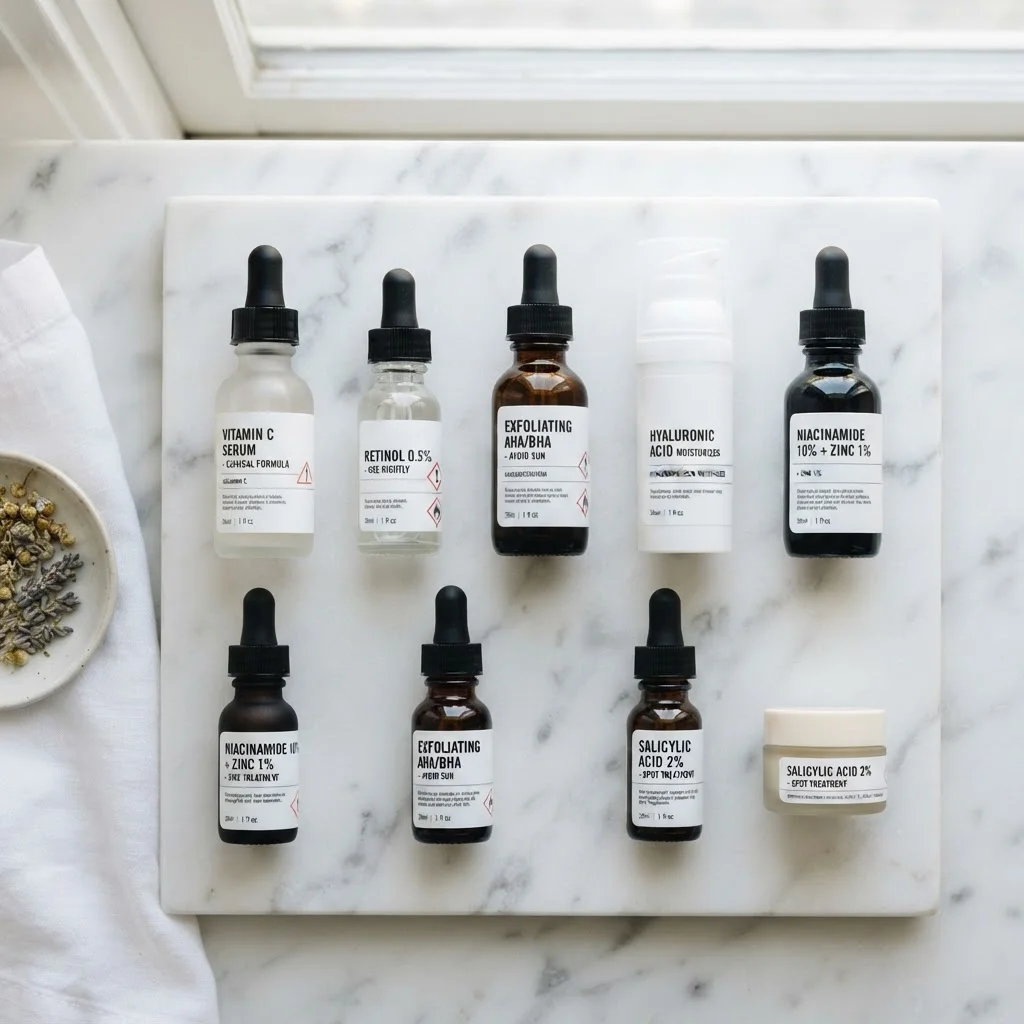
Photo: FaqExplorer.net | Informative Website editorial
Key Takeaways
- Retinol and AHAs/BHAs used together can cause significant irritation and barrier damage.
- Vitamin C loses potency and may irritate when layered with niacinamide at high concentrations.
- Benzoyl peroxide can oxidize and deactivate retinoids when applied simultaneously.
- Separating conflicting actives by time of day or alternating nights is a practical solution.
- Patch testing any new combination before full application helps prevent adverse reactions.
Why Ingredient Conflicts Are More Common Than You Think
Skincare routines have become increasingly complex, with many consumers layering multiple actives in a single session. The problem is that not all ingredients coexist peacefully - some neutralize each other's effectiveness, while others generate irritation that accumulates gradually rather than all at once. This slow-burn effect makes conflicts easy to miss: your skin may appear "sensitive" for weeks before you connect the symptom to a specific pairing.
Understanding which combinations to avoid doesn't require a chemistry degree, but it does require knowing the basic behavior of the ingredients you're using. For a grounding reference on what common actives actually do, see our Active Ingredients Glossary. The mistakes below cover the most clinically relevant conflicts - along with the reasoning behind each.
Layering retinol and AHAs or BHAs in the same application.
Combining high-concentration vitamin C with niacinamide in the same step.
Applying benzoyl peroxide and a retinoid in the same routine.
Using two exfoliating acids together without accounting for cumulative irritation.
Mixing oil-based vitamin C derivatives with water-based actives in the wrong order.
How to Restructure Your Routine Around Conflicts
The good news is that most ingredient conflicts don't require you to eliminate products - they require smarter scheduling. Separating actives between your morning and evening routines is one of the most effective strategies. For example, vitamin C works well in the morning (where it also supports antioxidant protection), while retinoids and chemical exfoliants are better suited to nighttime use.
~70%
Users reporting skin irritation from layering actives
A survey by the International Dermal Institute found that approximately 70% of respondents who experienced irritation were layering multiple active ingredients without guidance.
2×
Increased barrier disruption risk with combined exfoliants
Dermatology literature consistently notes that combining multiple exfoliating acids roughly doubles transepidermal water loss compared to using a single acid at the same total concentration.
If you're unsure how to split your current lineup, our guide on morning vs. evening routine timing explains which product categories belong in each part of the day. For sensitive or reactive skin, alternating actives on different nights - rather than using them on the same evening - adds another layer of protection. And before introducing a new combination to your full face, patch test the pairing first to gauge how your skin responds.
This article is for general informational and educational purposes only. It is not a substitute for professional dermatological or medical advice. If you experience persistent irritation, redness, or skin reactions, consult a qualified dermatologist.
The content on this site is provided for informational purposes only and should not be considered a substitute for professional advice. While we strive to provide accurate and up-to-date information, we make no guarantees regarding its completeness or accuracy. Always consult a qualified professional for advice specific to your circumstances before making any decisions.