
Morning Routine vs. Evening Routine: Why the Timing of Products Matters

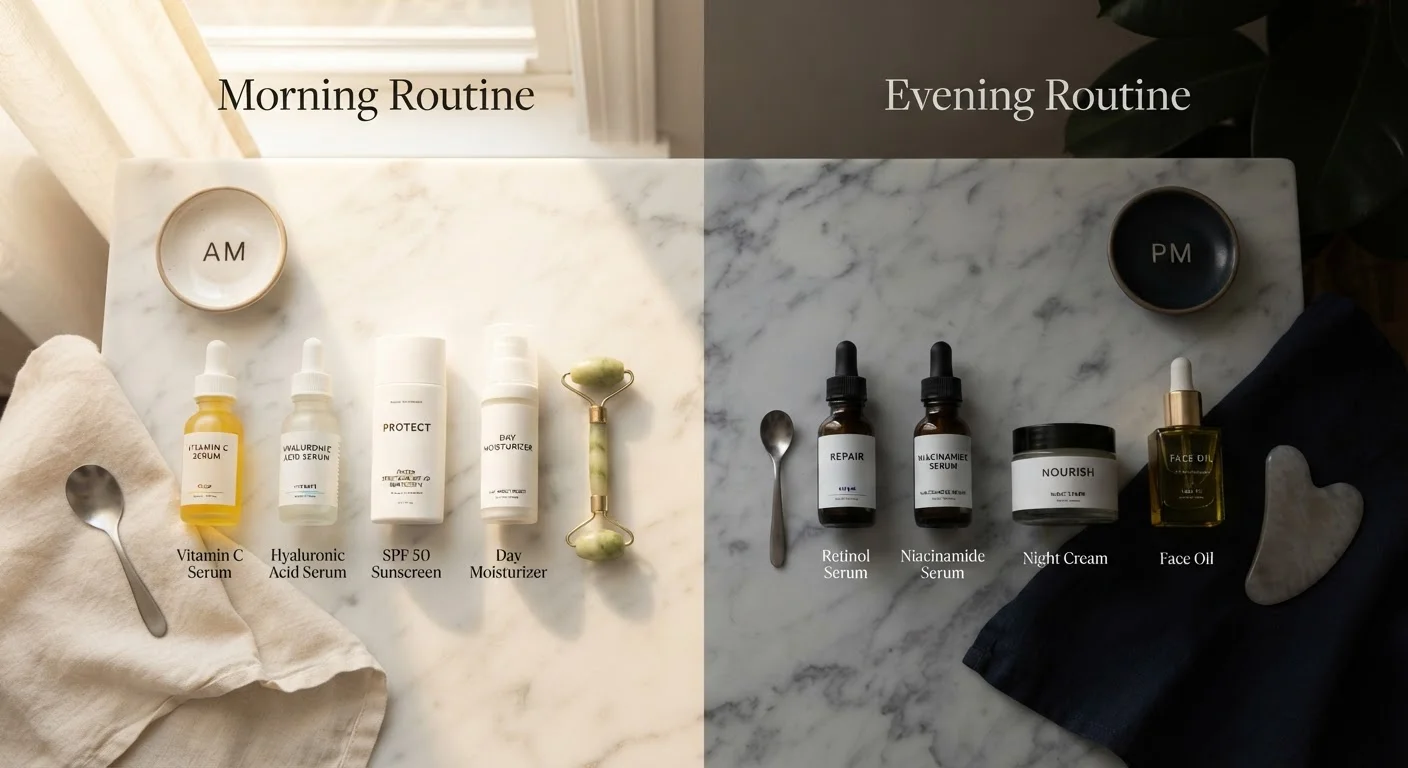
Photo: FaqExplorer.net | Informative Website editorial
Key Takeaways
- Skin operates in a protective mode during the day and a repair mode at night - routines should match each phase.
- Sunscreen is non-negotiable in the morning; most active treatments like retinoids belong at night.
- Evening is when skin's cell turnover peaks, making it the most receptive time for targeted ingredients.
- Applying photosensitizing ingredients like retinol in the morning can increase risk of sun-induced irritation.
- Both routines benefit from cleansing, but the goals differ: AM removes overnight buildup, PM removes the day's accumulation.
Why Timing Isn't Just a Preference - It's Skin Biology
Your skin doesn't behave the same way at 7 a.m. as it does at 10 p.m. Research in chronobiology - the study of biological rhythms - shows that skin follows a circadian cycle that shifts its priorities between daytime defense and nighttime repair. Ignoring this rhythm means your products may be working against your skin's natural state rather than with it.
During the day, skin produces more sebum, tightens its barrier function, and increases blood flow to the surface in anticipation of environmental exposure. At night, the skin barrier becomes more permeable, transepidermal water loss (TEWL) - the rate at which moisture escapes through skin - increases, and cellular turnover accelerates. These shifts have direct implications for which ingredients are effective, safe, and appropriately timed.
Understanding this cycle is the starting point for building a skincare routine from the ground up that actually works with your biology, not around it.
The Morning Routine: Defend, Protect, Prepare
The AM routine's primary job is protection. The core steps - gentle cleansing, antioxidant serum, moisturizer, and broad-spectrum SPF - form a layered defense system against the day's environmental aggressors.
Cleansing in the morning is lighter work than the evening. Overnight, skin sheds dead cells and secretes sebum, so a mild cleanser or even a simple rinse is sufficient for many skin types. Harsh cleansing in the morning can strip the barrier you need intact all day.
Antioxidant serums - particularly those containing vitamin C - are ideally applied in the morning. Vitamin C helps neutralize free radicals generated by UV exposure and pollution. Importantly, it also supports SPF by amplifying photoprotection, though it is not a substitute for sunscreen.
Sunscreen is the non-negotiable anchor of any morning routine. Broad-spectrum SPF protects against both UVA (aging) and UVB (burning) rays. Dermatological guidance consistently positions daily SPF as the single most impactful anti-aging step available. For more on how these products interact before makeup, see the layering order that makes products perform better.
| Criterion | Morning Routine | Evening Routine |
|---|---|---|
| Primary goal | Protection and defense | Repair and treatment |
| Cleansing intensity | Gentle or rinse-only | Thorough; often double cleanse |
| Sunscreen | Required (broad-spectrum SPF) | Not needed or appropriate |
| Retinoids / exfoliating acids | Avoid - photosensitizing | Ideal time to apply |
| Antioxidants (e.g. vitamin C) | Highly effective, synergistic with SPF | Less effective; may conflict with actives |
| Moisturizer weight | Lightweight; non-occluding under SPF | Richer; supports overnight barrier repair |
| Skin permeability | Lower - barrier is more defended | Higher - greater ingredient absorption |
The Evening Routine: Repair, Treat, Restore
The PM routine does the heavy lifting for skin health. Because skin is in active repair mode overnight and sun exposure is no longer a concern, this is when treatment-focused ingredients belong.
Double cleansing is most relevant in the evening. The first cleanse - often an oil-based formula - dissolves SPF, makeup, and sebum. A second water-based cleanser then removes any residual impurities. For a detailed breakdown of what each cleansing step accomplishes, see what each step actually does.
Retinoids (including retinol and prescription-strength tretinoin) are the cornerstone of most PM treatment routines. They accelerate cell turnover and stimulate collagen production, but they degrade in sunlight and make skin more photosensitive - nighttime use is essential. Similarly, exfoliating acids such as AHAs and BHAs are better suited to evening application.
Richer moisturizers and occlusives applied at night take advantage of the skin's increased permeability. Ingredients like ceramides, hyaluronic acid, and peptides can penetrate more readily and support barrier recovery while you sleep. Since sleep quality directly affects skin recovery, consider how your wind-down routine shapes the environment your skin is repairing in.
Consistency Matters More Than Complexity
Ingredient Placement: Common Mistakes and How to Avoid Them
Misplacing an ingredient isn't just about reduced efficacy - in some cases it can cause irritation or unintended skin reactions. A few key rules apply broadly:
- Retinoids at night only. Applying retinol in the morning and then stepping into sunlight increases photosensitivity risk and degrades the ingredient before it can act.
- Vitamin C in the morning. This antioxidant works synergistically with SPF and degrades when exposed to certain nighttime actives like benzoyl peroxide.
- AHAs and BHAs at night. These exfoliating acids increase sun sensitivity; nighttime use followed by morning SPF is the recommended pairing.
- SPF never at night. Sunscreen serves no protective purpose without UV exposure and adds unnecessary occlusion to a repair-focused routine.
Some ingredient combinations also conflict regardless of timing. For a fuller picture, explore ingredient conflicts that can quietly undermine your routine. Skin type, sensitivity, and any existing conditions can also affect which ingredients are appropriate - consulting a licensed dermatologist is recommended before introducing potent actives, particularly for those with reactive or compromised skin.
This article is for general informational purposes only and does not constitute medical or dermatological advice. Consult a qualified skincare professional or dermatologist before making changes to your routine, especially if you have a skin condition or use prescription products.
The content on this site is provided for informational purposes only and should not be considered a substitute for professional advice. While we strive to provide accurate and up-to-date information, we make no guarantees regarding its completeness or accuracy. Always consult a qualified professional for advice specific to your circumstances before making any decisions.