
Private Seller vs. Dealership: Weighing the Real Differences

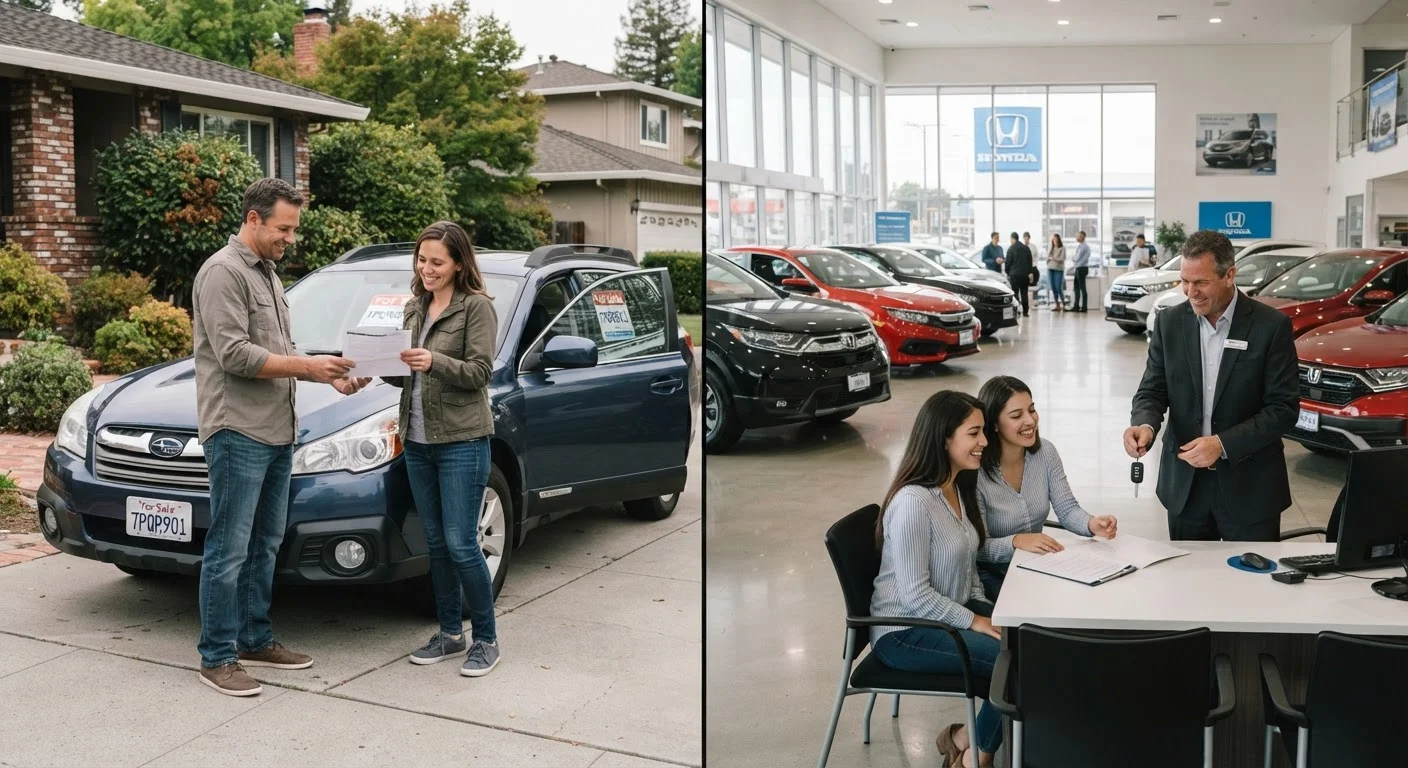
Photo: FaqExplorer.net | Informative Website editorial
Key Takeaways
- Private sellers typically list vehicles at lower prices, but buyers have fewer legal protections if problems arise.
- Dealerships offer financing, warranties, and regulated disclosures - often at a premium.
- Paperwork and title transfer are more straightforward at a dealership; private sales require more due diligence.
- A pre-purchase inspection by an independent mechanic matters more in a private sale than almost anywhere else.
- Neither route is universally better - the right choice depends on your budget, risk tolerance, and the specific vehicle.
The Price Question: Lower Listing vs. Hidden Costs
The most visible difference between buying from a private seller and a dealership is the asking price. Private sellers typically list vehicles closer to wholesale market value - they aren't recovering overhead costs like lot fees, employee salaries, or reconditioning expenses. That gap can be meaningful, often several hundred to a few thousand dollars depending on the vehicle's age and condition.
Dealerships, however, bundle services into the purchase that a private seller can't offer: certified inspections, limited warranties, and in some cases, return windows. Understanding what you're actually comparing - stripped price versus an all-in package - is essential before assuming the private listing is the better deal. Factor in the cost of an independent inspection, any deferred maintenance you'll inherit, and whether you'll need to purchase separate warranty coverage.
For a broader look at how purchase price interacts with long-term ownership costs, see our comparison of new and used vehicles.
| Private Seller | Dealership | |
|---|---|---|
| Typical Price | Often lower asking price | Higher, reflects overhead and services |
| Consumer Protections | Minimal - generally "as-is" | Regulated disclosures, FTC Buyers Guide required |
| Financing Options | Must arrange independently | On-site financing available |
| Title & Paperwork | Buyer and seller manage together | Dealer handles most DMV filings |
| Warranty Coverage | Rarely included | Often available (limited or certified) |
| Negotiation Style | Direct with individual owner | Multi-variable dealership process |
| Inspection Access | Independent mechanic strongly advised | May include dealer inspection report |
| Recourse if Problems Arise | Very limited after sale | Licensing board, regulatory complaint options |
Consumer Protections and Legal Standing
This is where the two routes diverge most sharply. Licensed dealerships operate under state and federal regulations. They're required to disclose known defects in many states, must comply with the Federal Trade Commission's Used Car Rule (which mandates a Buyers Guide listing warranty terms), and are subject to licensing oversight that gives you somewhere to escalate a complaint.
Private sales are generally conducted under the legal principle of caveat emptor - let the buyer beware. Unless a seller commits outright fraud, your recourse after the sale is limited. Most states treat private vehicle transactions as "as-is" by default. This doesn't mean private sellers are dishonest; most aren't. But it does mean the burden of uncovering problems falls almost entirely on you before money changes hands.
Private Sales Offer Little Recourse After the Fact
Always run a vehicle history report and arrange a pre-purchase inspection by an independent mechanic before finalizing any used-car purchase - this is especially critical in private transactions.
Financing, Paperwork, and the Ownership Transfer
Dealerships can arrange financing on the spot, which simplifies the process - though it's worth noting that dealer-arranged loans aren't always the most competitive option available. Bringing a pre-approved offer from your own bank or credit union gives you a useful benchmark. For a detailed breakdown of how those two financing paths compare, see our guide on financing through a dealership versus your own bank.
Title transfer is also cleaner at a dealership. The dealer handles DMV paperwork, tax collection, and registration in most states, meaning you typically drive off with temporary tags and receive your title by mail. In a private sale, you and the seller must complete the title assignment correctly, submit it to your state's DMV, pay applicable taxes, and handle registration yourself. Errors in this process can create title problems that take time and money to unwind.
If you're also weighing what to do with your current vehicle, our article on selling privately versus trading in covers that side of the equation in full.
Negotiation Dynamics and Buyer Leverage
Private sellers are often motivated - by a move, an upgrade, or simply the need to free up cash - and may have more flexibility on price than a dealership's structured pricing allows. That said, negotiating with an individual can be unpredictable. There's no manager to appeal to, no structured trade-in appraisal process, and no financing desk to work a deal around.
Dealership negotiations involve more moving parts: trade-in value, financing rate, add-ons, and the out-the-door price can all shift independently. Understanding how those levers interact helps buyers avoid overpaying. For practical context on common dealership dynamics, see our piece on why buyers overpay at the dealership.
In either channel, the fundamentals of leverage are the same: know the market value of the vehicle before you arrive, understand what alternatives you have, and be willing to walk away. Once a purchase is complete - wherever it happens - you'll want a reliable framework for ongoing ownership. Our car ownership hub covers maintenance, insurance, and long-term vehicle management.
The content on this site is provided for informational purposes only and should not be considered a substitute for professional advice. While we strive to provide accurate and up-to-date information, we make no guarantees regarding its completeness or accuracy. Always consult a qualified professional for advice specific to your circumstances before making any decisions.