
Everything Involved in Selling a Car Privately vs. Trading It In

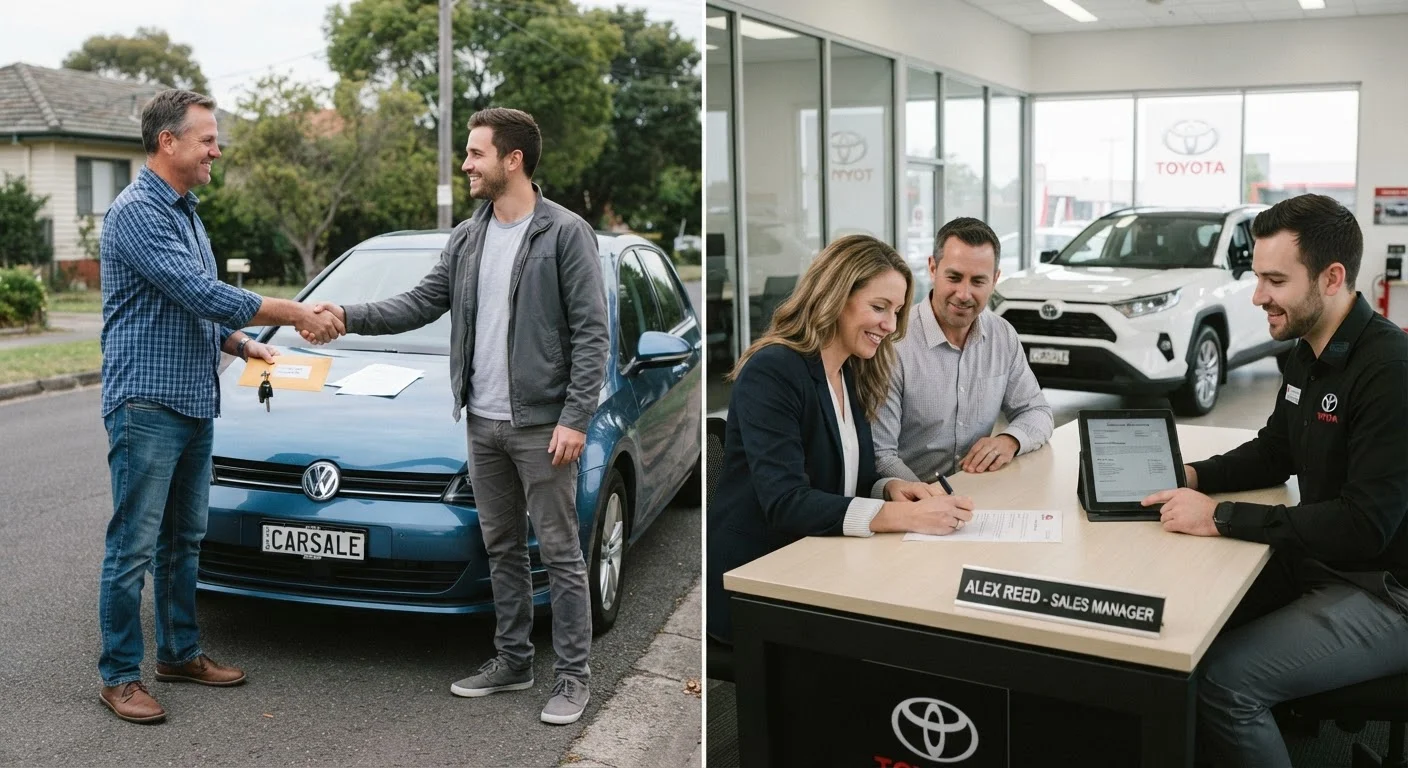
Photo: FaqExplorer.net | Informative Website editorial
Key Takeaways
- Private sales typically yield more money but require significantly more time, effort, and personal risk.
- Trade-ins are faster and simpler but dealers generally offer below private-market value.
- Both routes involve paperwork; private sales require more of it, handled entirely by the seller.
- Your vehicle's condition, your timeline, and your comfort with negotiation should drive the decision.
- Tax advantages of trade-ins may partially offset the difference in net proceeds, depending on your state.
What Each Path Actually Involves
When it's time to move on from a vehicle, most owners face a fundamental fork in the road: sell it privately or trade it in at a dealership. These aren't just different transaction types - they involve different processes, different timelines, and meaningfully different financial outcomes.
A private sale means you, as the owner, handle every stage: pricing, advertising, fielding inquiries, arranging test drives, negotiating, and completing the title transfer. A dealership trade-in means the dealer absorbs your vehicle's value as a credit toward a new or used purchase - or in some cases buys it outright. The dealer manages the paperwork and takes on the burden of reselling it.
Understanding what each actually demands helps you make a decision based on your situation, not assumptions. For more context on how dealers assess what they'll offer, see how trade-in value is determined.
The Private Sale Process: What You're Taking On
Selling privately can yield a higher sale price - often meaningfully so - but it comes with a clear set of responsibilities.
- Pricing research: You'll need to consult vehicle valuation tools and local market listings to set a realistic asking price. Overpricing stalls interest; underpricing leaves money behind.
- Advertising: Listings on classified platforms require photos, detailed descriptions, and ongoing management as inquiries come in.
- Vetting buyers: You'll need to screen contacts, arrange safe meeting locations for test drives, and handle cash, cashier's checks, or secure digital transfers.
- Paperwork: Title transfer, bill of sale, odometer disclosure, and any state-required release of liability forms are your responsibility. Requirements vary by state.
- Liability window: Until the title formally transfers, you may remain connected to the vehicle legally. Filing a notice of transfer promptly with your state's DMV is important.
Timeline: private sales can close in days with the right buyer, but realistically often take several weeks. Condition, price, and demand in your local market are the main variables.
Gather Your Documents Before You List
The Trade-In Process: Speed and Simplicity at a Cost
Trading in at a dealership compresses the entire process into one transaction. The dealer inspects your vehicle, makes an offer, and applies that amount toward your next purchase - or writes you a check if you're not buying from them.
What you gain:
- Speed: Most trade-in appraisals take under an hour. The whole transaction can close the same day.
- No private-party risk: You don't meet strangers, handle cash, or worry about fraudulent payment instruments.
- Paperwork handled by the dealer: Title transfer, lien payoff coordination (if applicable), and registration are managed on your behalf.
- Potential tax benefit: In many states, trade-in value is subtracted from the taxable purchase price of your replacement vehicle, reducing sales tax owed. The actual savings depend on your state's rules - worth verifying before you decide.
What you give up: dealers factor in reconditioning costs, wholesale margins, and market risk when making offers. Trade-in offers are typically lower than what a private buyer would pay. For a broader look at how this affects the buying side as well, see private seller vs. dealership differences.
| Private Sale | Dealership Trade-In | |
|---|---|---|
| Typical sale price | Higher - closer to retail market value | Lower - wholesale or near-wholesale offer |
| Time to complete | Days to several weeks | Same day in most cases |
| Paperwork burden | Seller handles all documentation | Dealer manages title and transfer |
| Buyer interaction required | Yes - screening, test drives, negotiation | No - single dealer appraisal |
| Payment risk | Must verify funds; fraud risk exists | Dealer payment is secure |
| Sales tax benefit | None | May reduce tax on replacement purchase (state-dependent) |
| Effort required | High | Low |
Making the Right Call for Your Situation
The financial gap between private sale and trade-in varies by vehicle. A well-maintained, in-demand model with complete service records may command a substantially higher private-sale price. An older vehicle with high mileage or cosmetic issues may see a narrower spread - and the effort of a private sale may not justify the difference.
Key questions to ask yourself:
- How much time can you realistically dedicate to selling?
- Are you purchasing a replacement vehicle at the same time?
- Is your vehicle in a condition and price range that attracts private buyers in your area?
- Does your state offer a sales tax offset for trade-ins that meaningfully narrows the net difference?
If you're also navigating a simultaneous vehicle purchase, see the car-buying process from start to finish for a full walkthrough of what that involves. And if you're weighing longer-term ownership decisions, leasing vs. buying over time is worth reviewing before you commit to your next vehicle.
Neither route is inherently better. The best choice is the one that aligns with your timeline, financial priorities, and appetite for the process involved.
The content on this site is provided for informational purposes only and should not be considered a substitute for professional advice. While we strive to provide accurate and up-to-date information, we make no guarantees regarding its completeness or accuracy. Always consult a qualified professional for advice specific to your circumstances before making any decisions.