
Wet Food vs. Dry Food for Cats

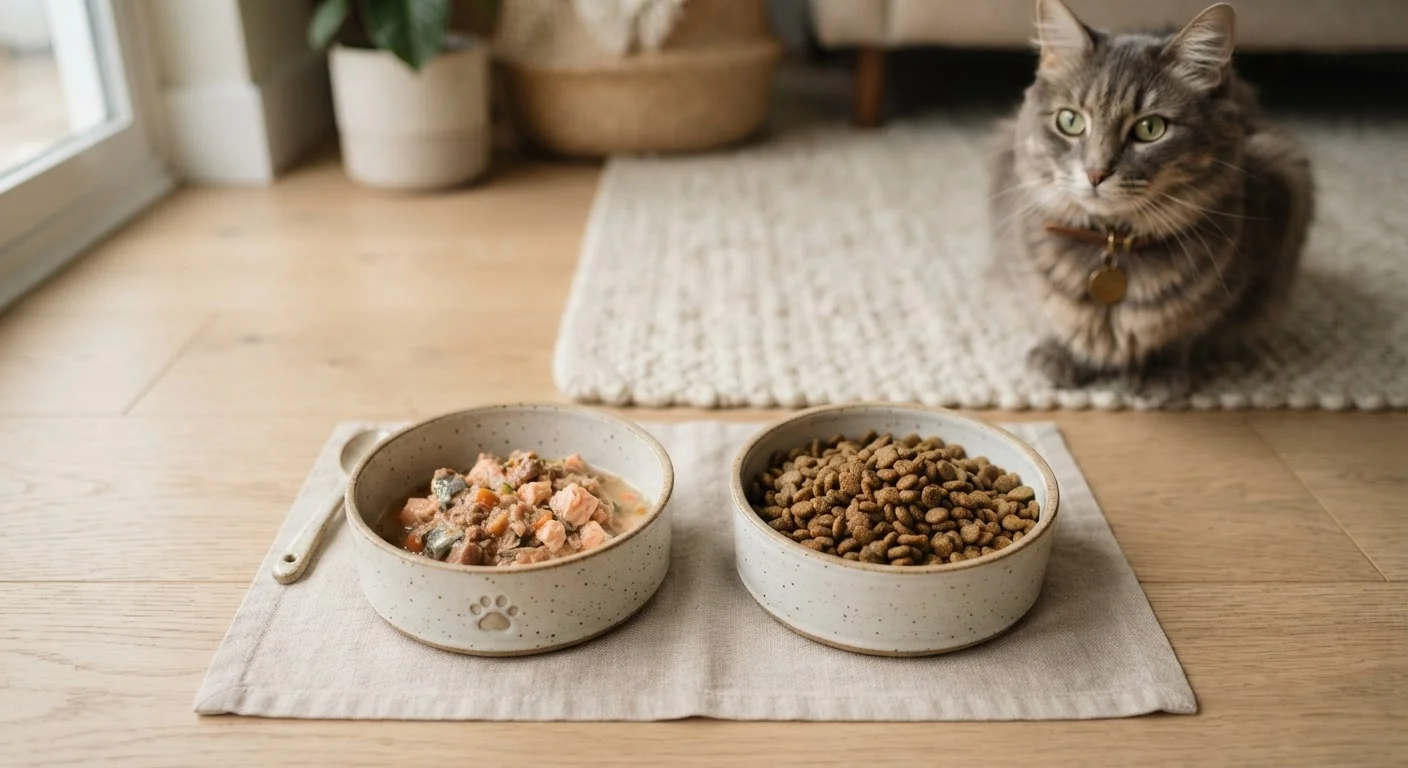
Photo: FaqExplorer.net | Informative Website editorial
Key Takeaways
- Wet food contains up to 80% moisture, making it a meaningful source of hydration for cats.
- Dry food is calorie-dense and shelf-stable, making portioning and storage more practical.
- Neither format is universally superior - life stage, health status, and individual preference all matter.
- Cats with urinary or kidney concerns may benefit from the added moisture in wet food.
- Dental health claims around dry food are more nuanced than commonly assumed.
- Many veterinarians support a mixed feeding approach tailored to the individual cat.
The Core Difference: Moisture Content
The most fundamental distinction between wet and dry cat food is water content. Wet food - sold in cans or pouches - typically contains between 70% and 80% moisture. Dry kibble, by contrast, contains roughly 8% to 10% moisture. This gap has real consequences for feline health, particularly because cats evolved as desert animals with a naturally low thirst drive.
Unlike dogs, cats don't instinctively drink enough water to compensate for a dry-only diet. A cat eating exclusively kibble may chronically consume less total fluid than their physiology requires, which some veterinary nutritionists link to a higher risk of urinary tract issues and kidney strain over time. Wet food partially bridges this gap by delivering water within the meal itself.
That said, access to fresh water remains essential regardless of food format. Cats on wet food still need water available at all times. For cats that drink poorly from still bowls, a recirculating water fountain can encourage better hydration alongside either food type.
| Criterion | Wet Cat Food | Dry Cat Food (Kibble) |
|---|---|---|
| Moisture content | 70-80% | 8-10% |
| Calorie density | Lower per gram | Higher per gram |
| Palatability | Generally higher | Variable by cat |
| Shelf life (opened) | 24-48 hours refrigerated | Weeks in sealed bag |
| Typical cost | Higher per calorie | Lower per calorie |
| Urinary health support | Stronger (via hydration) | Weaker without extra water |
| Dental health benefit | Minimal | Marginal at best |
| Suitability for free-feeding | Not recommended | More practical |
Nutrition, Calories, and Palatability
Both wet and dry cat food can be nutritionally complete. The key marker to look for is a statement from the Association of American Feed Control Officials (AAFCO) confirming the food meets minimum nutritional standards for your cat's life stage. Format alone does not determine quality - ingredient sourcing and formulation matter far more.
Calorie density differs significantly. Dry kibble delivers more calories per gram, making overfeeding easy if portions aren't carefully measured. Wet food's high moisture content means cats consume more volume for fewer calories, which can support a healthy weight - particularly in indoor cats with lower activity levels. If your cat's lifestyle and enrichment opportunities shape their energy needs, resources like keeping an indoor cat mentally stimulated can help you think holistically about activity alongside diet.
Palatability is another practical factor. Many cats find the aroma and texture of wet food more appealing, which makes it useful for encouraging eating in finicky or unwell cats. Dry food, however, often suits cats who graze throughout the day, since it doesn't spoil at room temperature within minutes of being served.
70-80%
Moisture in wet cat food
Veterinary nutritionists cite this range as a key advantage for cats with low thirst drive or urinary health concerns.
~8%
Moisture in dry kibble
The low moisture content of kibble means cats relying solely on dry food must drink significantly more water to meet their fluid needs.
~50%
Cats affected by periodontal disease by age 3
According to general veterinary estimates, dental disease is among the most common conditions seen in cats, underscoring that food format alone is insufficient for oral health.
Dental Health: Separating Fact from Assumption
A persistent belief holds that crunching on dry kibble helps clean cats' teeth. The reality is more complicated. While the mechanical action of chewing can marginally reduce plaque on the tooth surface contacted, most cats swallow kibble with minimal chewing - and regular-sized kibble doesn't meaningfully reach the gum line where periodontal disease develops.
Veterinary dental health organisations note that neither wet nor standard dry food provides adequate dental hygiene on its own. The most effective approaches to feline dental health remain regular professional cleanings and, where tolerated, tooth brushing with a vet-approved enzymatic toothpaste. Some prescription dental diets with a larger kibble size are formulated specifically to encourage more chewing - but these are distinct from regular dry food.
If dental health is a concern for your cat, your veterinarian is the right person to guide you toward an appropriate dental care routine, rather than relying on food format alone as a protective measure.
Cost, Practicality, and Life Stage Considerations
Dry food is generally less expensive on a per-calorie basis and stays fresh in a sealed bag for weeks. Wet food costs more, requires refrigeration after opening, and must be used within 24 to 48 hours once opened to avoid spoilage. For owners managing tight budgets or feeding multiple cats, these practical differences are real.
Life stage also shapes the conversation. Kittens have high energy demands and benefit from calorie-dense, protein-rich food in both formats. Senior cats - particularly those with reduced kidney function or dental sensitivity - may tolerate wet food better. How a cat's nutritional needs evolve across life stages is worth understanding before settling on a single feeding approach for the long term.
Many veterinarians support a mixed-feeding strategy: offering wet food once or twice daily for hydration and palatability, while providing a measured portion of dry kibble at other times. If you're considering this approach, discuss appropriate portion sizes with your vet to avoid unintentional overfeeding. For dog owners curious about parallel considerations, wet food vs. dry kibble for dogs covers similar trade-offs in the canine context.
This article is for general informational purposes only and is not a substitute for professional veterinary advice. Always consult a licensed veterinarian for guidance specific to your cat's health, diet, and nutritional needs.
The content on this site is provided for informational purposes only and should not be considered a substitute for professional advice. While we strive to provide accurate and up-to-date information, we make no guarantees regarding its completeness or accuracy. Always consult a qualified professional for advice specific to your circumstances before making any decisions.