
Wet Food vs. Dry Kibble: How to Think Through the Difference

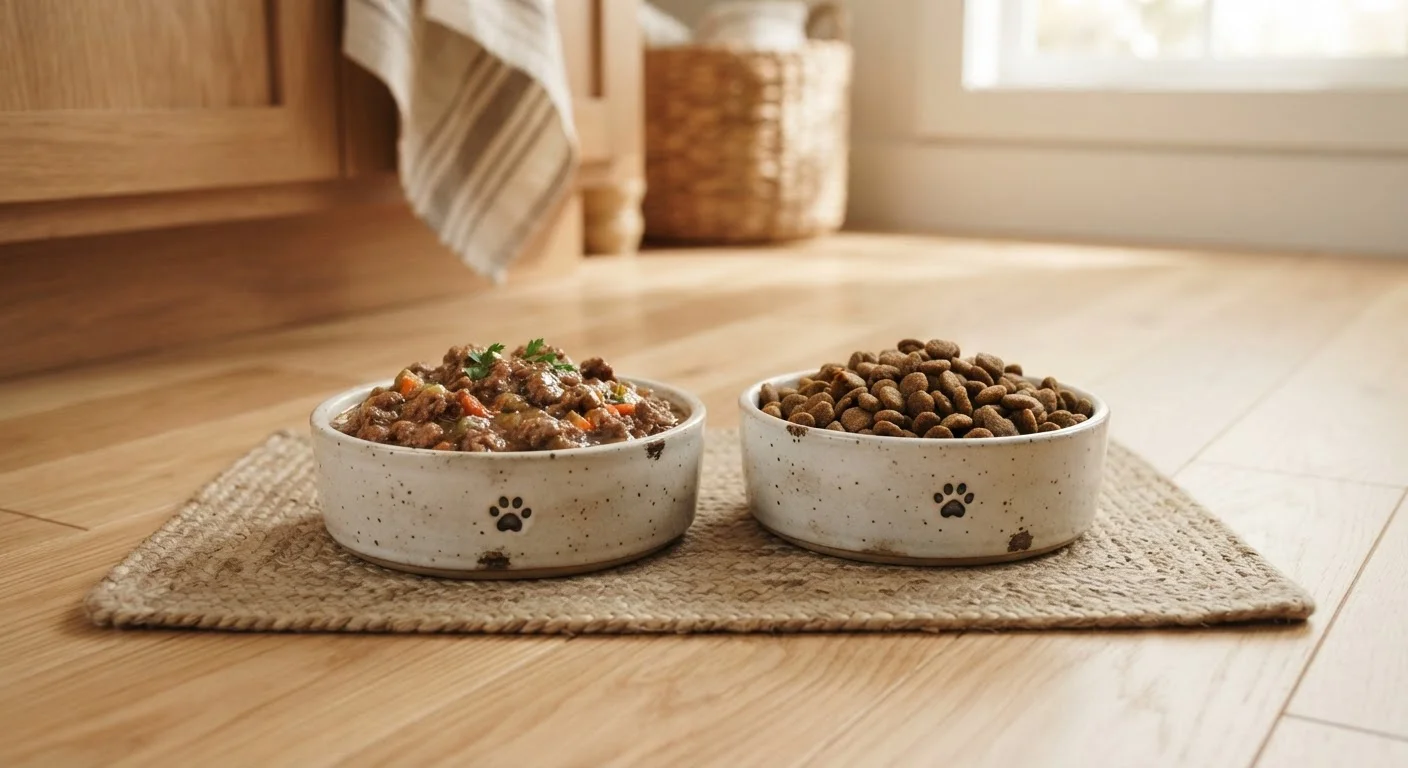
Photo: FaqExplorer.net | Informative Website editorial
Key Takeaways
- Wet food contains roughly 70-80% moisture; dry kibble typically contains only 10% - a significant hydration difference.
- Neither format is universally superior; the right choice depends on your dog's health, age, and individual needs.
- Dry kibble's texture may offer modest mechanical dental benefits, but it is not a substitute for tooth brushing.
- Wet food is generally more calorie-dense per volume, which matters for dogs managing their weight.
- Many veterinarians support mixed feeding as a practical middle ground for nutrition and palatability.
- Always read the AAFCO nutritional adequacy statement on any dog food to confirm it meets established standards.
The Core Difference: Moisture Content
The most fundamental difference between wet food and dry kibble is water content. Wet food - whether sold in cans, pouches, or trays - typically contains between 70% and 80% moisture. Dry kibble, by contrast, usually falls at or below 10%. That gap has real consequences for how your dog processes nutrients, maintains hydration, and even how hungry they feel after a meal.
Dogs who eat wet food absorb a meaningful portion of their daily water intake through their food alone. This matters most for dogs prone to urinary tract issues or those who don't drink enthusiastically from their bowl. For most healthy dogs eating dry food, drinking enough fresh water is essential to compensate. Body condition and overall health can both be influenced by how well-hydrated a dog stays day to day.
| Criterion | Wet Dog Food | Dry Kibble |
|---|---|---|
| Moisture Content | 70-80% | ~10% |
| Cost Per Meal | Higher | Lower |
| Caloric Density | Lower per volume | Higher per volume |
| Palatability | Highly palatable | Varies by dog |
| Dental Benefits | Minimal | Modest mechanical effect |
| Storage After Opening | Refrigerate; use within 1-2 days | Room temperature; weeks-long shelf life |
| Best For | Hydration, picky eaters, seniors | Routine feeding, convenience |
Nutrition, Calories, and Palatability
On a dry-matter basis - meaning once you strip away all moisture - wet food and high-quality dry kibble can deliver comparable macronutrient profiles. Protein, fat, and carbohydrate ratios vary far more by brand and formulation than by format alone. What matters most is whether the food carries an AAFCO (Association of American Feed Control Officials) nutritional adequacy statement confirming it's complete and balanced for your dog's life stage.
Caloric density is where the formats diverge noticeably. Wet food is typically less calorie-dense by volume, which can make dogs feel fuller while consuming fewer calories - a consideration worth discussing with your vet if your dog is overweight. Kibble packs more calories into a smaller serving, which simplifies portioning but also makes accidental overfeeding easier. Our guide to reading a dog food label explains how to use the guaranteed analysis panel to compare products accurately.
Palatability - how appealing the food is to your dog - also differs. Wet food's aroma and texture are generally more attractive to dogs, making it useful for picky eaters, puppies transitioning to solid food, or dogs whose appetite has diminished due to age or illness.
70-80%
Moisture content in typical wet dog food
Compared to roughly 10% in dry kibble, this difference significantly affects a dog's daily fluid intake from food alone.
~10%
Moisture content in dry kibble
Dogs eating dry food exclusively rely primarily on drinking water to meet their daily hydration needs.
3-4×
Approximate cost difference per calorie
Wet food generally costs more per calorie than dry kibble, a gap that compounds significantly in larger or multi-dog households.
Dental Health: What Kibble Can and Cannot Do
A common argument in favor of dry kibble is its benefit to dental health. The mechanical friction of chewing hard kibble against tooth surfaces can help slow the buildup of plaque and tartar - but veterinary dental specialists are careful to note this effect is modest and varies by kibble size, shape, and the individual dog's chewing habits.
Wet food, on the other hand, does little to mechanically clean teeth. Dogs eating primarily wet diets may accumulate tartar more quickly if other dental hygiene steps aren't taken. However, the answer to dental health isn't simply choosing dry food - it's adding active care like daily tooth brushing, which remains the gold standard recommended by veterinary dental organizations.
Dogs with missing teeth, jaw injuries, or post-surgical recovery may find kibble painful or difficult to chew, making wet food a medically appropriate alternative in those situations. Always follow your veterinarian's guidance when dental or oral health conditions are involved.
Practical Considerations: Cost, Storage, and Feeding Logistics
Dry kibble is considerably more economical per meal in most cases. It stores easily at room temperature, stays fresh for weeks after opening (when sealed properly), and is straightforward to measure and feed. For owners managing multiple dogs or working within a budget, kibble's logistical advantages are real.
Wet food costs more per calorie, requires refrigeration after opening, and must typically be used within a day or two. Opened cans or pouches left at room temperature are a bacterial risk - a factor worth considering during warm months or in households where feeding schedules vary.
Many veterinarians and nutritionists support a mixed approach: using dry kibble as the base diet while incorporating measured amounts of wet food for palatability or hydration benefits. If you take this route, adjusting total calorie intake to account for both components is important to avoid unintended weight gain. For a broader look at how your dog's living environment influences their nutritional needs, see our article on indoor vs. outdoor dog care.
This article is for general informational purposes only and is not a substitute for professional veterinary advice. Always consult a licensed veterinarian regarding your dog's specific dietary needs.
The content on this site is provided for informational purposes only and should not be considered a substitute for professional advice. While we strive to provide accurate and up-to-date information, we make no guarantees regarding its completeness or accuracy. Always consult a qualified professional for advice specific to your circumstances before making any decisions.