
What Parakeets Actually Eat - and What People Commonly Get Wrong

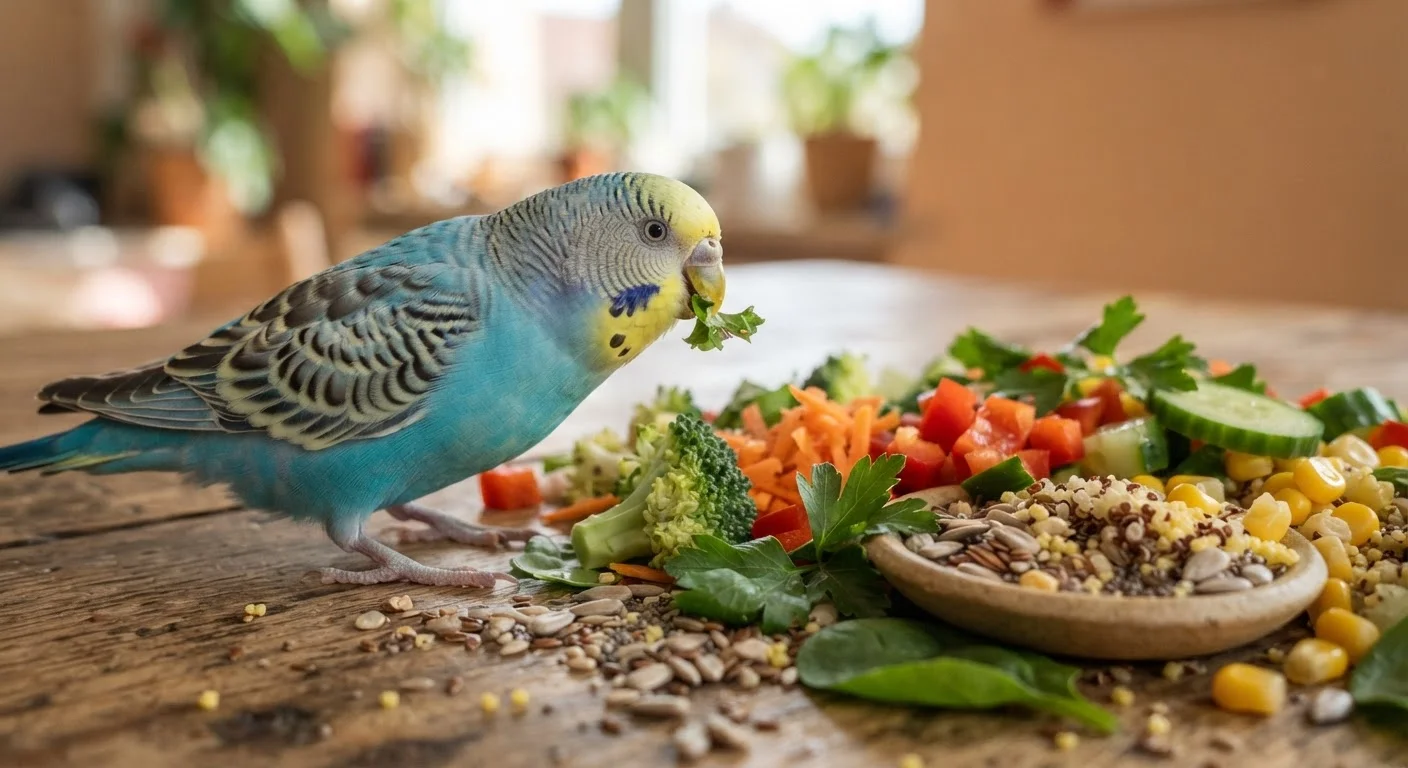
Photo: FaqExplorer.net | Informative Website editorial
Key Takeaways
- Seeds alone do not provide the nutrition parakeets need for a long, healthy life.
- Pellets, leafy greens, and vegetables should form the foundation of a balanced budgie diet.
- Several common household foods - including avocado and chocolate - are toxic to parakeets.
- Transitioning a seed-dependent bird to a varied diet takes patience and a gradual approach.
- Fresh water should be changed daily, and food dishes cleaned regularly to prevent bacterial growth.
The Seed-Only Trap: Why It's So Common
Walk into almost any pet store and you'll find rows of colorful seed mixes marketed for parakeets. It's easy to assume these products represent a complete diet - the packaging often shows happy, vibrant birds. But relying solely on seeds is one of the most widespread and consequential mistakes parakeet owners make.
Seeds are high in fat and low in key vitamins and minerals, including vitamin A, calcium, and iodine. A bird eating nothing but seeds is essentially subsisting on nutritional junk food. Over time, this contributes to obesity, fatty liver disease, and a shortened lifespan. Avian veterinarians consistently report that diet-related illness is among the most common reasons parakeets are brought in for care.
Understanding what parakeets actually need starts with recognizing that in the wild, budgerigars eat a far more varied diet - grasses, leafy vegetation, occasional insects, and seeds that are often sprouted and lower in fat than the dried seeds sold commercially. Domesticated parakeets have the same nutritional requirements, even if their environment is very different. For more on building a healthy environment alongside a healthy diet, see our guide to setting up a safe bird habitat.
Feeding an all-seed diet and treating it as nutritionally complete.
Offering fresh foods once and giving up when the bird ignores them.
Offering toxic foods without realizing they're dangerous.
Neglecting water quality and dish cleanliness.
Over-supplementing with vitamins added to water.
What a Balanced Parakeet Diet Actually Looks Like
Avian nutrition specialists generally recommend that parakeets receive a diet composed primarily of high-quality pellets, supplemented with fresh vegetables, leafy greens, and limited amounts of seeds as a treat rather than a staple.
60-70%
Recommended pellet proportion of diet
Avian veterinary organizations commonly suggest pellets make up the majority of a parakeet's daily food intake, with fresh foods and minimal seeds comprising the rest.
~15 years
Potential lifespan with proper care
Well-cared-for parakeets can live 12-15 years or more, while those on poor diets often experience significantly shorter lifespans due to preventable illness.
Pellets are formulated to meet parakeets' nutritional needs and remove the guesswork of balancing seeds and supplements. Leafy greens - such as romaine lettuce, kale, and spinach in moderation - provide vitamins and enrichment. Vegetables like carrots, bell peppers, and broccoli are generally well-tolerated and nutritious additions. Small amounts of fruit can be offered occasionally, but the natural sugar content means fruit should remain a minor component of the overall diet.
Foods to avoid entirely include avocado (toxic to birds), onion, garlic, chocolate, caffeine, and anything heavily salted or processed. Dairy and meat are also inappropriate for parakeets. If you're unsure whether a food is safe, consult an avian veterinarian before offering it - this is especially important given how sensitive small birds are to toxic exposure. Many of these hazards overlap with myths that circulate widely among small-pet owners; our article on small pet myths that can harm your animal covers related misconceptions in more detail.
Avocado Is Always Toxic to Birds
This article provides general educational information about parakeet nutrition and is not a substitute for advice from a qualified avian veterinarian. If your bird is showing signs of illness or significant behavioral changes, consult a professional promptly.
The content on this site is provided for informational purposes only and should not be considered a substitute for professional advice. While we strive to provide accurate and up-to-date information, we make no guarantees regarding its completeness or accuracy. Always consult a qualified professional for advice specific to your circumstances before making any decisions.