
Setting Up a Safe Habitat for a Pet Bird

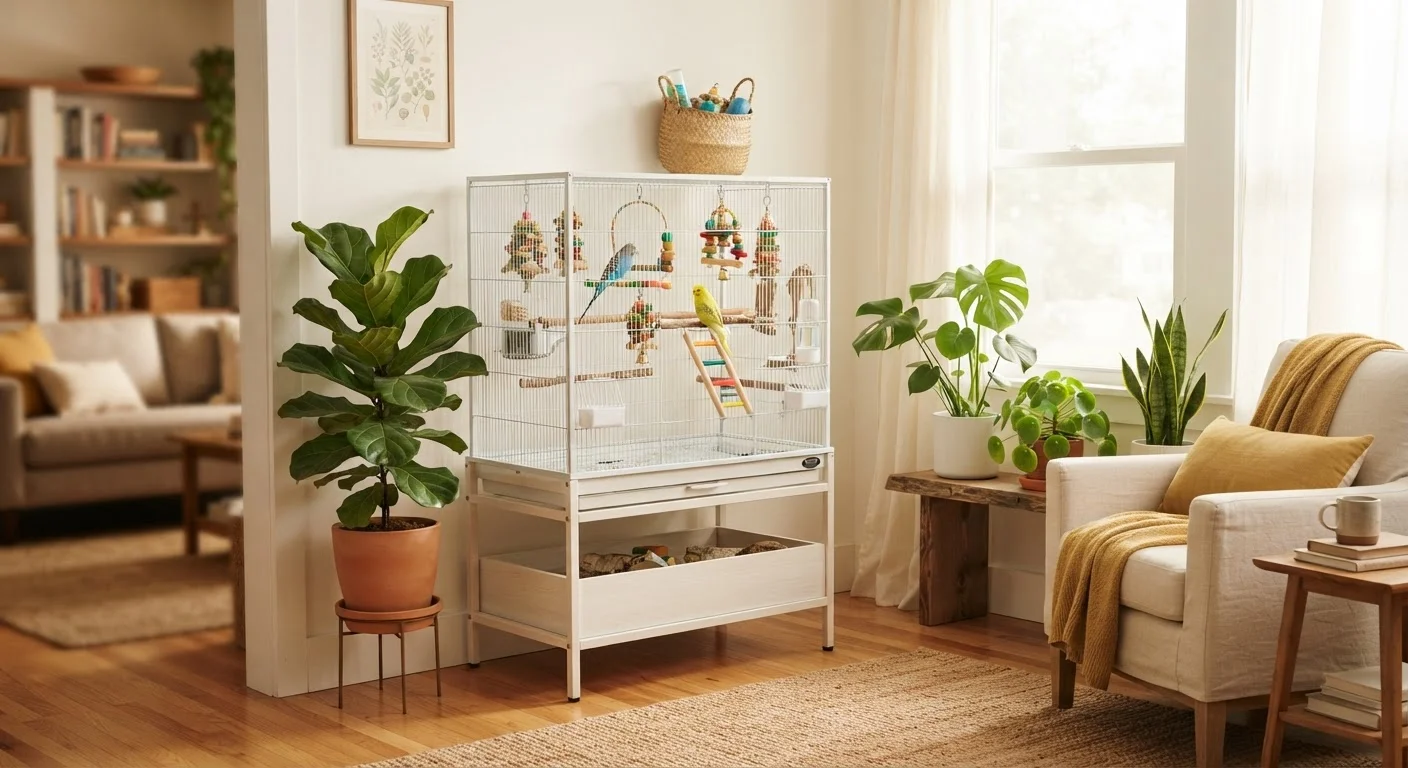
Photo: FaqExplorer.net | Informative Website editorial
Key Takeaways
- Cage size should allow full wing extension plus comfortable movement between multiple perches.
- Many common household items - including nonstick cookware fumes - are acutely toxic to birds.
- Perch variety in material and diameter helps maintain healthy foot joints over time.
- Placement away from drafts, direct sun, and kitchen fumes protects your bird's respiratory health.
- Daily supervised out-of-cage time in a bird-proofed space supports physical and mental wellbeing.
Why Habitat Setup Is a Health Decision
Birds are among the most environmentally sensitive pets in any household. Their respiratory systems process air far more efficiently than mammals do - a biological advantage in the wild that becomes a vulnerability indoors, where fumes, drafts, and airborne particles can cause rapid harm. Getting the habitat right from the start is not just about comfort; it directly affects your bird's immune health, behavior, and longevity.
Many bird owners focus on the cage itself and overlook the broader environmental picture: where the cage sits, what happens in surrounding rooms, and how daily household activities affect air and temperature. Common misconceptions about small pet care can lead well-meaning owners to miss these factors entirely.
This guide walks through each element of a sound bird habitat - cage selection, perch setup, hazard removal, and daily maintenance - so you can approach setup with confidence rather than guesswork.
Consider Air Quality From Day One
Before your bird arrives, use the new small pet preparation checklist to confirm your habitat, supplies, and household are fully ready.
What you will need
Once your space is prepared, follow the steps below in order. Each builds on the last, and skipping ahead - particularly the hazard audit - can leave meaningful risks unaddressed.
Appropriately Sized Wire Cage
Provides the primary living enclosure; bar spacing and dimensions must match your species to prevent injury or escape.
Natural Wood Perches (varied diameters)
Encourage natural gripping exercise and prevent pressure sores on feet from uniform-diameter dowels.
Rope or Concrete Perch
Adds surface variety and, in the case of concrete, helps keep nails worn naturally.
HEPA Air Purifier
Filters airborne particles and helps maintain the clean air quality birds require.
Cage Liner / Tray Paper
Lines the cage bottom for easy waste removal and daily monitoring of droppings for health changes.
Foraging Toys
Provides mental stimulation and mimics natural food-finding behavior to prevent boredom.
Step-by-Step Habitat Setup
Choose the Right Cage Size for Your Species
The cage must be large enough for your bird to fully extend both wings simultaneously without touching the sides. For a parakeet or cockatiel, a minimum footprint of 18 × 18 inches with 24 inches of height is a practical floor, though larger is always better. Larger parrots such as cockatiels need considerably more room. Bar spacing is equally critical: bars spaced too wide allow heads to become trapped, while bars too narrow can injure feet. Standard guidance suggests bar spacing of ½ inch for small birds, ¾ inch for medium species, and 1-1.5 inches for large parrots.
Choose a cage with a removable bottom tray and accessible doors for easy cleaning. Avoid cages with sharp internal edges, galvanized metal that may leach zinc, or painted surfaces that are not confirmed bird-safe.
Select and Position Perches Thoughtfully
Install a minimum of three perches at different heights, using at least two different materials and two different diameters. Natural wood branches (from bird-safe trees such as manzanita, willow, or apple wood) are ideal primary perches. Supplement with a softer rope perch or a textured concrete perch for variety. Avoid sandpaper-covered perches, which abrade feet without meaningfully trimming nails.
Position the highest perch away from the food and water dishes to prevent contamination from droppings. Leave enough horizontal clearance between perches so your bird can move freely and practice short flights if the cage dimensions allow it.
Place the Cage in a Safe, Draft-Free Location
Choose a room your family uses regularly - birds are social and do poorly in isolation - but avoid the kitchen entirely due to cooking fume risks. Position the cage against a solid wall on at least one side; this gives your bird a sense of security. Avoid placement near windows where direct sun cannot be escaped, next to air conditioning or heating vents, or near exterior doors where sudden temperature changes and drafts occur.
The ideal height places the cage at roughly human eye level. Birds placed too low may feel vulnerable; those positioned very high above eye level can become overly dominant in their behavior, according to many avian behavior specialists.
Audit Your Home for Toxic Hazards
Before your bird has any free-flight time, systematically check the room for hazards. Common risks include: open water sources (toilets, fish tanks, decorative bowls), mirrors and large windows that birds cannot perceive as barriers, exposed electrical cords, ceiling fans, and toxic houseplants. Remove or secure each hazard before allowing supervised out-of-cage time.
[important_callout]Airborne toxins deserve equal attention. In addition to nonstick cookware fumes, birds are highly sensitive to scented candles, incense, plug-in air fresheners, cleaning product fumes, and cigarette or vape smoke. Their respiratory systems are uniquely efficient - which makes them uniquely vulnerable to airborne contaminants.
Establish a Cleaning and Maintenance Routine
Daily: Replace cage liner paper, refresh food and water, and observe droppings for consistency and color changes that might indicate health issues. Weekly: Wash food and water dishes with unscented soap and rinse thoroughly; wipe down perches and cage bars. Monthly: Perform a full cage disassembly clean, sanitizing all surfaces with an avian-safe cleaner or a diluted white vinegar solution, then rinse and dry completely before replacing your bird.
Avoid bleach-based cleaners, harsh disinfectants, and any scented products inside or directly around the cage. Ventilate the room well after any cleaning, and allow all surfaces to dry fully before your bird returns.
Plan Daily Out-of-Cage Time and Enrichment
Most pet birds need a minimum of one to two hours of supervised out-of-cage time daily for exercise, social interaction, and mental stimulation. Prepare the room before opening the cage: close windows and doors, disable ceiling fans, and ensure no hazardous surfaces are accessible. Foraging toys, puzzle feeders, and rotating novel objects within the cage also contribute meaningfully to cognitive health on days when room time is shorter.
For a deeper look at structuring enrichment into your bird's routine, see our guide to small pet enrichment strategies. If you are still deciding whether a bird is the right fit for your living situation, our apartment pet guide offers useful context on space and noise considerations.
Household Plants Can Be Toxic
After completing setup, it is worth considering the longer-term picture. Some bird species - parrots in particular - can live for decades, meaning your habitat investment is part of a substantial commitment. Understanding small pet lifespans and long-term care needs can help you plan appropriately. And if you share your home with a cat, thinking through your cat's access and indoor setup is equally relevant to keeping a bird safe.
This article is for general informational purposes only and does not constitute veterinary advice. Always consult a qualified avian veterinarian for guidance specific to your bird's species, age, and health status.
The content on this site is provided for informational purposes only and should not be considered a substitute for professional advice. While we strive to provide accurate and up-to-date information, we make no guarantees regarding its completeness or accuracy. Always consult a qualified professional for advice specific to your circumstances before making any decisions.