
Skin Undertones Explained: Why They Matter for Foundation and Concealer

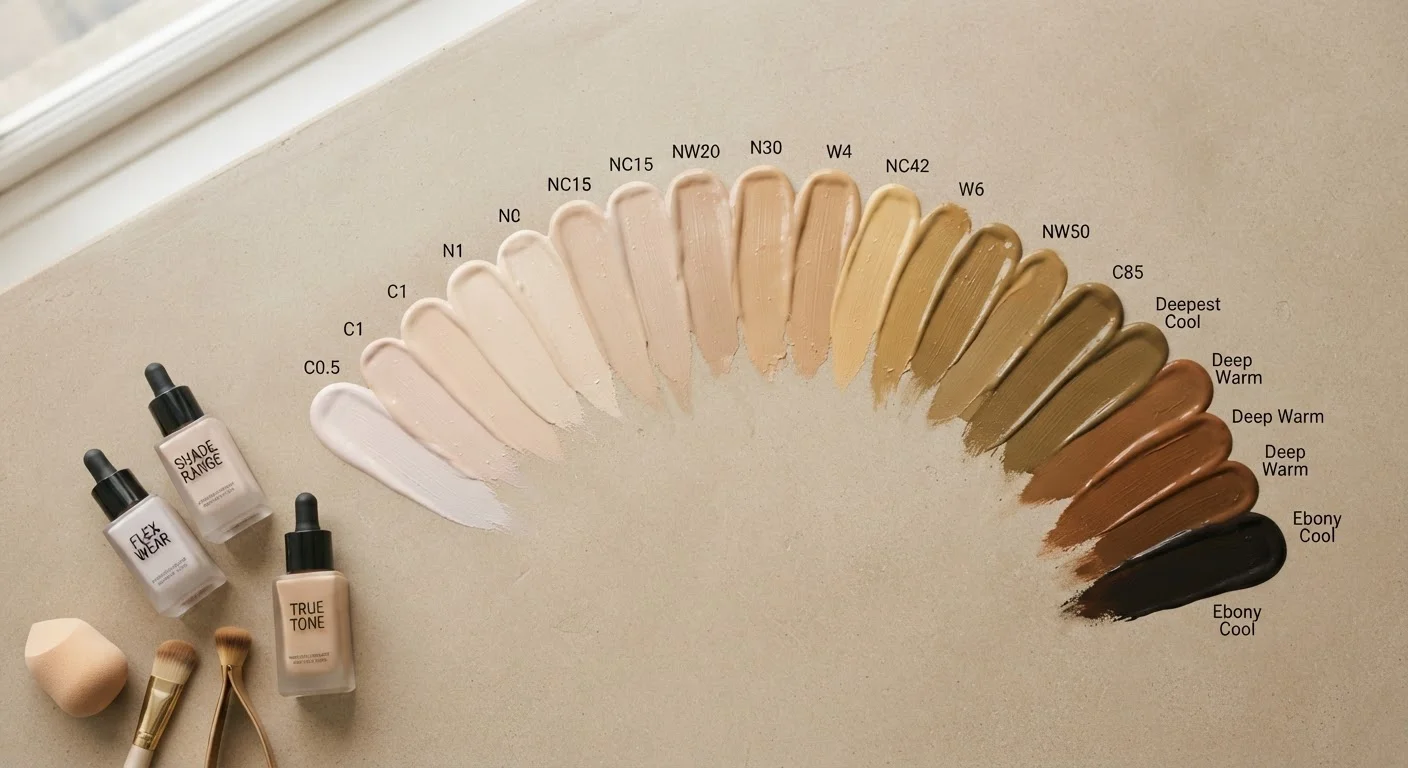
Photo: FaqExplorer.net | Informative Website editorial
Key Takeaways
- Your skin undertone is permanent and does not change with a tan or seasonal shifts.
- Undertones are categorized as warm, cool, or neutral - each responds differently to makeup pigments.
- Matching foundation to your undertone prevents that ashy, orange, or muddy finish.
- Multiple at-home methods can help you identify your undertone without professional tools.
- Undertones also influence which blush, bronzer, and highlight shades complement your skin.
- Knowing your undertone saves time and money when selecting makeup products.
Undertone vs. Skin Tone: An Important Distinction
Many people conflate skin tone - the observable depth or lightness of their complexion - with skin undertone, the persistent hue layered beneath it. They are related but not the same thing, and confusing them is the most common reason a foundation looks off even when the depth seems right.
Skin tone sits at the surface. It darkens with sun exposure, fluctuates with hormones, and shifts with health. Undertone, on the other hand, is set by the ratio of pigments deeper in the skin - it does not bronze in summer or lighten in winter. This is why understanding it pays off as a permanent reference point for every makeup decision you make.
Just as identifying your skin type accurately gives you a reliable framework for choosing skincare, knowing your undertone gives you a reliable filter for makeup. Both are foundational pieces of self-knowledge that reduce guesswork and wasted spending.
The Three Undertone Categories Explained
Undertones are typically grouped into three broad families. Most people fit clearly into one, though individual variation within each category is wide.
- Warm undertones carry yellow, golden, peach, or olive hues. People with warm undertones often find that gold jewelry looks more flattering against their skin than silver, and that earthy, amber, and bronze makeup shades complement them naturally.
- Cool undertones show pink, rosy, red, or bluish casts beneath the surface. Silver jewelry tends to complement cool undertones, and shades like berry, plum, and icy pink often read cleanly on the skin.
- Neutral undertones reflect a balanced mix - neither distinctly warm nor distinctly cool. People with neutral undertones generally find that both gold and silver jewelry are flattering, and they have the broadest range of foundation shades available to them.
It's worth noting that undertone categories exist across the entire spectrum of human complexion. Deep, dark skin tones can be warm or cool; fair skin can be either as well. Undertone is not correlated with how light or deep your complexion runs.
3
Core undertone categories recognized across all complexions
Cosmetic chemists and makeup artists broadly classify undertones as warm, cool, or neutral regardless of surface skin depth or ethnicity.
~45%
Shoppers who return foundation due to color mismatch
Industry surveys have indicated that color mismatch - frequently an undertone issue - is among the most common reasons consumers return or abandon foundation purchases.
How to Identify Your Undertone at Home
You don't need professional tools or a makeup counter visit to determine your undertone. Several reliable methods can guide you.
The Vein Test
Look at the veins on the inside of your wrist in natural daylight. If they appear blue or purple, your undertone is likely cool. If they look green or olive, you're probably warm. If you see both or can't tell definitively, neutral is a reasonable conclusion.
The White vs. Cream Test
Hold a piece of bright white fabric and a piece of off-white or cream fabric near your face in natural light. If the bright white makes your skin look clearer and more radiant, you likely have a cool undertone. If the cream shade is more flattering, your undertone is probably warm. If neither shows a clear winner, neutral fits.
The Sun Reaction Test
Consider how your skin responds to unprotected sun exposure. Warm and olive undertones often tan easily with minimal burning, while cool undertones tend to burn before tanning or skip tanning altogether.
The Jewelry Test
Observe whether gold or silver jewelry tends to make your complexion look more alive. Gold typically flatters warm undertones; silver suits cool undertones; and both work with neutral.
Test in Natural Light, Not Store Lighting
Why Undertone Is the Key to Foundation and Concealer Matching
Foundation is designed to unify and even your complexion - not to be visible. When the undertone of a formula doesn't align with yours, it becomes the thing everyone notices. A cool-undertoned person who chooses a warm formula may look orange or muddy; a warm-undertoned person in a cool-toned foundation can appear ashy or washed out.
Depth matching (light, medium, deep) gets you in the right neighborhood. Undertone matching gets you to the exact address. Most foundation lines indicate undertone in their naming conventions - letters like N (neutral), W (warm), and C (cool) are common.
Concealer follows the same logic. Under-eye circles often have a blue, purple, or even greenish cast depending on your skin. A concealer matched only to your surface shade without considering undertone can still leave circles visible. Color-correcting concealers - typically peach or orange for blue discoloration - work on the principle of opposite undertones canceling each other out, a technique rooted in color theory.
Once your base is dialed in, the rest of your routine builds on it. Preparing skin properly before applying makeup also shapes how well foundation adheres and how accurately you can assess color in the first place - a well-primed base reflects true undertone more clearly than dry or reactive skin does.
Beyond Foundation: How Undertone Shapes Your Whole Makeup Palette
Once you know your undertone, you have a consistent lens for evaluating blush, bronzer, highlighter, and even lip color. The goal is harmony - shades that feel like they belong together - rather than rigid rules that limit creativity.
For blush, warm undertones tend to read naturally with coral, peach, and terracotta tones. Cool undertones tend to look fresh with rosy pinks, mauves, and berry shades. Neutral undertones have flexibility in both directions. For a deeper dive into how placement interacts with those shade choices, blush placement guides explain how location and color interact with your face structure together.
Highlighters with gold or bronze sheens tend to read warmer; champagne, pearl, and icy pigments lean cooler. Knowing your undertone means you stop guessing and start building a coherent kit.
This article is for informational and educational purposes only. Individual results with makeup products vary. If you have skin concerns - including sensitivities or conditions - consult a qualified dermatologist before introducing new products into your routine.
Frequently Asked Questions
The content on this site is provided for informational purposes only and should not be considered a substitute for professional advice. While we strive to provide accurate and up-to-date information, we make no guarantees regarding its completeness or accuracy. Always consult a qualified professional for advice specific to your circumstances before making any decisions.