
Chemical Exfoliants vs. Physical Scrubs

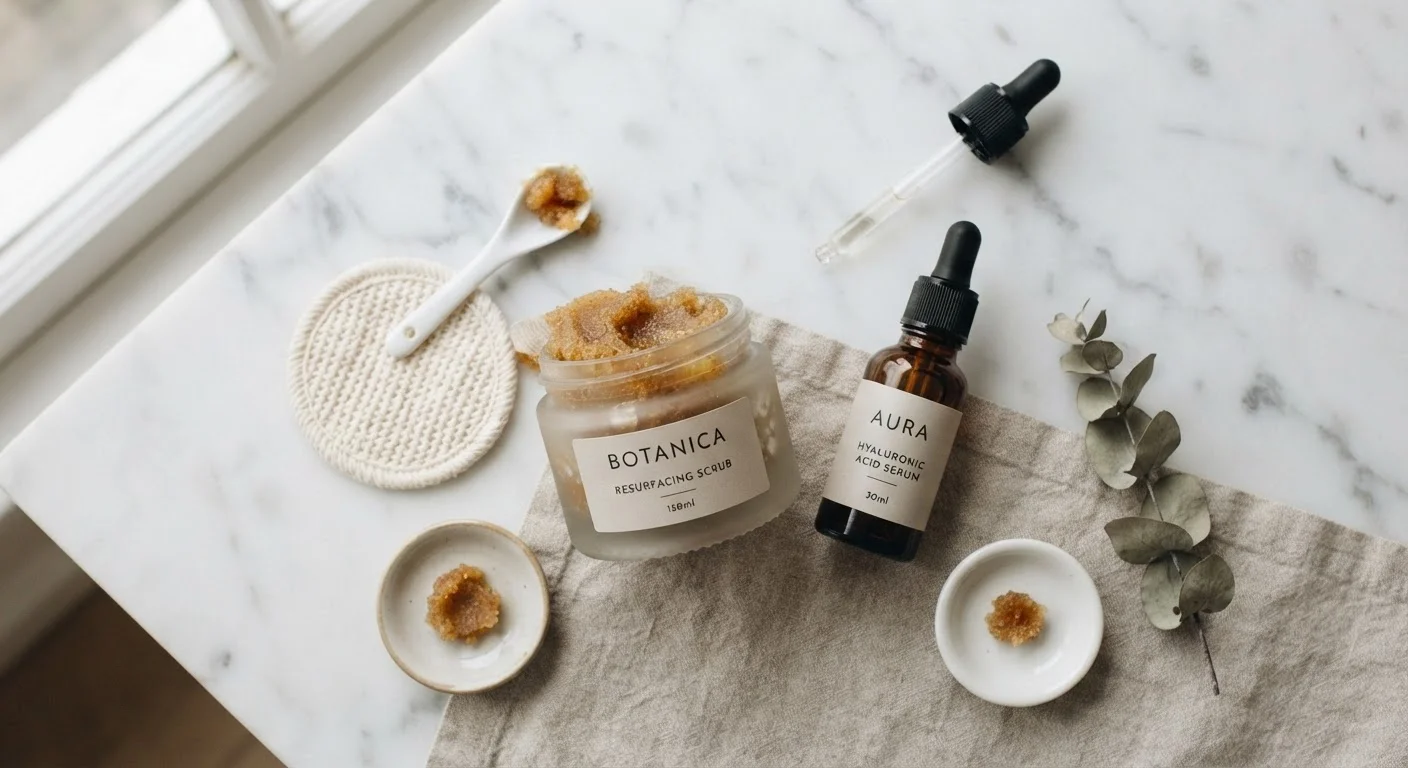
Photo: FaqExplorer.net | Informative Website editorial
Key Takeaways
- Chemical exfoliants dissolve dead skin cells via acids or enzymes; physical scrubs manually buff them away.
- AHAs target surface texture and tone; BHAs penetrate pores and suit oily or acne-prone skin.
- Physical scrubs carry higher irritation risk if overused or if abrasive particles are irregular in shape.
- Sensitive skin generally tolerates well-formulated chemical exfoliants better than gritty physical scrubs.
- Both methods require sunscreen use afterward, as freshly exfoliated skin is more sun-sensitive.
- Frequency matters more than method - over-exfoliation damages the skin barrier regardless of type used.
How Each Method Actually Works
Exfoliation - the removal of dead skin cells from the surface layer - is a foundational step in any effective skincare routine. But the two major approaches achieve this through completely different mechanisms, and understanding that difference is the key to choosing the right one for your skin.
Chemical exfoliants use acids or enzymes to break down the bonds holding dead skin cells together. Alpha hydroxy acids (AHAs) - such as glycolic and lactic acid - are water-soluble and work on the skin's surface. Beta hydroxy acids (BHAs), primarily salicylic acid, are oil-soluble, allowing them to penetrate into pores and clear sebum and debris from within. Enzymes (often from papaya or pineapple) offer a gentler alternative, digesting dead cell proteins without acids. For a deeper look at how these actives are labeled, see our active ingredients glossary.
Physical scrubs use manual friction - typically via fine granules, beads, or textured materials - to mechanically dislodge dead cells. Results are immediate and tactile, but the process is entirely surface-level.
| Criterion | Chemical Exfoliants | Physical Scrubs |
|---|---|---|
| Mechanism | Dissolves intercellular bonds via acids or enzymes | Manually buffs away dead cells via friction |
| Depth of action | Surface to within-pore (depending on type) | Surface only |
| Best skin types | Oily, acne-prone, sensitive (lower concentrations) | Normal, combination |
| Irritation risk | Low to moderate (concentration-dependent) | Moderate to high (particle shape-dependent) |
| Results timeline | Gradual, cumulative over weeks | Immediate surface smoothness |
| Sun sensitivity after use | Increased - SPF required | Mildly increased - SPF advised |
| Suitable for active breakouts | Yes (BHAs especially) | Generally not recommended |
Skin Type Compatibility and Risk Factors
The right exfoliant is inseparable from your skin type. Before choosing, it helps to accurately identify how your skin behaves - our guide on identifying your skin type accurately walks through the process dermatologists use.
For oily and acne-prone skin, BHAs are widely regarded as the most targeted option because they work inside the pore - the origin point of congestion. Physical scrubs, by contrast, can spread bacteria across the surface if used on active breakouts, potentially worsening inflammation.
For dry or sensitive skin, lower-concentration AHAs (around 5-8%) or polyhydroxy acids (PHAs) tend to be well tolerated. Physical scrubs pose a specific risk here: irregular particle shapes - common in walnut shell or apricot kernel-based products - can create micro-abrasions in already-compromised skin. Finely milled, rounded particles (like sugar or synthetic microbeads where still available) are less traumatic, but even these require a light touch.
For normal to combination skin, either method can work when used at appropriate frequency. The concern in any skin type is overuse. Exfoliating more than skin's natural repair cycle allows strips the protective barrier, leading to redness, tightness, and increased sensitivity. Most dermatologists suggest no more than two to three exfoliation sessions per week for chemical types and once or twice for physical scrubs.
A Note on 'Natural' Scrub Ingredients
Fitting Exfoliation Into Your Routine
Where exfoliation sits in your routine - and what surrounds it - matters as much as which type you choose. Chemical exfoliants are typically applied after cleansing and before serums or moisturizer. Understanding the full routine context is helpful; our breakdown of what each skincare step actually does covers this in detail.
One critical note: both chemical and physical exfoliation increase photosensitivity. Freshly exfoliated skin has less of its natural protective outer layer and is more vulnerable to UV damage. Daily broad-spectrum SPF is non-negotiable when exfoliation is part of your routine.
Be mindful of ingredient interactions too. Using chemical exfoliants alongside retinoids or other active ingredients can amplify irritation significantly. Our article on ingredient conflicts that can undermine your routine outlines which pairings to avoid and why.
~70%
Glycolic acid skin penetration advantage over larger AHAs
Glycolic acid has the smallest molecular size among common AHAs, which is why it penetrates the stratum corneum more readily than lactic or mandelic acid, according to published dermatology literature.
2-3×
Recommended maximum weekly exfoliation sessions
Most board-certified dermatologists advise limiting exfoliation to two to three times per week to avoid disrupting the skin's natural barrier repair cycle.
This article is for informational purposes only and is not a substitute for professional dermatological advice. If you have a skin condition or persistent skin concerns, consult a qualified dermatologist before changing your routine.
The content on this site is provided for informational purposes only and should not be considered a substitute for professional advice. While we strive to provide accurate and up-to-date information, we make no guarantees regarding its completeness or accuracy. Always consult a qualified professional for advice specific to your circumstances before making any decisions.