
Whole Foods vs. Processed Foods: What the Difference Really Means for Your Diet

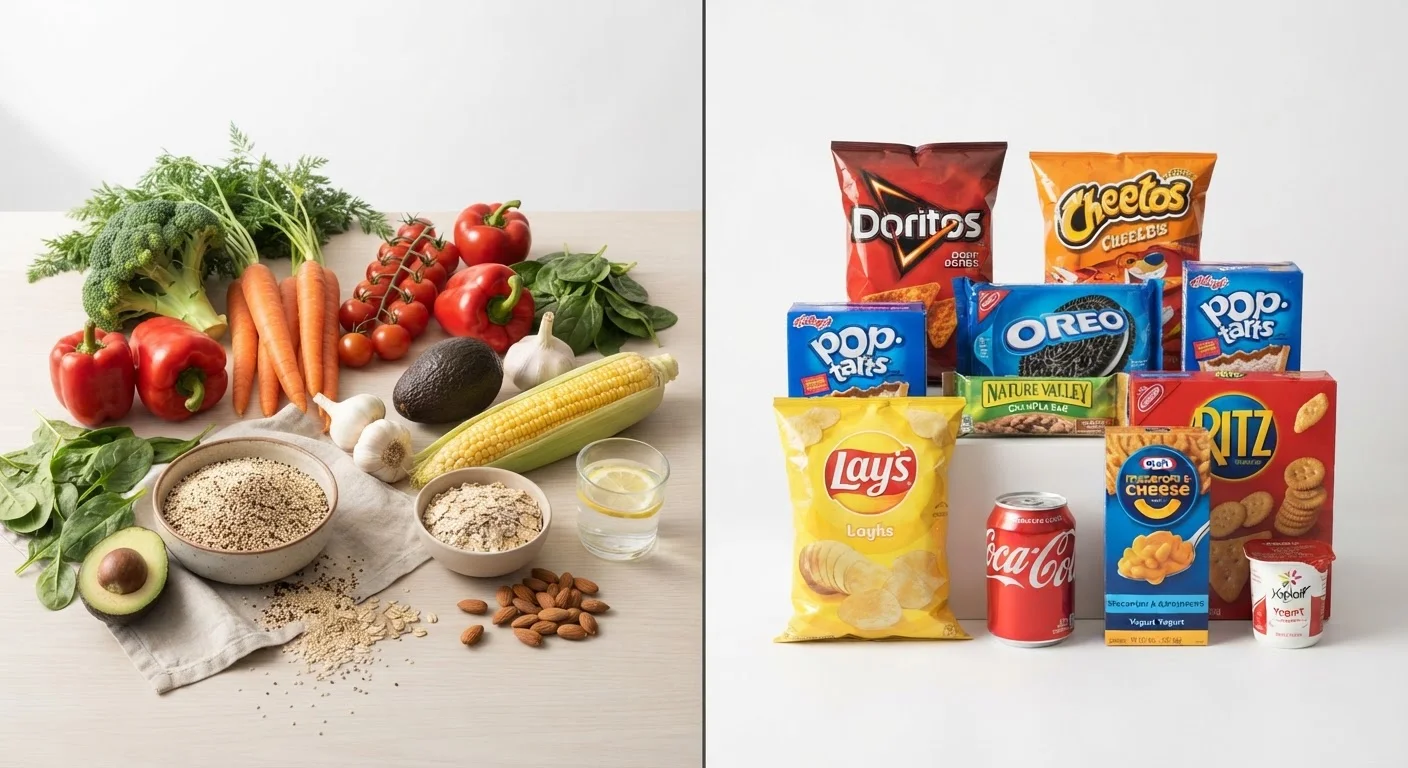
Photo: FaqExplorer.net | Informative Website editorial
Key Takeaways
- "Processed" describes a spectrum - canned beans and breakfast cereals are not nutritionally equivalent.
- Ultra-processed foods are linked to higher sodium, added sugars, and lower fiber compared to whole foods.
- Whole foods retain more naturally occurring nutrients including fiber, vitamins, and protective plant compounds.
- Minimally processed foods like frozen vegetables or pasteurized milk can still support a nutritious diet.
- Reading nutrition labels helps identify ultra-processed options regardless of front-of-package marketing claims.
Defining the Terms: What Do 'Whole' and 'Processed' Actually Mean?
The term whole food refers to a food that is eaten in - or very close to - its natural state, with little to no industrial alteration. Think an apple, a handful of oats, a raw walnut, or a chicken breast. The defining feature is that the food's original nutrient matrix - its fiber, vitamins, minerals, and phytonutrients (plant-based compounds with potential health benefits) - remains largely intact.
Processed food, on the other hand, is not a single category. Researchers and public health bodies use a classification system called NOVA, developed by Brazilian nutrition researchers, which sorts foods into four groups based on the extent and purpose of processing. Under this framework:
- Group 1 - Unprocessed or minimally processed foods (fresh fruit, plain frozen vegetables, eggs)
- Group 2 - Processed culinary ingredients (olive oil, salt, flour used in cooking)
- Group 3 - Processed foods (canned beans, cheese, cured meats, bread)
- Group 4 - Ultra-processed foods (packaged snacks, sodas, instant noodles, many breakfast cereals)
The important distinction is that not all processing is nutritionally harmful. Freezing vegetables preserves most of their nutrients. Pasteurizing milk makes it safe to drink. The concern, supported by a growing body of research, centers specifically on ultra-processed foods - those engineered with industrial ingredients and additives rarely used in home cooking, such as high-fructose corn syrup, emulsifiers, artificial colorings, and flavor enhancers.
A Note on the NOVA Classification
The Nutritional Contrast: What Research Shows
When researchers compare dietary patterns heavy in whole foods against those dominated by ultra-processed products, consistent differences emerge across several nutritional dimensions.
| Criterion | Whole Foods | Ultra-Processed Foods |
|---|---|---|
| Fiber content | Naturally high; intact | Often low; stripped during processing |
| Added sugars | None (sugars are naturally occurring) | Frequently high |
| Sodium levels | Naturally low | Often elevated for preservation/flavor |
| Micronutrient profile | Full, naturally co-occurring | Partial; often selectively fortified |
| Additives & preservatives | None | Common; emulsifiers, colorings, flavors |
| Phytonutrients | Present in plant-based whole foods | Largely absent or degraded |
| Shelf life | Short to moderate | Extended by design |
Whole foods tend to be richer in dietary fiber, a nutrient most Americans fall short on. Fiber supports digestive health, helps regulate blood sugar response, and contributes to satiety. Ultra-processed foods, by contrast, are often stripped of fiber during manufacturing, then may have isolated forms reintroduced - a poor substitute for the naturally occurring kind.
Micronutrient losses are another factor. Heat, refining, and other industrial processes can degrade vitamins such as B1 (thiamine), B9 (folate), and vitamin C. Many processed products are fortified to compensate, but fortification restores select nutrients rather than the full original profile. For a deeper look at how food labels reflect these differences, see our guide to reading nutrition labels.
Ultra-processed foods are also typically higher in sodium and added sugars - two dietary components linked to cardiovascular and metabolic health concerns when consumed in excess. Understanding how added sugars differ from natural sugars is a useful step in making sense of ingredient lists.
Where Protein and Fat Fit Into This Picture
Processing affects more than just carbohydrates and fiber. It also shapes how the body accesses protein and fat in food.
Whole-food protein sources - legumes, eggs, fish, plain poultry - deliver amino acids alongside co-occurring nutrients like zinc, iron, and omega-3 fatty acids. Highly processed protein products (certain protein bars, reconstituted meat products) may deliver adequate amino acid counts but with added sugars, saturated fats, or artificial ingredients that complicate the overall nutritional picture. For a full breakdown of protein quality across different food sources, our comparison of protein sources covers the key trade-offs.
Fats behave similarly. Whole food sources of fat - avocados, nuts, seeds, oily fish - contain naturally occurring unsaturated fatty acids alongside fat-soluble vitamins. Ultra-processed foods frequently rely on refined oils, and historically included industrially produced trans fats (now largely regulated out of the U.S. food supply). Understanding the differences between fat types can sharpen how you evaluate processed food ingredients.
Practical Implications: Navigating Real Grocery Decisions
A useful mental model for shopping is to think in terms of degree of processing rather than a binary whole-versus-processed divide. Plain oats are minimally processed and nutritionally close to whole grain. A flavored oat packet with added sugars and artificial flavoring sits much further along the spectrum.
Some practical guidelines grounded in nutrition research:
- Prioritize foods with short, recognizable ingredient lists.
- Treat frozen and canned whole foods (without heavy sauces or added salt) as nutritionally comparable to fresh.
- Use the nutrition facts panel to check sodium, added sugars, and fiber rather than relying solely on front-of-package claims.
- View ultra-processed foods as occasional rather than dietary staples rather than categorical prohibitions - dietary patterns matter more than individual foods.
For a structured approach to grocery decisions, our grocery shopping checklist offers a practical framework you can apply on your next trip.
This article provides general nutrition information for educational purposes only and is not a substitute for personalized advice from a registered dietitian or qualified healthcare professional.
The content on this site is provided for informational purposes only and should not be considered a substitute for professional advice. While we strive to provide accurate and up-to-date information, we make no guarantees regarding its completeness or accuracy. Always consult a qualified professional for advice specific to your circumstances before making any decisions.