
Feline Enrichment: From Window Perches to Puzzle Feeders

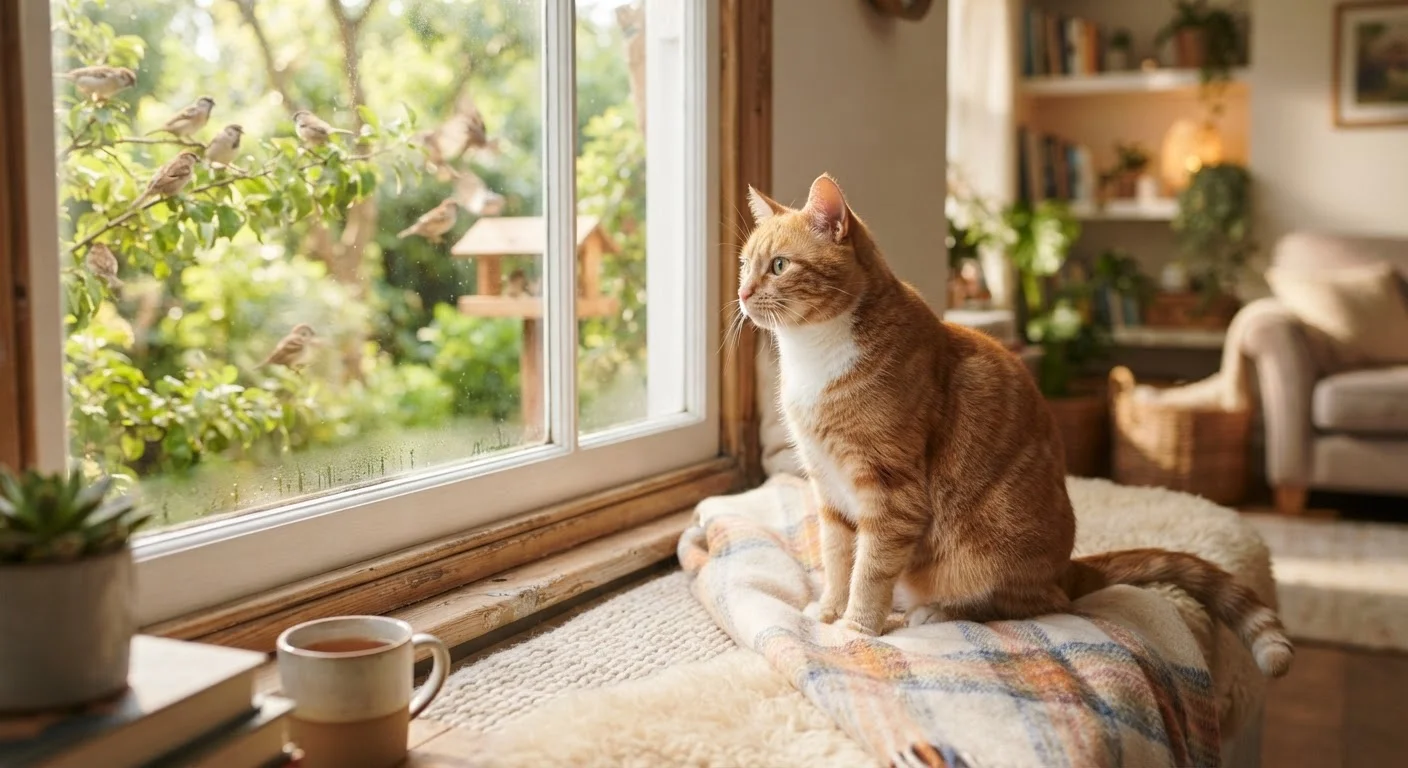
Photo: FaqExplorer.net | Informative Website editorial
Key Takeaways
- Enrichment addresses a cat's instinctive needs for hunting, climbing, hiding, and exploring - not just boredom.
- Layering multiple enrichment types produces better results than relying on a single approach.
- Indoor cats benefit most from structured daily enrichment to offset the limitations of a confined environment.
- Puzzle feeders can slow eating, reduce anxiety, and provide meaningful mental stimulation simultaneously.
- A cat's age, personality, and physical ability should guide which enrichment options you prioritize.
Why Enrichment Is a Welfare Essential, Not a Luxury
Cats are predators built for a complex world - one that demands problem-solving, stalking, pouncing, and territorial navigation. When that complexity disappears inside four walls, the result can be chronic stress, destructive behavior, overeating, or withdrawal. Enrichment is the deliberate practice of reintroducing that complexity in safe, manageable ways.
The goal is not to entertain your cat. It is to meet the behavioral and psychological needs that food, water, and shelter alone cannot address. Research in feline behavioral science consistently points to environmental enrichment as a key pillar of indoor cat welfare - alongside nutrition, veterinary care, and social interaction. For a deeper look at how a cat's needs shift across life stages, see our article on how a cat's needs change over a lifetime.
The enrichment options below are organized by type. Each serves a distinct function. The most effective setups layer several together, matching your individual cat's temperament and physical condition.
Window Perches and Bird Feeders Outside
A window perch gives an indoor cat access to what behaviorists sometimes call "cat TV" - the continuous, unpredictable motion of birds, squirrels, and passing people. Unlike passive observation, this experience engages a cat's predatory attention system: pupils dilate, muscles tense, and the animal enters a state of alert arousal that is both stimulating and self-regulating.
For best results, position the perch at a window with meaningful activity, ideally one that catches morning or afternoon sun. Placing a bird feeder or birdbath in the cat's sightline significantly increases engagement. Cats with mobility limitations or arthritis may need a low-step approach to reach the perch comfortably.
A well-positioned window perch engages a cat's predatory attention system without requiring any effort from the owner.
Puzzle Feeders and Food-Dispensing Toys
In the wild, a cat's caloric intake comes at the cost of effort - stalking, chasing, capturing. Puzzle feeders reintroduce that work-for-food dynamic in a controlled setting. The cognitive engagement required to extract kibble or wet food from a puzzle can reduce anxiety, slow eating (which may help cats prone to vomiting after meals), and provide a meaningful activity during the hours an owner is away.
Puzzle feeders range from simple flat trays with raised pegs to multi-stage sliding compartments. Start with low-difficulty options and increase complexity gradually. Cats that show frustration rather than persistence may need a simpler starting point - the goal is mild challenge, not defeat.
Puzzle feeders restore the work-for-food dynamic that indoor cats are otherwise denied entirely.
Vertical Space: Cat Trees, Shelves, and Climbing Structures
Cats are vertical animals. Height offers safety, territorial vantage, and a way to manage stress in multi-pet households. A cat that can retreat upward is less likely to feel cornered or reactive. Cat trees, wall-mounted shelves, and window catwalks all expand usable territory without requiring more floor space.
In multi-cat homes, vertical space is especially important - it creates separate "zones" that reduce competition and allow each cat to claim a position without direct confrontation. Shelves placed at varying heights allow cats of different ages and agility levels to participate. A senior cat may prefer a lower perch with a ramp; a young cat will often choose the highest available point.
Vertical space effectively expands a cat's territory upward, reducing conflict and stress in multi-cat households.
Interactive Play with Wand Toys
Unlike automated toys, wand play involves a human operator - and that distinction matters. The unpredictable, organic movement a person creates with a feather wand or ribbon toy mimics prey behavior in ways that looped electronic patterns cannot. This form of play delivers a full predatory sequence: stalk, chase, pounce, and catch. Completing that sequence has a calming effect; cats that never reach the "catch" phase may remain frustrated and overstimulated.
Two ten-minute sessions per day are a commonly cited target by feline behaviorists, though the right amount varies by age and individual drive. Always end a play session by allowing the cat to "catch" the toy several times, then offer a small food reward to simulate the post-hunt meal.
Wand play delivers a complete predatory sequence - stalk, chase, pounce, catch - that automated toys rarely replicate.
Scent Enrichment and Novel Smells
Cats experience the world primarily through scent, yet this sense is almost entirely neglected in typical indoor environments. Scent enrichment can be as simple as rotating in dried herbs (such as valerian or silver vine, which many cats respond to even more strongly than catnip), placing worn clothing with familiar human scent in a resting spot, or bringing in safe natural materials like pinecones or untreated wood.
For cats that go outdoors occasionally, scent is already richly layered. For full indoor cats, deliberate scent enrichment can meaningfully increase investigation and activity. Introduce new scents gradually and observe your cat's reaction - some individuals are highly sensitive, while others investigate and move on quickly.
Scent enrichment taps into a cat's primary sense - one that most indoor environments leave almost entirely understimulated.
Hiding Spots and Refuge Spaces
Enrichment is not only about stimulation - it is equally about the ability to withdraw. Cats that feel they have no escape route in a stressful situation may become chronically anxious. Covered beds, cardboard box hideaways, and enclosed tunnels all serve as psychological refuges that allow a cat to regulate its own arousal level.
This is especially relevant in busy households or when changes occur - new furniture, guests, construction noise. A hiding spot gives the cat agency: it can choose to engage with the environment or retreat. That choice itself is an important form of control that supports overall wellbeing.
The ability to hide and withdraw is as enriching as stimulation - it gives cats meaningful control over their own comfort.
Putting It All Together
No single enrichment item replaces a thoughtful, varied environment. A cat with a window perch and nothing else will eventually habituate to it; a cat with rotating puzzle feeders, occasional wand play, a vertical climbing route, and a predictable daily rhythm is genuinely thriving. Rotate novelty items regularly to maintain interest - cats notice when something new appears, and that novelty itself is stimulating.
Rotate Enrichment to Sustain Interest
If you share your home with more than one cat, enrichment becomes even more important for managing territory and preventing conflict. Our guide on introducing a second cat into a single-cat household covers how enrichment can ease the transition. And if you're curious how puzzle feeders intersect with your cat's dietary routine, the principles in our Cat Nutrition 101 article provide useful grounding. For more proven strategies specifically designed for indoor cats, see Keeping an Indoor Cat Mentally Stimulated.
This article is for general informational and educational purposes. For concerns about your cat's health or behavior, consult a licensed veterinarian or certified feline behaviorist.
The content on this site is provided for informational purposes only and should not be considered a substitute for professional advice. While we strive to provide accurate and up-to-date information, we make no guarantees regarding its completeness or accuracy. Always consult a qualified professional for advice specific to your circumstances before making any decisions.