
Hamster vs. Gerbil: Understanding the Real Differences Before You Commit

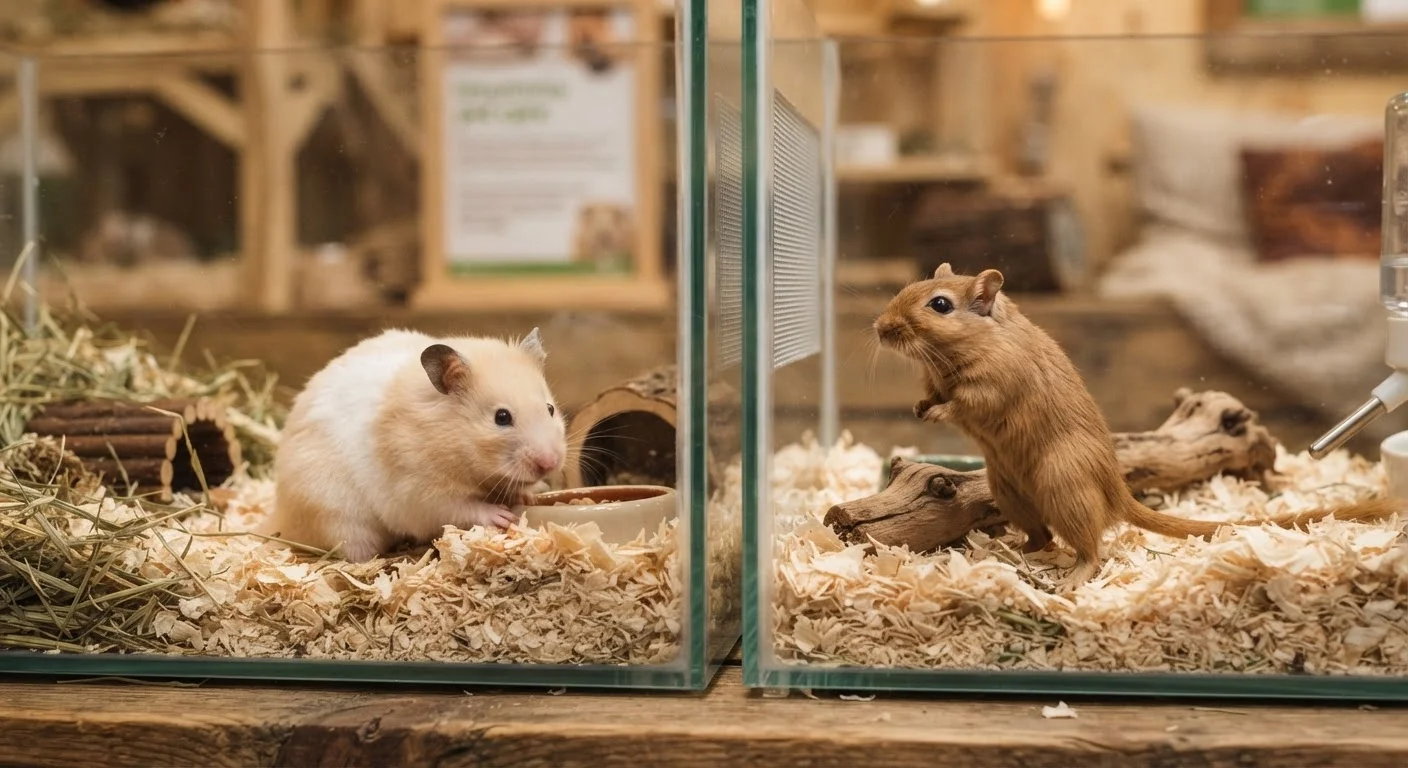
Photo: FaqExplorer.net | Informative Website editorial
Key Takeaways
- Hamsters are solitary and generally prefer living alone; gerbils are social and need at least one companion.
- Gerbils are active during the day and evening, making them more visible to daytime owners than nocturnal hamsters.
- Both animals need more space than basic starter cages typically provide - enclosure size matters significantly.
- Hamsters tend to have shorter lifespans (2-3 years) compared to gerbils (3-5 years) on average.
- Neither species is inherently low-maintenance; both require daily feeding, cleaning, and meaningful enrichment.
Social Needs: A Fundamental Fork in the Road
The single most important difference between hamsters and gerbils isn't size or appearance - it's social structure. Hamsters are obligate solitary animals. In the wild, adult hamsters defend individual territories aggressively, and housing two together almost always leads to stress, injury, or death for one of them. A hamster housed alone is not lonely - it is living in alignment with its biology.
Gerbils are the opposite. In their natural habitat, they live in family groups and engage in constant social grooming and play. A gerbil kept alone will often show signs of chronic stress, including over-grooming and reduced activity. Responsible gerbil ownership means committing to at least a bonded pair, ideally from the same litter or introduced through a careful split-cage method while young.
This single factor reshapes every other care consideration - enclosure setup, veterinary costs, time investment, and emotional complexity all double when you move from one gerbil to two. Common small pet myths often minimize this distinction, but it is one of the most welfare-critical choices you'll make.
Activity Patterns and Daily Life
Hamsters are predominantly nocturnal. Syrian and dwarf hamsters typically sleep through most of the day and become active in the late evening and overnight. This means a hamster owner who works daytime hours may rarely observe their pet at its most energetic. Disturbing a sleeping hamster during daylight hours can cause genuine stress and increases the likelihood of defensive biting.
Gerbils follow a different rhythm. They are crepuscular to diurnal, meaning they have activity bursts throughout the day with rest periods interspersed - more in line with a typical household's waking hours. Families or individuals who want a pet that's visibly active during the day will find gerbils a better fit.
| Criterion | Hamster | Gerbil |
|---|---|---|
| Social structure | Solitary - must live alone | Social - needs at least one companion |
| Activity timing | Primarily nocturnal | Crepuscular / daytime active |
| Typical lifespan | 2-3 years | 3-5 years |
| Minimum enclosure | 40-gallon floor space, 6"+ substrate | Large tank with depth and horizontal run |
| Handling tolerance | Variable; can bite if startled | Generally curious; less bite-prone |
| Cost of ownership | Single animal, lower ongoing cost | Pair or group; higher ongoing cost |
| Burrowing need | High - deep substrate essential | Moderate - digging important but less extreme |
Both species require substantial enrichment. Wheels, tunnels, and foraging opportunities aren't optional extras - they're foundational to physical and psychological health. See enrichment strategies for small pets for practical ideas that apply directly to both species.
Space, Setup, and Long-Term Commitment
Neither hamsters nor gerbils are well served by the small, basic enclosures commonly sold in pet stores. Hamsters - particularly Syrians - need a minimum of 40 gallons of floor space and deep substrate (at least 6 inches) to allow natural burrowing. Dwarf hamsters need somewhat less, but the principle holds: burrowing is a core behavioral need, not a preference.
Gerbils need horizontal space for running and vertical structure for climbing, along with deep substrate for their own digging instincts. Because they're kept in pairs or groups, their enclosure must accommodate multiple animals comfortably without resource competition.
6+ inches
Minimum substrate depth for hamsters
Veterinary and animal welfare organizations consistently recommend deep bedding to allow natural burrowing behavior in hamsters.
3-5 years
Average gerbil lifespan with good care
Gerbils generally outlive hamsters by one to two years on average, an important consideration for long-term commitment.
2+
Minimum gerbils recommended per enclosure
Animal behavior experts and exotic veterinarians broadly agree that solitary gerbil housing significantly compromises welfare.
On lifespan, gerbils generally live 3-5 years with good care, while hamsters average 2-3 years, though this varies by species and individual health. Dwarf hamsters sometimes live shorter lives than Syrians. Both species benefit from regular veterinary checkups - small animals can mask illness, and early detection matters. If you're also weighing other small pet options, the comparison between guinea pigs and rabbits covers similarly important lifestyle-fit questions.
This article is for general informational purposes only and does not constitute veterinary advice. Consult a qualified veterinarian familiar with small exotic animals for guidance specific to your pet's health and care needs.
The content on this site is provided for informational purposes only and should not be considered a substitute for professional advice. While we strive to provide accurate and up-to-date information, we make no guarantees regarding its completeness or accuracy. Always consult a qualified professional for advice specific to your circumstances before making any decisions.