
Guinea Pig or Rabbit: Which Small Pet Actually Fits Your Lifestyle?

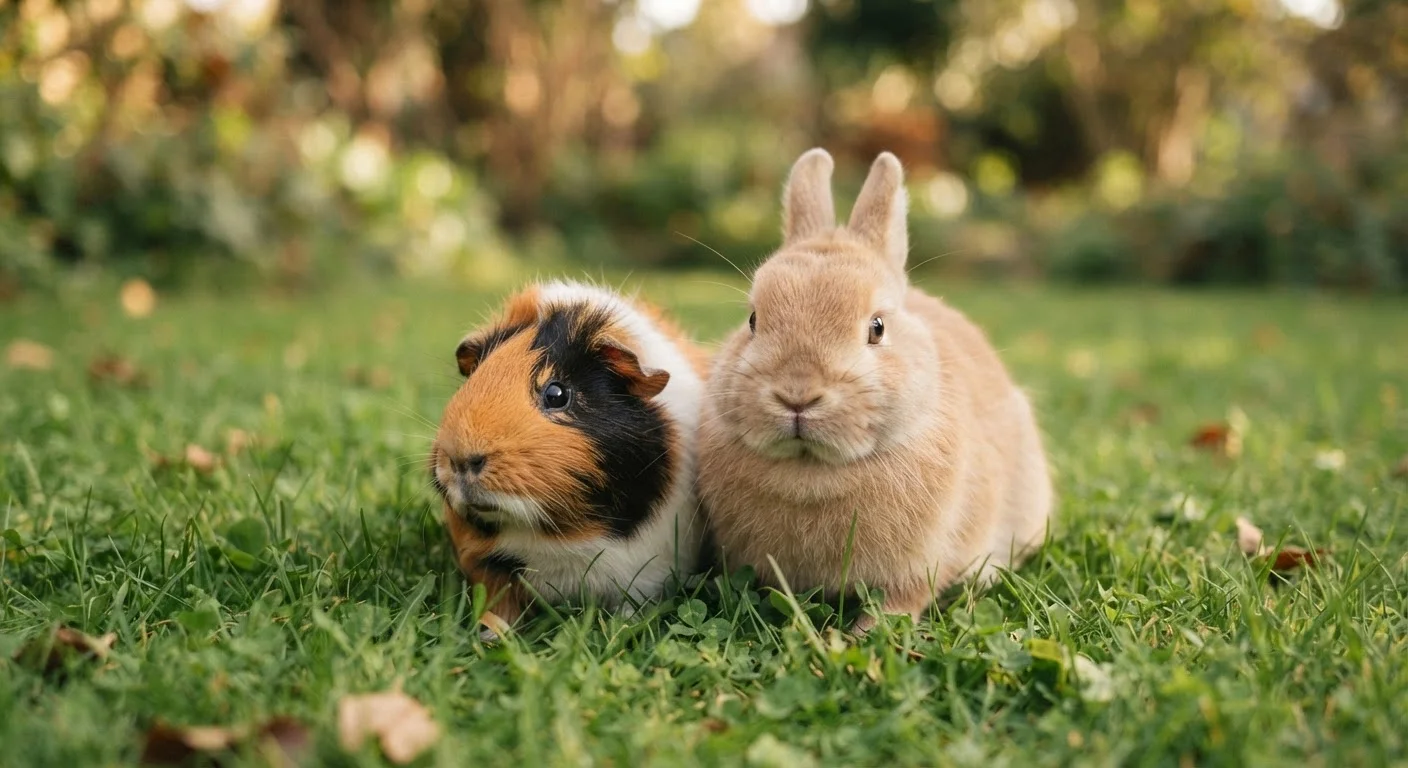
Photo: FaqExplorer.net | Informative Website editorial
Key Takeaways
- Guinea pigs are highly social animals that generally require same-species companionship to thrive.
- Rabbits need significantly more space and daily supervised free-roam time than most new owners anticipate.
- Both species require a hay-based diet and access to a specialized exotic veterinarian.
- Guinea pigs tend to be more tolerant of handling; rabbits can be more prone to stress-related injury if handled incorrectly.
- Neither animal is truly low-maintenance - both involve real daily care commitments and ongoing veterinary costs.
Social Needs and Companionship
One of the sharpest distinctions between guinea pigs and rabbits is how each species relates to companionship - both with their own kind and with humans.
Guinea pigs are herd animals. In most circumstances, keeping a single guinea pig is considered a welfare concern by animal behavior experts; they do best in same-sex pairs or small groups. Their vocalizations - wheeks, purrs, and chutts - are a rich communication system, and owners who engage regularly will find guinea pigs remarkably expressive. This makes them rewarding for people who enjoy consistent, predictable interaction.
Rabbits, by contrast, have a more complex social profile. Many rabbits do benefit from a bonded companion, but bonding two rabbits is a careful process that requires patience and, often, professional guidance. Some rabbits thrive as solo pets when their human interaction is rich and frequent. Rabbits are prey animals with finely tuned stress responses - they can become withdrawn or territorial if their environment isn't managed thoughtfully.
For a deeper look at common assumptions people make about small pets before adopting, see small pet myths that could actually harm your animal.
| Criterion | Guinea Pig | Rabbit |
|---|---|---|
| Typical lifespan | 4-7 years | 8-12 years |
| Social companionship need | Requires same-species pair | Varies; bonding is complex |
| Minimum enclosure size (pair) | ~7.5 sq ft floor space | Much larger; free-roam preferred |
| Daily free-roam exercise | Beneficial but flexible | Essential for welfare |
| Handling tolerance | Generally calmer to hold | Can kick; risk of injury if dropped |
| Special dietary need | Vitamin C supplementation | GI stasis risk; hay critical |
| Noise level | Vocal and expressive | Mostly quiet |
| Vet specialist required | Yes - exotic practitioner | Yes - exotic practitioner |
Space, Exercise, and Housing Requirements
Both animals are frequently underestimated in terms of space, but rabbits represent the larger commitment by a clear margin.
Guinea pigs need a spacious enclosure - the commonly cited minimum for two guinea pigs is around 7.5 square feet of floor space, though more is always better. They should not live in small wire-floor cages; solid, flat flooring protects their feet. Daily out-of-cage time in a safe, enclosed area is beneficial but less physiologically critical than it is for rabbits.
Rabbits require considerably more room. Housing a rabbit in a hutch alone - a setup still widely sold in pet stores - is now considered inadequate by most rabbit welfare organizations. Rabbits need to be able to perform a full binky (a high-speed jump-and-twist behavior that signals contentment) without obstruction. Many rabbit owners opt for free-roaming setups within rabbit-proofed rooms. Electrical cords, houseplants, and baseboards must all be secured, as rabbits chew instinctively.
Small pets and apartment living offers useful guidance if floor space is a genuine constraint in your home.
8-12 yrs
Typical rabbit lifespan with proper care
Rabbits generally live significantly longer than most prospective owners expect, representing a long-term commitment comparable to some dog breeds.
~7.5 sq ft
Minimum recommended floor space for two guinea pigs
Many animal welfare organizations recommend this as a floor minimum for a bonded pair, with larger enclosures strongly preferred.
Top cause
GI stasis as a leading rabbit emergency
Gastrointestinal stasis - a dangerous slowdown of gut movement - is one of the most common life-threatening conditions seen in pet rabbits by exotic veterinarians.
Diet, Health, and Veterinary Care
Both guinea pigs and rabbits are herbivores that require unlimited access to high-quality grass hay - typically timothy hay for adults - which must make up the bulk of their diet. Hay supports healthy digestion and wears down continuously growing teeth. Pellets should be offered in limited quantities, and fresh leafy greens round out the diet for both species.
One critical distinction: guinea pigs, like humans, cannot synthesize vitamin C. They must receive it through fresh food sources such as bell pepper and leafy greens. A deficiency leads to scurvy, which is preventable with proper diet planning.
Both animals require veterinary care from a practitioner experienced with exotic species - a standard dog-and-cat vet may not have the necessary training. What distinguishes exotic vets explains the difference and when it matters most. Rabbits are also prone to gastrointestinal stasis, a potentially life-threatening slowdown of gut motility that requires prompt veterinary attention. Owners should familiarize themselves with the warning signs before bringing a rabbit home. See rabbit care fundamentals for new owners for a comprehensive overview.
Finally, enrichment matters for both species. Building enrichment into your small pet's daily routine provides practical strategies to keep both rabbits and guinea pigs mentally engaged.
This article is for general informational and educational purposes only. For guidance specific to your pet's health, always consult a qualified exotic animal veterinarian.
The content on this site is provided for informational purposes only and should not be considered a substitute for professional advice. While we strive to provide accurate and up-to-date information, we make no guarantees regarding its completeness or accuracy. Always consult a qualified professional for advice specific to your circumstances before making any decisions.