
Building Enrichment Into Your Small Pet's Daily Routine

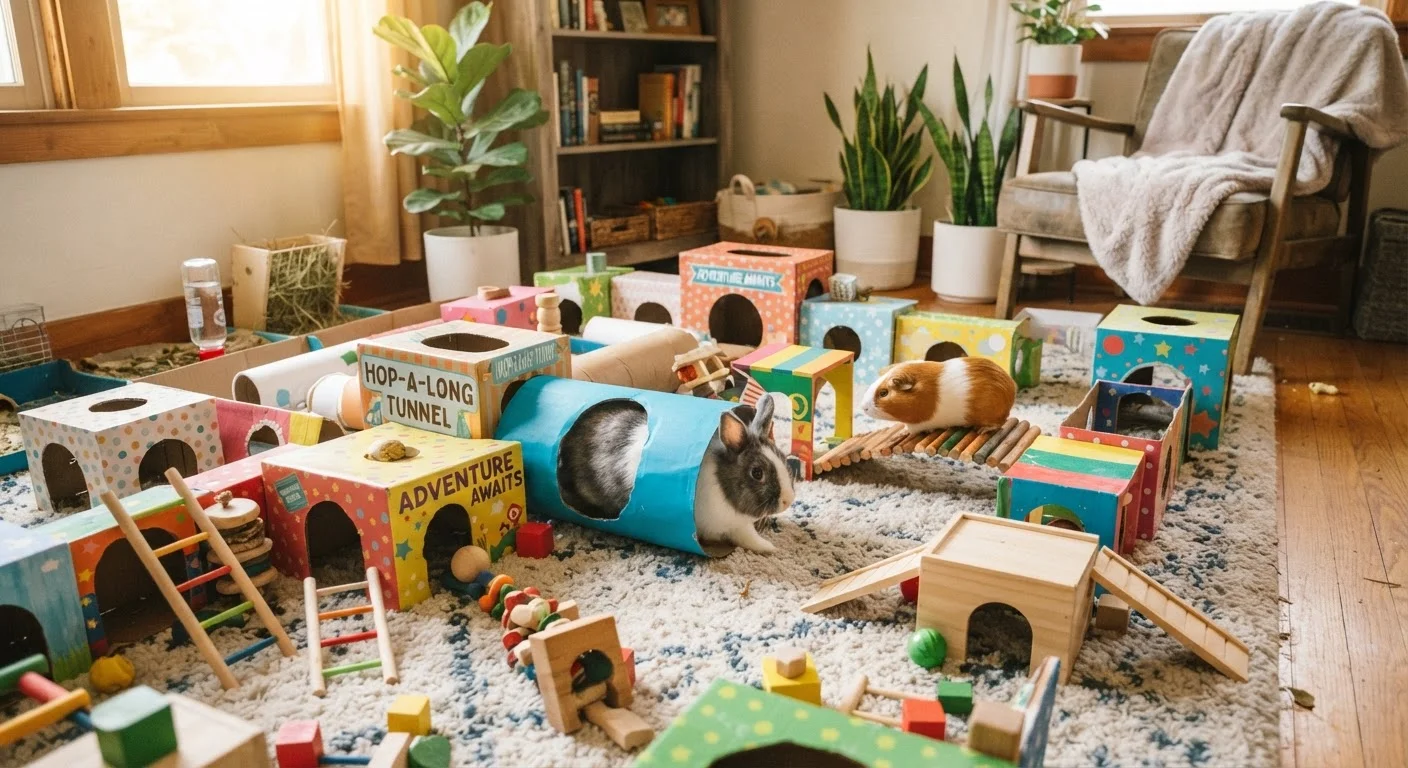
Photo: FaqExplorer.net | Informative Website editorial
Key Takeaways
- Small animals like rabbits, guinea pigs, birds, and rodents need daily mental stimulation to stay healthy and avoid behavioral problems.
- Enrichment doesn't require expensive purchases - forage opportunities, hiding spaces, and social interaction are highly effective.
- Rotating activities prevents habituation, keeping your pet genuinely engaged rather than merely tolerant of familiar objects.
- Species-specific instincts should guide enrichment choices - burrowing, foraging, climbing, and chewing needs vary widely.
- Signs of under-enrichment include repetitive behaviors, over-grooming, lethargy, and destructive activity.
Why Enrichment Matters for Small Pets
Many small animals are kept in environments that meet their basic survival needs - food, water, warmth - but fall short of meeting their behavioral needs. This gap matters. Animals like rabbits, guinea pigs, rats, parakeets, and hamsters are cognitively active creatures with instincts shaped by millions of years of foraging, burrowing, social bonding, and problem-solving. When those instincts have nowhere to go, stress and boredom follow.
Under-stimulated small pets commonly develop what animal behaviorists call stereotypies - repetitive, seemingly purposeless behaviors such as bar-chewing, pacing, or over-grooming. These are behavioral warning signs, not personality quirks. They indicate that an animal's psychological needs are unmet. For a broader look at how misconceptions about small pet needs can lead to real welfare problems, see common small pet myths that could harm your animal.
The good news: meaningful enrichment rarely requires elaborate setups or significant expense. It requires understanding what your specific animal is wired to do - and building regular opportunities for that behavior into each day.
Best Practices for Daily Enrichment
The following approaches are grounded in established small animal husbandry and behavioral science. Adapt them to your pet's species, age, and individual temperament.
Build foraging opportunities into every feeding session
Rotate enrichment items on a weekly schedule
Provide species-appropriate substrate for digging and burrowing
Incorporate safe, supervised out-of-cage time daily
Use social interaction as enrichment, not just care
Introduce novel, safe sensory experiences periodically
Quick Wins You Can Implement Today
You don't need to overhaul your pet's entire setup to make a meaningful difference. Start with small, consistent changes that tap into your animal's natural drive to explore and problem-solve.
If you're still deciding which small animal fits your household, comparing guinea pigs and rabbits is a useful starting point for understanding how enrichment needs differ between species.
Species-Specific Considerations
Enrichment is not one-size-fits-all. Effective strategies hinge on understanding each animal's natural history.
- Rabbits are crepuscular foragers with a strong need to dig and chew. Hay-based foraging puzzles, tunnels, and safe wooden chews address core instincts. Understanding your rabbit's body language also helps you gauge whether enrichment activities are welcomed or stressful - see how rabbits communicate through body language. For a comprehensive care foundation, rabbit care from day one covers housing and behavioral needs together.
- Guinea pigs are highly social herd animals. A single guinea pig without daily human interaction or a companion is at real risk of loneliness. Enrichment for guinea pigs should emphasize social contact and varied food-based exploration.
- Birds - including parakeets, cockatiels, and conures - need cognitive challenge and social engagement. Foraging toys, novel perch textures, and safe household objects to manipulate mimic problem-solving behaviors they'd use in the wild. Habitat setup also plays a key role; setting up a safe habitat for a pet bird outlines how environment and enrichment work together.
- Rats and mice are highly intelligent rodents that benefit from complex environments - multi-level housing, tunnels, objects to rearrange, and regular human handling all support their need for novelty and social stimulation.
- Hamsters, while often solitary, still require substantial physical and mental activity. A large, appropriately sized wheel, burrowing substrate at least six inches deep, and regular cage rearrangement are considered baseline needs by many exotic animal welfare organizations.
When to Involve a Veterinarian
Regardless of species, if you're uncertain whether specific enrichment activities are appropriate for your pet's health status, consult a veterinarian experienced with small animals. Not all general practice vets have this training - understanding the difference between exotic and general vets can help you find the right professional.
The content on this site is provided for informational purposes only and should not be considered a substitute for professional advice. While we strive to provide accurate and up-to-date information, we make no guarantees regarding its completeness or accuracy. Always consult a qualified professional for advice specific to your circumstances before making any decisions.