
Reasons Smart Lighting Systems Actually Change How People Use Their Homes

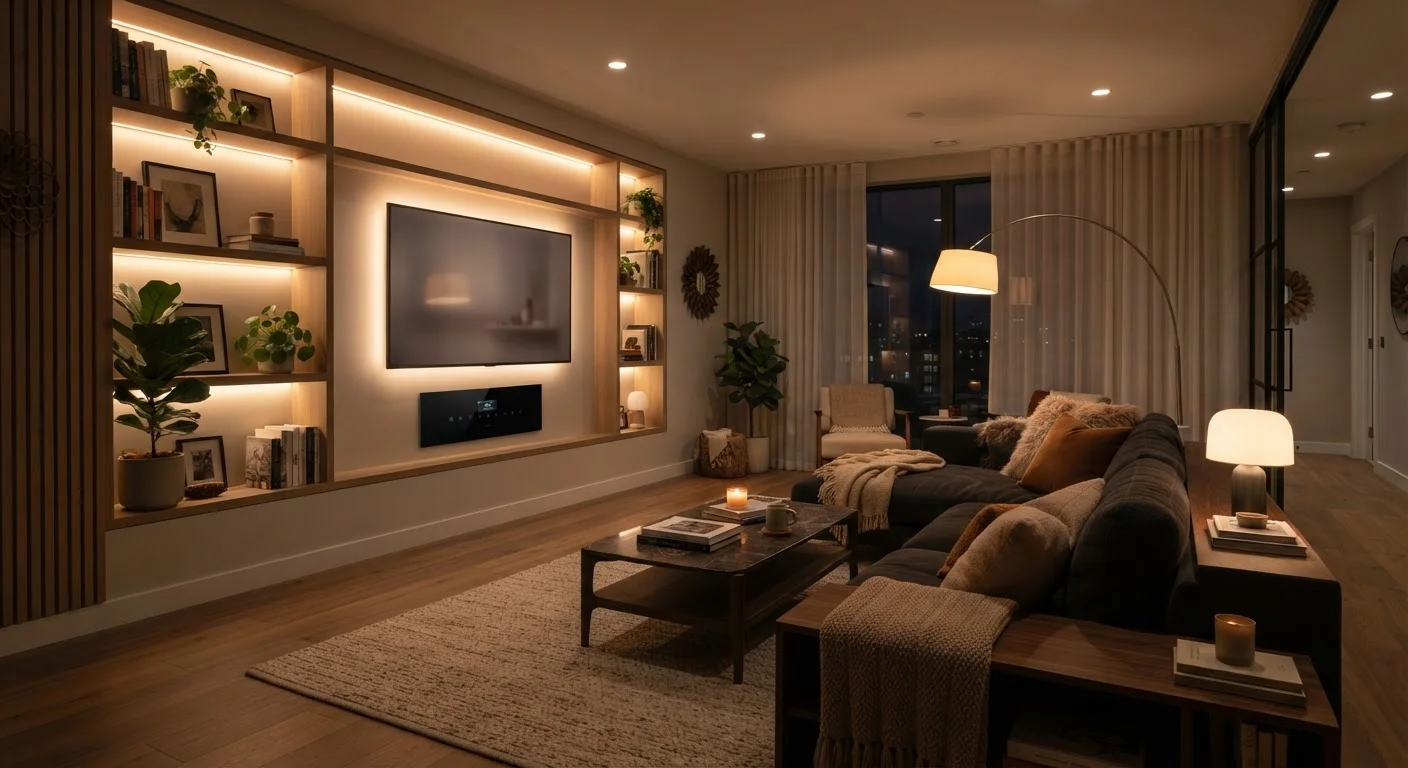
Photo: FaqExplorer.net | Informative Website editorial
Key Takeaways
- Smart lighting can be programmed to match daily routines, reducing manual adjustment throughout the day.
- Dimming and color temperature controls meaningfully affect mood, focus, and sleep quality.
- Occupancy-based automation prevents lights from running in unoccupied rooms, cutting unnecessary energy use.
- Scene-setting lets one tap shift a room's entire function - from workspace to relaxation space.
- Integration with other smart home devices creates behavioral patterns that traditional switches cannot support.
Why Lighting Has More Leverage Than Most People Expect
Most homeowners think about smart lighting as a convenience upgrade - turning lights on and off with a phone instead of a switch. That framing undersells what the technology actually does. When lighting is programmable, responsive, and layered across a home, it quietly reshapes how spaces are used and how routines unfold throughout the day.
This isn't about novelty. Lighting affects human circadian biology, perceived room temperature, and whether a space feels suitable for a given task. A fixed overhead bulb at one brightness handles all of that the same way regardless of the hour or activity. Smart systems don't. Understanding the specific ways they change behavior helps consumers evaluate whether the investment matches their actual lifestyle - not just a wishlist of features.
For anyone building out a broader connected home, it's also worth understanding how smart home protocols work, since the communication standard your lighting uses affects compatibility with other devices.
Automated schedules replace decision fatigue
Every manual light switch interaction is a small decision. Multiply that across a household and a full day, and the cumulative interruption to focus and flow adds up. Smart lighting schedules eliminate the majority of these micro-decisions by triggering lights based on time of day or sunrise and sunset data.
Morning routines benefit particularly from this: lights can ramp up gradually rather than snapping on at full brightness, which aligns better with how people naturally wake. Evening schedules work in reverse, dimming automatically as bedtime approaches rather than requiring deliberate action.
Scheduled lighting removes dozens of small daily decisions without requiring any willpower.
Color temperature shifts support natural energy cycles
Tunable white bulbs - those capable of shifting between warm amber and cool daylight tones - allow lighting to track the body's natural preference for cooler, energizing light during the day and warmer, lower-stimulation light in the evening. This matters because exposure to blue-spectrum light in the hours before sleep is associated with disrupted melatonin production, according to research published in sleep science literature.
Smart systems can automate these shifts on a schedule tied to clock time, so residents don't have to think about it. The practical result is that bedrooms and living areas feel more naturally suited to rest in the evening without any manual adjustment.
Automated color temperature shifts help rooms feel right for the time of day without manual effort.
Occupancy sensing prevents the lights-left-on problem
Motion and occupancy sensors integrated with smart lighting systems can detect when a room is empty and turn lights off automatically. This addresses one of the most consistent sources of household energy waste: lights running in rooms no one is in.
Unlike timers, occupancy-based control adapts to actual behavior. A bathroom, laundry room, or hallway that sees irregular traffic doesn't need a fixed schedule - it needs to respond to presence. This approach works well in households with children or in multi-story homes where tracking every room manually is impractical.
Occupancy sensors respond to actual behavior, not assumptions about when rooms will be used.
Scene presets redefine how rooms function
A single room can serve as a workspace, a dining room, a media space, and a social gathering spot - often within the same day. Standard lighting treats all of these the same. Scene presets in smart systems don't.
A "movie" scene might dim overhead lights and activate accent strips at low warm output. A "dinner" scene might bring pendant lights to 70% while turning off task lighting. A "focus" scene might push cool daylight bulbs to full output over a desk. Each preset is saved and triggered with a single action, reshaping the room's functional character without physical changes.
Scene presets let one room serve multiple distinct functions without moving a piece of furniture.
Integration with other devices creates compounding routines
Smart lighting becomes significantly more powerful when it communicates with other home systems. A door sensor triggering a soft entry light when someone arrives home. A smart alarm activating a gradual sunrise simulation. A security camera triggering all exterior lights simultaneously when motion is detected after dark.
These integrations don't require complex programming in most modern platforms - they're typically configured through condition-and-action rules in a companion app. The result is a home that responds to what's happening rather than waiting for manual input. For readers curious about privacy implications of connected devices, common misconceptions about smart home privacy is worth reviewing before expanding any system.
Lighting integrated with sensors and other devices creates a home that responds rather than waits.
Remote access changes how people think about leaving home
The ability to check and control lighting from anywhere changes the mental load of leaving the house. Forgotten lights can be turned off without returning. A vacancy simulation - lights cycling on a randomized schedule - can be activated from a phone while traveling, providing a basic security benefit without dedicated hardware.
This remote visibility also closes a feedback loop: people can see what's on, which often surfaces patterns they weren't aware of. Consistently leaving particular lights on becomes visible data rather than an unexamined habit.
Remote access turns lighting oversight from a guessing game into verifiable, actionable information.
What This Means for Your Home
The shift from fixed to programmable lighting isn't just a technical one - it's a behavioral one. Once lighting responds to time, occupancy, and intent, people tend to use rooms differently. A home office feels distinct from a living room not because the furniture changed, but because the light did. A bedroom that dims automatically at a consistent time each night removes a small but real friction from winding down.
Start With High-Traffic Zones
Smart lighting pairs naturally with other automated systems. Similar logic applies to climate: smart thermostats learn usage patterns in comparable ways, and the two systems often integrate directly. If you're planning a broader setup, starting with a clear ecosystem plan prevents compatibility headaches down the road.
None of this requires a fully automated home to deliver value. Even a single zone of smart lighting in a frequently used room can demonstrate how much the fixed-switch model was leaving on the table.
The content on this site is provided for informational purposes only and should not be considered a substitute for professional advice. While we strive to provide accurate and up-to-date information, we make no guarantees regarding its completeness or accuracy. Always consult a qualified professional for advice specific to your circumstances before making any decisions.