
Smart Thermostat Basics: How They Learn, Schedule, and Save Energy

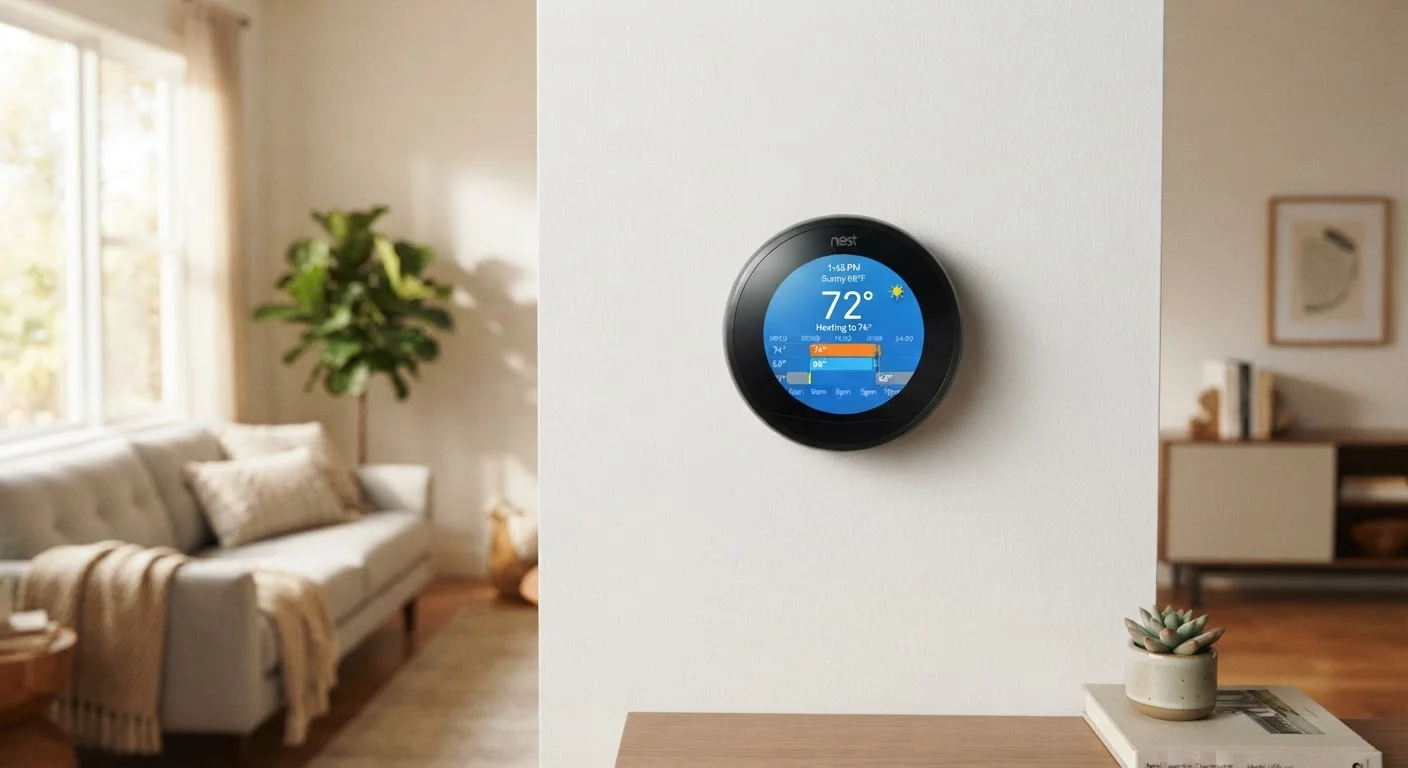
Photo: FaqExplorer.net | Informative Website editorial
Key Takeaways
- Smart thermostats go beyond scheduling by using occupancy sensors and usage patterns to adjust temperatures automatically.
- Learning algorithms typically require one to two weeks of manual adjustments before making autonomous decisions.
- Remote access via smartphone apps lets you change settings from anywhere with an internet connection.
- Energy savings depend heavily on your existing habits, home insulation, and HVAC system efficiency.
- Most smart thermostats integrate with voice assistants and smart home platforms but may require a hub or specific ecosystem.
What Makes a Thermostat 'Smart'
A traditional programmable thermostat lets you set a fixed schedule - heat to 70°F at 7am, drop to 62°F at 10pm. That's all it does. A smart thermostat layers several additional capabilities on top of that foundation: wireless connectivity, onboard sensors, cloud-based processing, and in some cases, machine learning algorithms that adapt to your behavior over time.
The connectivity piece is what unlocks remote control. Once joined to your home Wi-Fi network, the thermostat communicates with a cloud server, which relays commands to and from a smartphone app. This means you can adjust the temperature from work, check whether the heat is running while you're on vacation, or receive alerts if indoor temperatures drop unexpectedly.
If you're just beginning to build out a connected home, our beginner's guide to setting up a smart home explains how to integrate devices like thermostats into a broader ecosystem without overcomplicating the process.
10%
Potential annual heating cost reduction
The U.S. Department of Energy estimates turning the thermostat back 7-10°F for 8 hours per day can reduce heating bills by approximately 10% annually.
1-2 weeks
Typical learning phase duration
Most learning thermostats observe manual adjustments for one to two weeks before generating a reliable automated schedule.
~50%
Share of home energy use from heating and cooling
According to the U.S. Energy Information Administration, space heating and cooling account for roughly half of residential energy consumption.
How Learning Algorithms Actually Work
The term 'learning thermostat' refers to a device that observes your manual temperature adjustments and builds a predictive schedule from them. During the first one to two weeks, the thermostat logs what time you wake up, what temperature you prefer in the morning, when the house is empty, and when you typically go to bed. It then generates an automated schedule based on those patterns rather than requiring you to program one manually.
Occupancy detection is a key input to this process. Most learning thermostats include passive infrared (PIR) sensors - the same technology used in motion-activated lights - to detect when people are present in a room. When the home appears unoccupied, the thermostat shifts into an energy-saving mode. Some models allow additional remote sensors placed in different rooms to get a more accurate picture of where activity is actually happening.
It's worth noting that these algorithms aren't perfect. Irregular schedules, guests, or seasonal changes in routine can cause the device to make predictions that don't match your actual needs. Most systems include an override function and allow you to edit the learned schedule manually at any time.
“The thermostat is the device that controls the largest share of home energy consumption, yet it's historically been one of the least optimized. Connecting it to behavioral data - even something as simple as when people are home - is one of the highest-leverage changes a household can make.”
— Energy Systems Researcher, Building Energy Efficiency Expert, U.S. academic institution
Scheduling, Geofencing, and Remote Access
Even if you choose a smart thermostat without learning capabilities, manual scheduling is significantly more flexible than on older programmable models. Most smart thermostats allow different schedules for each day of the week, multiple temperature setpoints throughout the day, and easy adjustments through an app or touchscreen interface.
Geofencing adds another layer of automation. Using your smartphone's GPS, the thermostat's companion app can detect when you leave a defined radius around your home and switch to an away temperature automatically. When you return within range, it begins warming or cooling the home before you arrive. This function works well for people with unpredictable departure times - though it requires keeping location services active for the app, which has battery and privacy implications worth considering.
Remote access is straightforward: the smartphone app connects to the thermostat through the manufacturer's cloud servers. If the internet connection goes down, remote access is unavailable, but the thermostat continues running its local schedule. For households concerned about cloud dependency, some models support local control through a smart home hub - see our explainer on how smart home hubs manage local vs. cloud control for more detail on that distinction.
Energy Savings: What's Realistic
Smart thermostats are widely marketed around energy savings, and for many households there is a genuine reduction in heating and cooling costs - but the size of that reduction varies considerably. Homes where occupants rarely adjusted the thermostat manually, or where heating and cooling ran at full capacity around the clock, tend to see the largest impact. Homes already using a well-optimized programmable schedule may see smaller gains.
The U.S. Department of Energy notes that turning your thermostat back 7-10°F from its normal setting for 8 hours per day can reduce heating costs by as much as 10% annually. A smart thermostat automates this kind of setback reliably, which is its core energy-saving mechanism - not any form of AI magic. Factors like home insulation, window efficiency, and HVAC system age all influence outcomes more than the thermostat itself.
It's also worth thinking about how smart thermostats fit into broader home energy management. Just as smart lighting systems shift energy use patterns, automating temperature control works best when it's integrated thoughtfully with how your household actually operates - not treated as a guaranteed cost-cutting solution.
Frequently Asked Questions
The content on this site is provided for informational purposes only and should not be considered a substitute for professional advice. While we strive to provide accurate and up-to-date information, we make no guarantees regarding its completeness or accuracy. Always consult a qualified professional for advice specific to your circumstances before making any decisions.