
Secured vs. Unsecured Debt: How the Difference Affects Your Risk

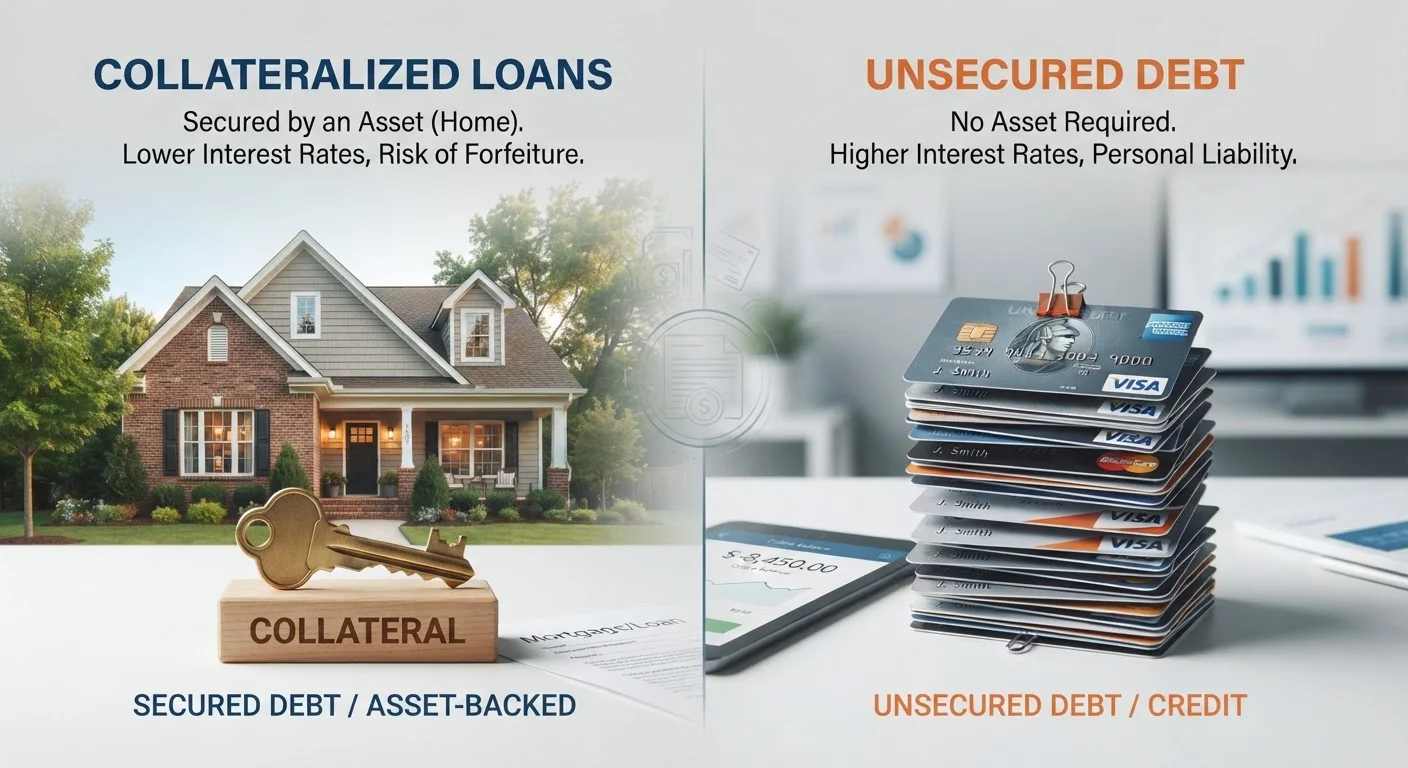
Photo: FaqExplorer.net | Informative Website editorial
Key Takeaways
- Secured debt is backed by an asset (collateral); unsecured debt is not, relying instead on creditworthiness.
- Defaulting on secured debt can result in loss of the pledged asset, such as foreclosure or vehicle repossession.
- Unsecured debt typically carries higher interest rates because lenders take on more risk without collateral.
- Your credit score and debt type together influence the terms and rates lenders offer you.
- Understanding both types helps you weigh the true cost and risk of any borrowing decision.
The Core Distinction: Collateral
The single most important difference between secured and unsecured debt is collateral - an asset you pledge to the lender as a guarantee. With secured debt, the lender holds a legal claim (called a lien) against that asset for the life of the loan. If you stop making payments, the lender can seize and sell the asset to recover what you owe.
Common examples of secured debt include:
- Mortgages - your home serves as collateral. See how fixed and adjustable mortgage rates work for more on how the loan structure affects your long-term costs.
- Auto loans - the vehicle is the collateral, which is why lenders can repossess a car when payments lapse.
- Home equity loans - these borrow against the ownership stake you've built in your property. What a home equity loan actually does to your property explains the implications in detail.
Unsecured debt, by contrast, requires no asset pledge. Lenders extend credit based on your credit history, income, and overall financial profile - not on property you own. Credit cards, personal loans, student loans, and medical bills are typical examples.
| Criterion | Secured Debt | Unsecured Debt |
|---|---|---|
| Collateral required | Yes - asset pledged to lender | No - based on creditworthiness |
| Typical interest rates | Generally lower | Generally higher |
| Common examples | Mortgage, auto loan, home equity loan | Credit card, personal loan, student loan |
| Default consequence | Asset seizure (foreclosure, repossession) | Credit damage, collections, possible judgment |
| Lender risk level | Lower - clear recovery path | Higher - indirect recovery only |
| Borrower asset risk | High - specific asset at stake | Lower - no specific asset pledged |
How Risk Shifts Between Lender and Borrower
The presence or absence of collateral fundamentally changes who bears more risk in the lending relationship.
With secured debt, the lender's risk is lower because they have a defined recovery path: seize and liquidate the collateral. In exchange for accepting this pledge, lenders typically offer borrowers lower interest rates. That trade-off is real - a mortgage rate is almost always lower than a personal loan rate for a comparable borrower - but the borrower accepts a significant consequence: defaulting can mean losing their home, car, or other pledged asset.
With unsecured debt, the lender has no direct claim on a specific asset. If you default, their remedies are more indirect - reporting the delinquency to credit bureaus, selling the debt to a collection agency, or pursuing a court judgment. Because this recovery path is less certain, lenders charge higher interest rates to compensate for the added risk they absorb.
~$1.14T
Total U.S. credit card debt outstanding
According to the Federal Reserve Bank of New York's Household Debt and Credit Report, U.S. credit card balances - a primary form of unsecured debt - reached approximately $1.14 trillion as of early 2024.
~20%+
Average credit card interest rate (APR)
The Federal Reserve tracks average credit card rates; by mid-2024 the average APR on accounts assessed interest exceeded 20%, sharply higher than typical secured loan rates.
This also means that carrying high-interest unsecured balances over time can compound debt faster than many borrowers expect. Common borrowing traps that deepen debt covers how minimum payments and other patterns quietly accelerate the cost of unsecured balances.
What Happens When You Default
Default consequences differ sharply depending on debt type - and understanding them before you borrow matters.
Secured Debt Defaults
When a borrower stops paying a secured loan, the lender's recourse is tied to the collateral. For a mortgage, this means the foreclosure process - a legal proceeding that can ultimately result in losing your home. For an auto loan, lenders can initiate repossession, often with minimal advance notice in many states. Beyond losing the asset, a deficiency balance - the gap between what the asset sells for and what you owed - may still be owed to the lender, depending on state law.
Unsecured Debt Defaults
Without collateral to seize, lenders rely on reporting, collection, and legal channels. Severe delinquency damages your credit profile significantly and can result in a lawsuit and wage garnishment if a court judgment is entered against you. While no specific asset is at immediate risk, the broader financial fallout - including the difficulty of qualifying for future credit - can be substantial.
For borrowers managing multiple debt types simultaneously, having a clear repayment plan is essential. Debt Avalanche vs. Debt Snowball breaks down structured approaches to paying down what you owe.
Credit Score Affects Both Debt Types
This article is for general informational and educational purposes only and does not constitute personalized financial or legal advice. Consult a qualified financial advisor or attorney for guidance tailored to your specific situation.
The content on this site is provided for informational purposes only and should not be considered a substitute for professional advice. While we strive to provide accurate and up-to-date information, we make no guarantees regarding its completeness or accuracy. Always consult a qualified professional for advice specific to your circumstances before making any decisions.